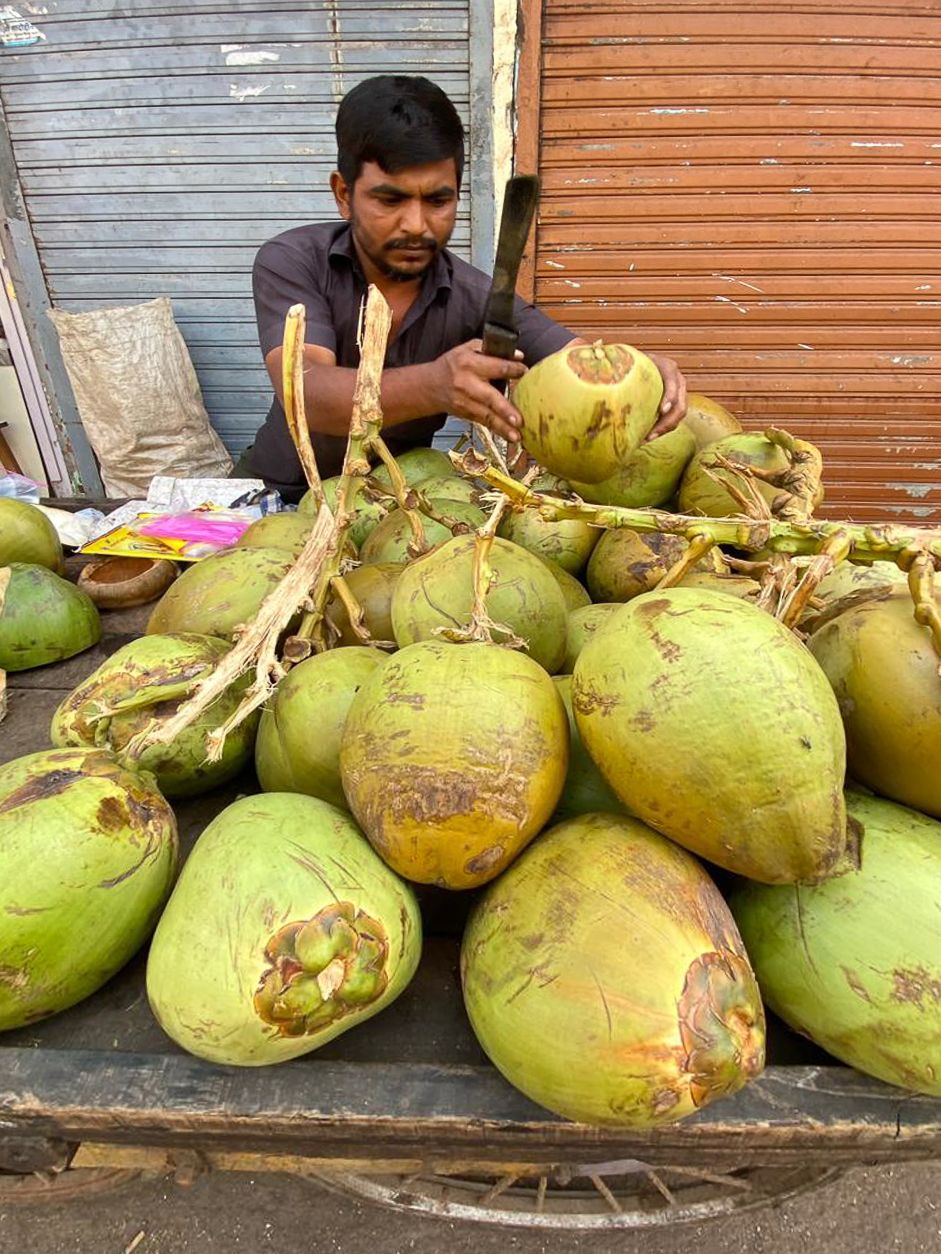
As the title suggests, Life Got Better with Coconuts for Kausar Shaikh. He came to Mumbai 15 years ago, leaving his family farm in Jharkhand, because he was not keen on agriculture and was seeking a different path. Seeing other migrants from his region successfully start small businesses gave him the confidence to leave years of unstable work in Mumbai behind and become a thriving coconut vendor in Dharavi.
Every day, a coconut vendor can be seen on the Dharavi Main Road in Koliwada. He is one of many vendors who operate in the precinct. His Name is Kausar, Kausar Shaikh. He’s a native of Sahibganj, Jharkhand, where he has a loving family with two little sons. He came to Mumbai along with his younger brother Kareem around 15 years ago, when he was just 21. He grew up in a farmer’s household, but he said he was bored with farming. He wanted to do something different with his life.
‘‘Ab har kisi ko sab cheez me mazaa to nahi aata na, waise hi mujhe Kheti baadi me mazaa nahi aata tha.’’
“Look, not everyone can like every single thing, you know? I just didn’t get any pleasure out of farming.”
He starts his day at 2:00 AM, gets up, splashes water on his face, steps out of his King’s Circle room, and takes a fifteen-minute walk to a nearby park where he usually secures his cart at night. He then pushes his cart towards Sion Hospital, where he waits for the coconut-carrying truck arriving from Mysore, Karnataka, to stock up his cart. After stocking up his coconuts, he again takes the cart to the park and chains it to the fence of the footpath on the periphery of the park, trusting that his stock will be safe until he returns. In his six years of business, his cart hasn’t been stolen once; however, the police had confiscated his cart a few times, and he had to pay a fine to get it back.
He returns to his apartment to get ready for the day, after which he walks back to the park to retrieve his cart, and then pushes it about two and a half kilometres to Dharavi Koliwada, where he sets up for the day.
On most days, customers gather at Kausar’s cart throughout the morning and afternoon. He serves them efficiently while maintaining friendly but professional relationships. He has built connections with regular customers and fellow vendors over the years, but says he prefers to mind his own business quietly.
“Abhi tumhare aane ke pehle ek ladka aaya tha, vo hafte me do teen baar aata hai nariyal paani peene ke liye, mujhe ek ladki ka photo dikhaya, uske girlfriend ka photo tha, kehta hai , agar ise dekha yaha se jaate hue, toh mujhe phone mila dena. Abhi aise daily customer bolega, toh hum unki madad kar dete hai, sab achhe log hai, roz yahi se guzarte hai. Par phir bhi mai iss sab me itna padta nahi.”
“See that young man? He’s a regular, just left. He showed me his girlfriend’s photo and asked me to call him if I saw her passing by. When a daily customer asks for such a trivial favour, even if I feel reluctant, I oblige; they are good people, people I see every day. But still, I prefer not to get too involved in all these personal matters.”
He says that despite the time that has passed, the longing for home is constant. Since becoming a father a few years ago, he has felt a persistent homesickness, intensely missing his children. He consciously chose not to bring his family to the city, firmly believing they were better off staying in Jharkhand, where life is perhaps simpler. His work cycle here is not continuous; he operates on a rotational basis. He works diligently for about four months, after which his brother, Kareem, travels to the city to take his place, stepping into the same demanding schedule and lifestyle. This four-month break is the only time he gets an opportunity to be reunited with his family.
This arrangement exists because he recognises a potential market here; the financial opportunity outweighs the personal cost. Before this current business, he spent almost nine years doing all kinds of odd jobs, including a relatively stable stint decorating for weddings, but none of those provided a sufficient or secure income. Seeing others around him, people who had lived similar lives of unstable work, successfully start small businesses, gave him the confidence to try something of his own.
“Dhandha Chaalu karne tak toh mujhe laga ki Bambai aana aur itni mehnat karna bekaar tha.”
“Until I started this business, I felt that coming to Mumbai and doing so much hard work was useless.”
He explained that the almost perennial humid weather makes selling coconut water successful anywhere in Mumbai. But the Dharavi Main Road is a good location strategically to conduct his business, especially on Sundays, with several churches nearby, people leaving church after mass who use the road, see his cart and stop for a quick, refreshing coconut. Business is so good, he often sells out before noon on Sundays.
When asked more about Dharavi, He says, like many others, his story of landing up in Dharavi was guided by community ties and economic logic. He explained that a lot of people from his own village work in the informal industries here, so he essentially just followed their lead. He set up his cart nearby, not necessarily among friends, but among familiar faces who reinforce that subtle, comforting sense of regional unity and fraternity that’s vital for migrants in a huge city like Mumbai. His decision paid off, and he's doing better now than he ever did in those years of shifting from one job to another.
His sense of humour and warmth with customers reflect the relationships he has built over six years in Dharavi, a place that has allowed him to earn a steady living and offered the support of familiar people, embracing him so completely that he doesn't intend to move out anytime soon.


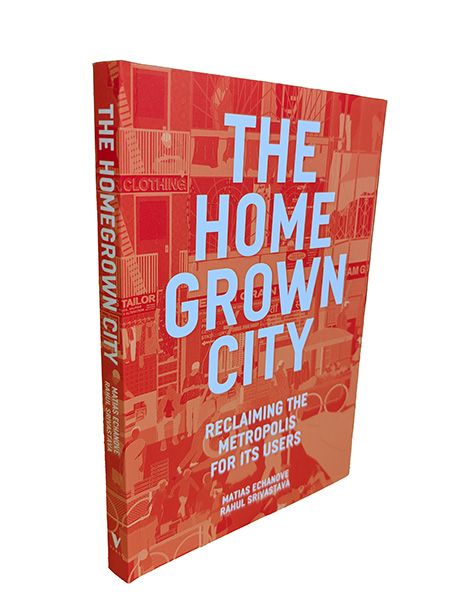
A new book by urbz co-founders, Matias Echanove and Rahul Srivastava, drawing on their learning from Mumbai, Tokyo and other cities where they have been active for over 15 years.

Written by urbz co-founders Matias Echanove and Rahul Srivastava, the book makes the case for a radically new path to urban development based on collective initiative, local knowledge and use value. It reframes the city as a place where people are creators of their habitats and agents of their own evolution. Rather than offering a list of wishes for how the city ought to be, Rahul and Matias base their vision on years of work in some of the most complex and diverse urban environments on the planet.
Their collaboration began in 2008 in Dharavi, a large settlement in the heart of Mumbai, India. This neighbourhood was developed by its inhabitants without architects, engineers or planners, against all odds. It was here that Matias, Rahul and their colleagues shaped urbz’s unique approach—one that places residents at the center of the process and actively supports local initiatives.
The 240-page book is published by Verso in London, a publishing house known for its engagement for social justice and progressive collection, which includes such classics as David Harvey’s Rebel Cities and Mike Davis’ City of Quartz. The Homegrown City has received endorsements from Amitav Ghosh, Susan Fainstein, Neil Brenner and Arjun Appadurai.
The book will be officially released in January 2026 and it is currently available for pre-order worldwide in paper and digital formats. A series of book launches and presentations will be held in Paris, Mumbai and London in the first semester 2026. Pre-order now on Verso!


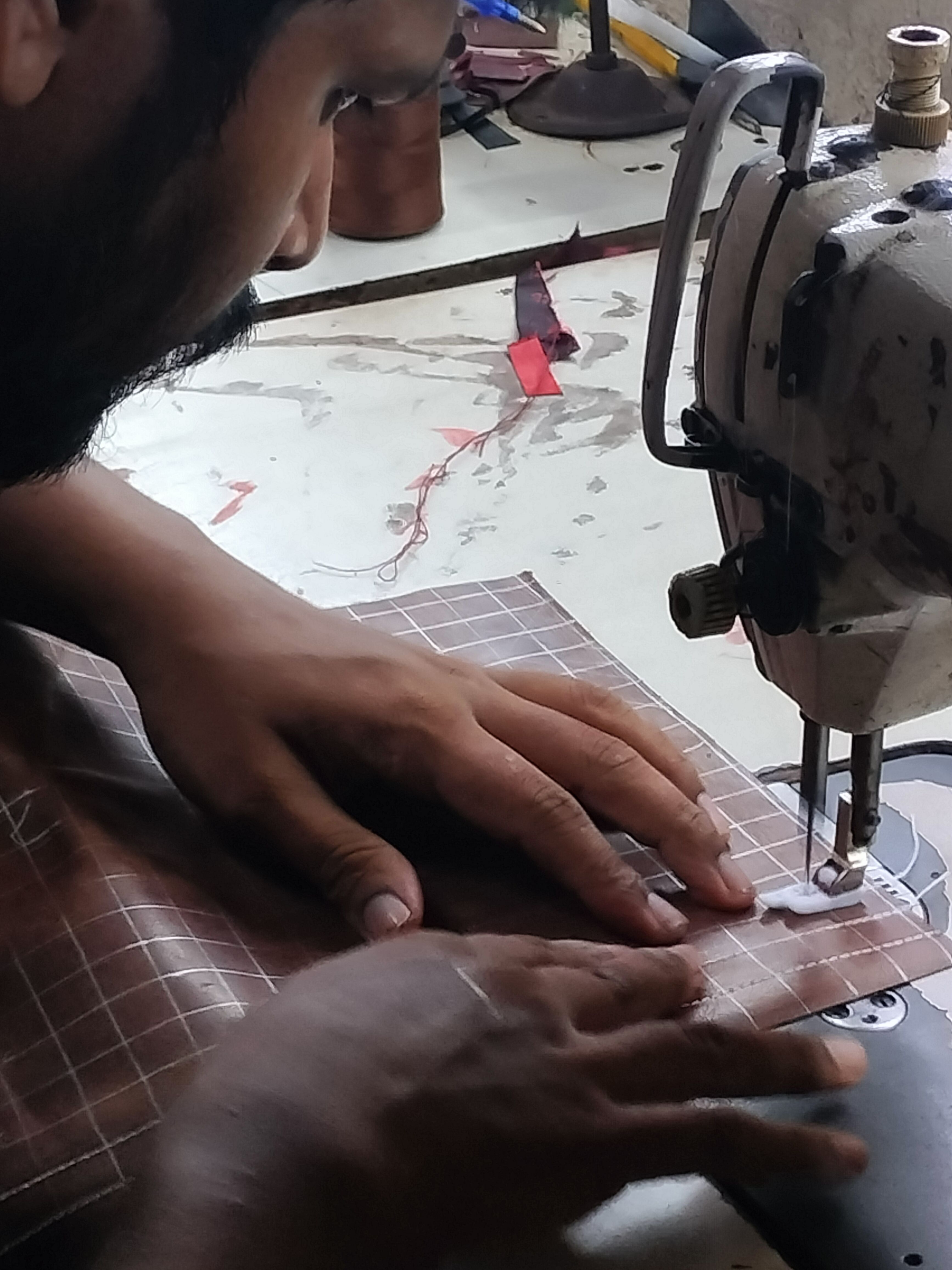
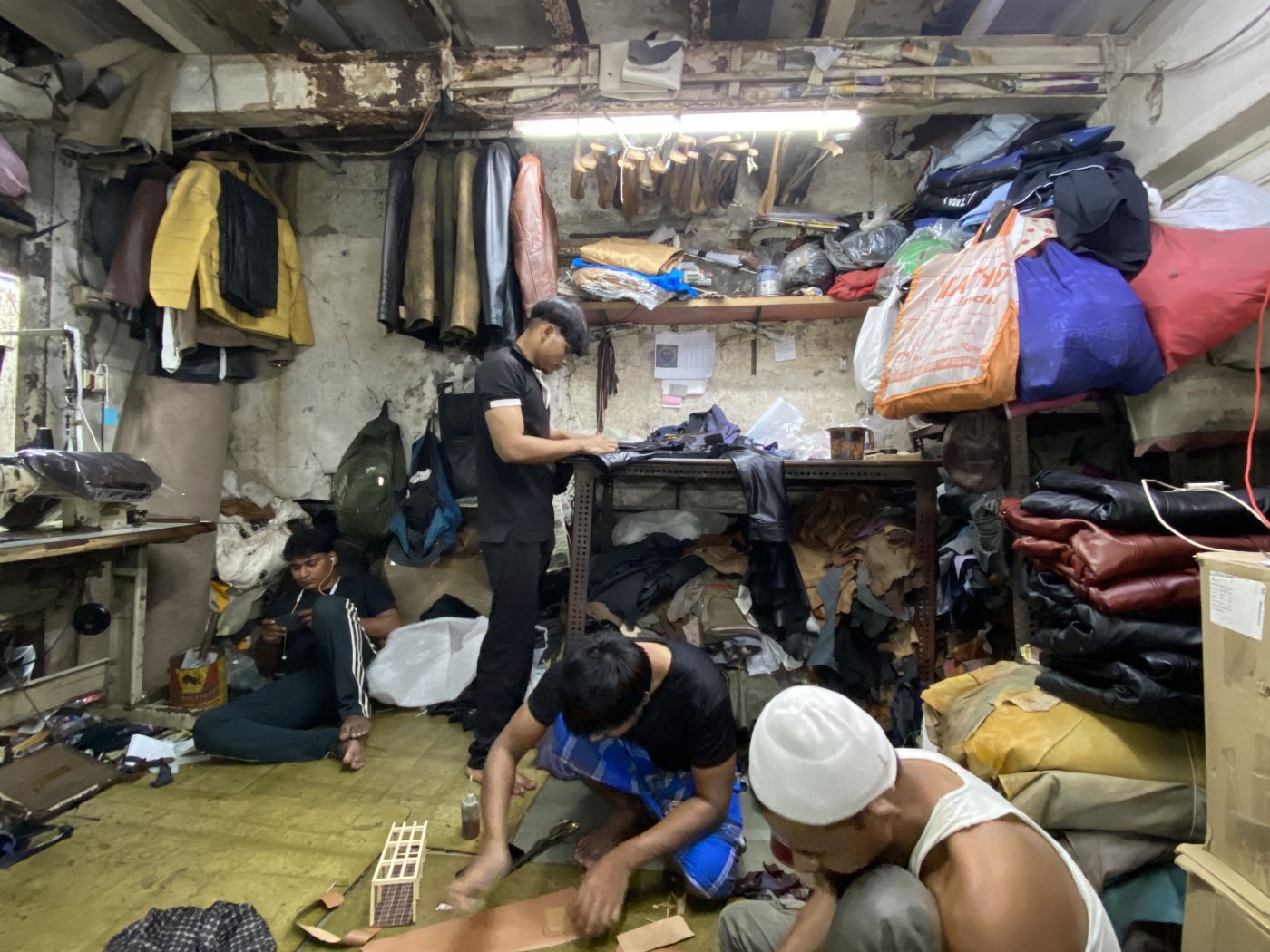
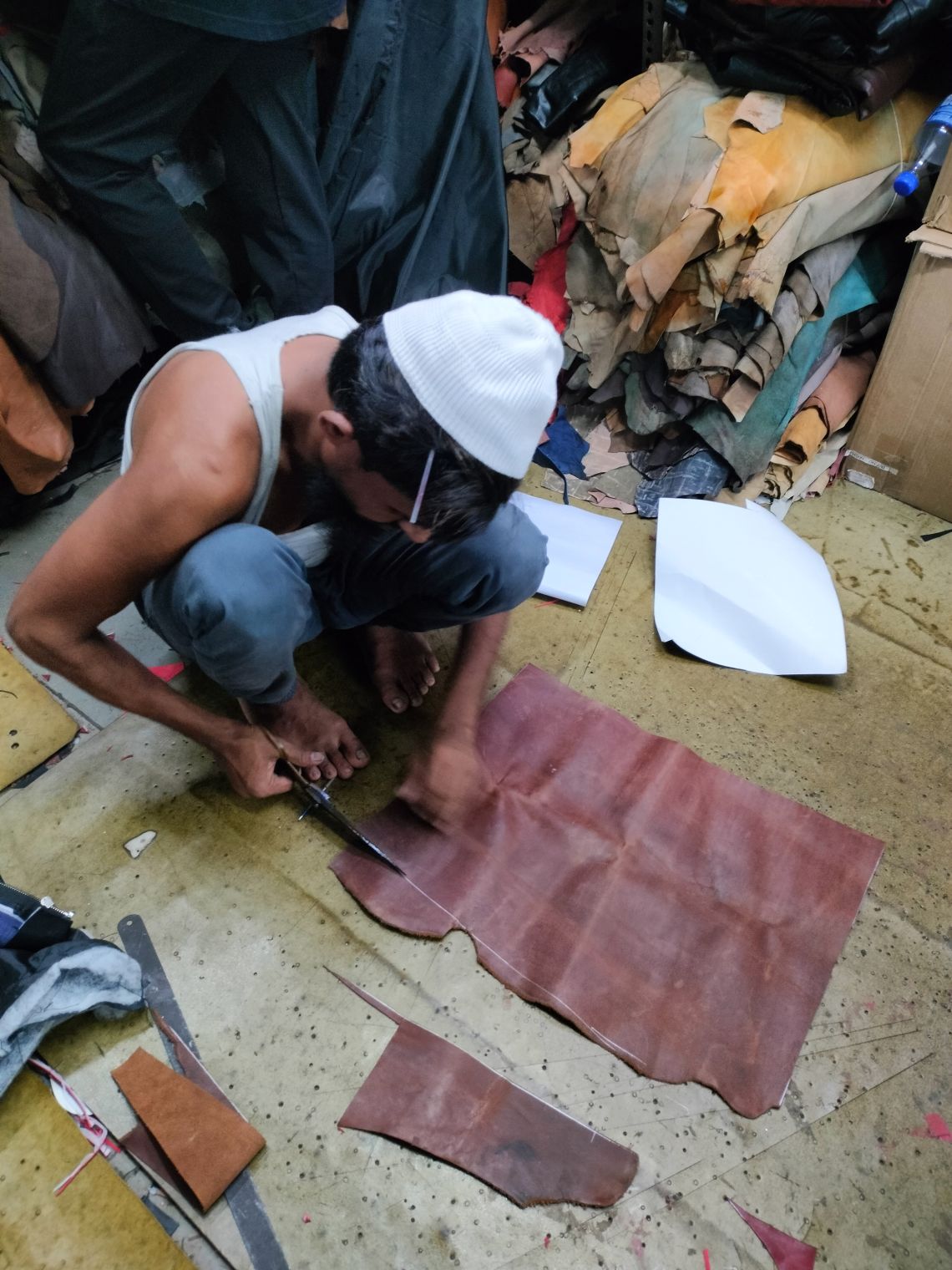
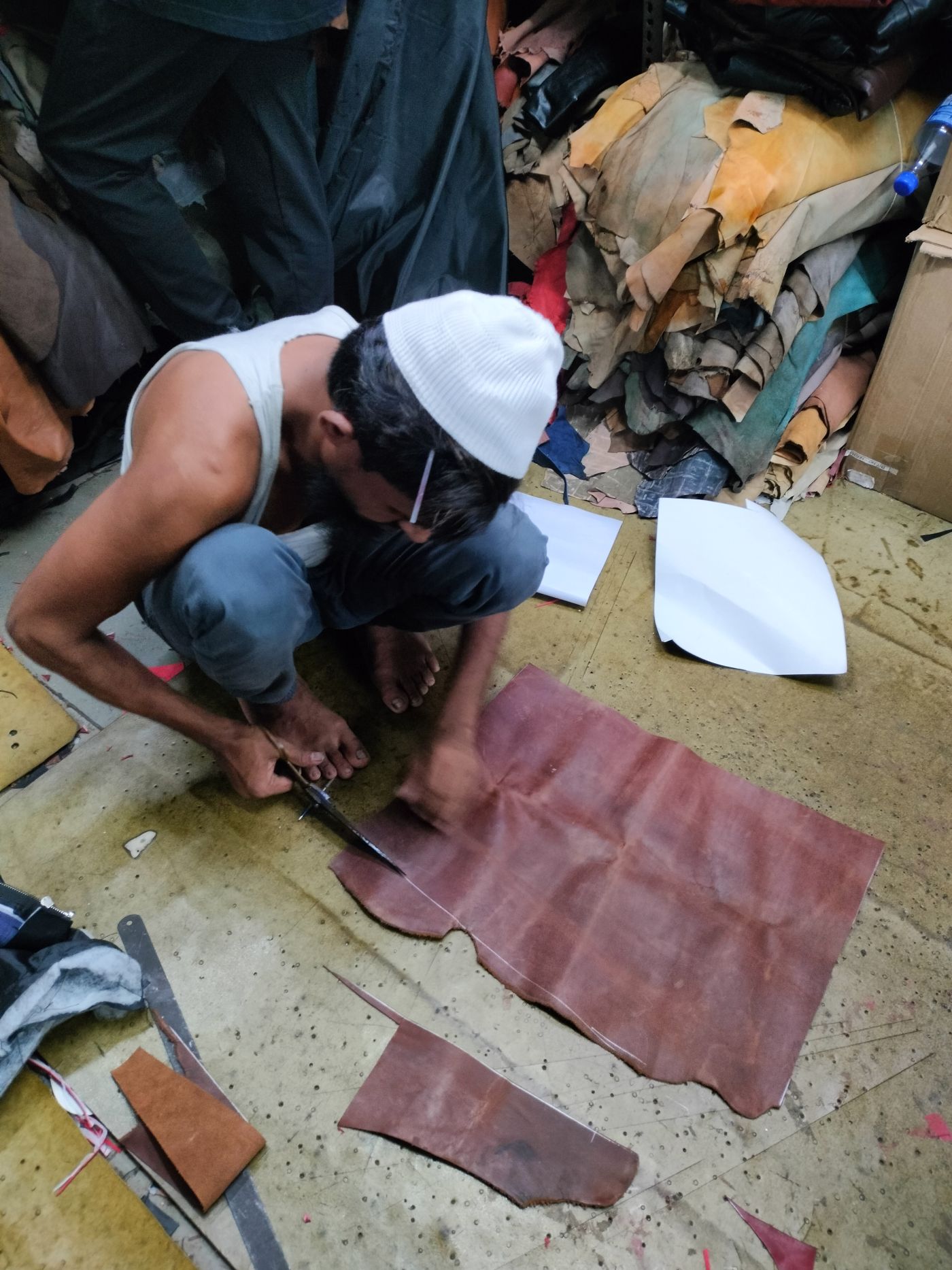
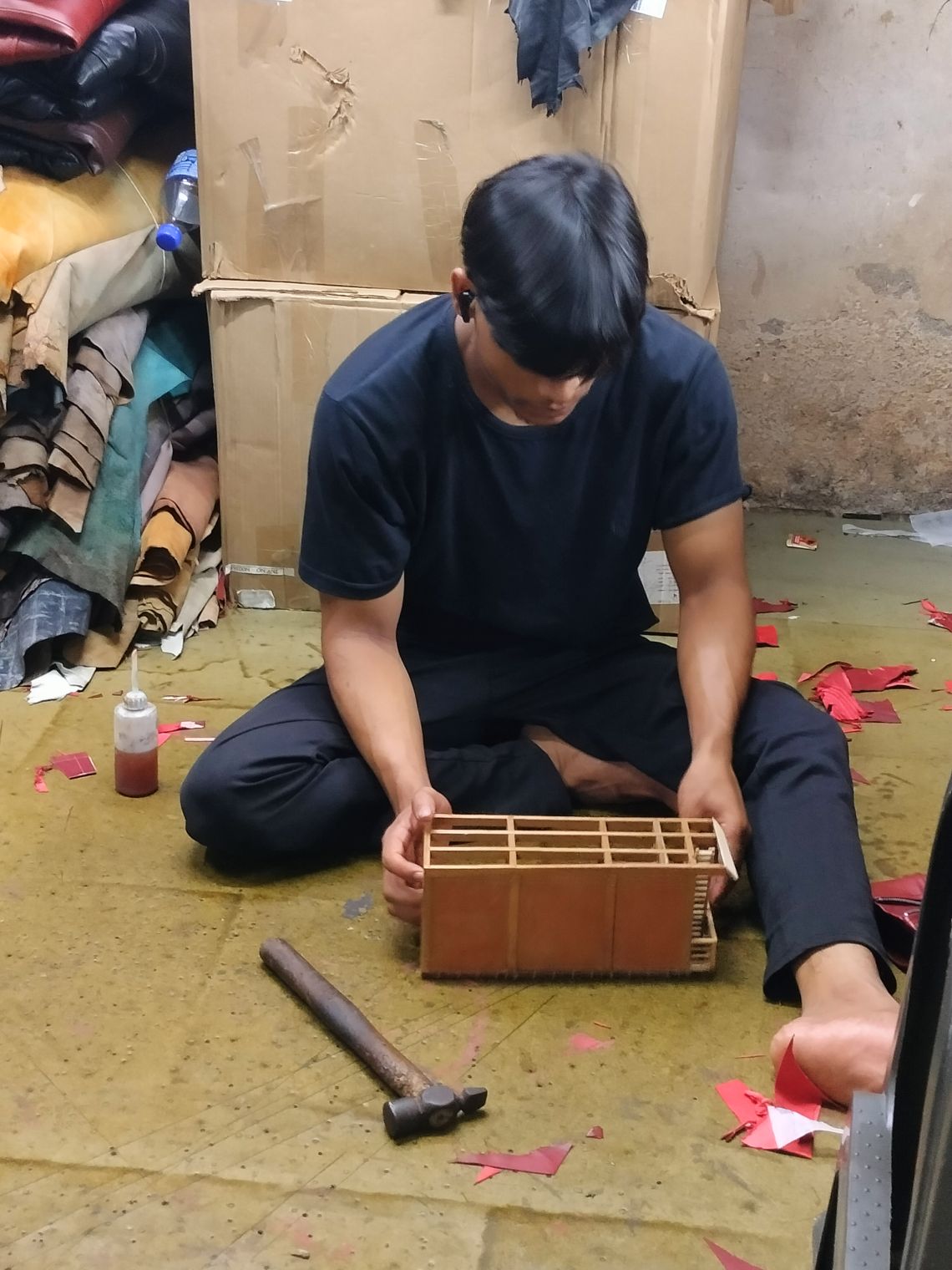
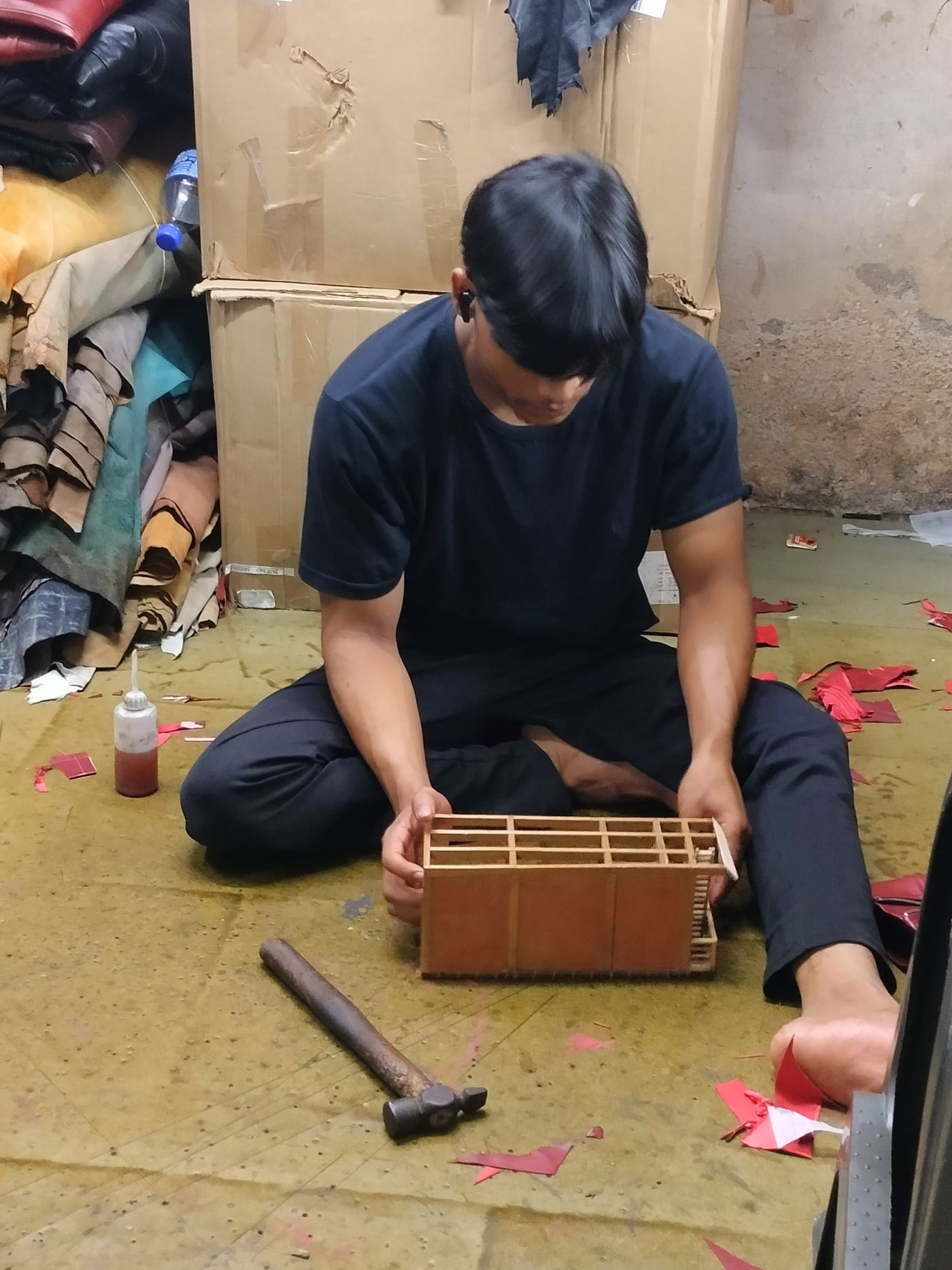
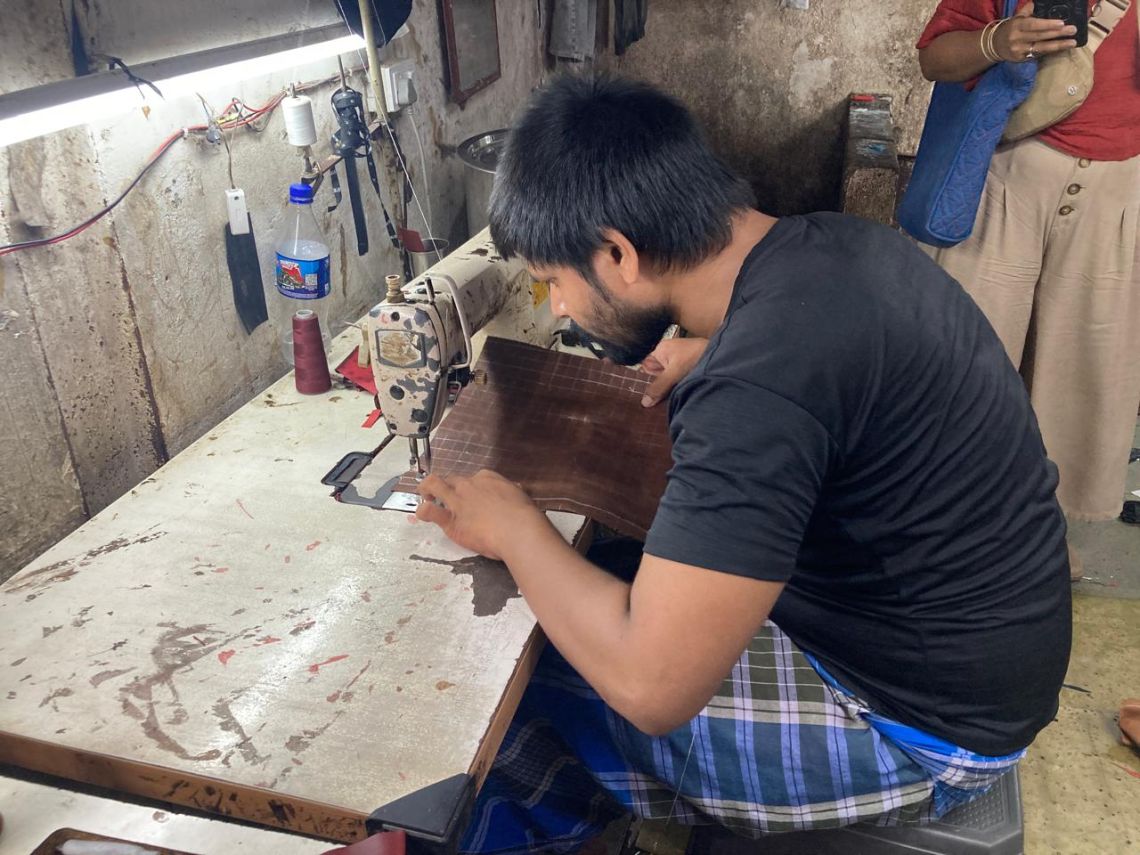
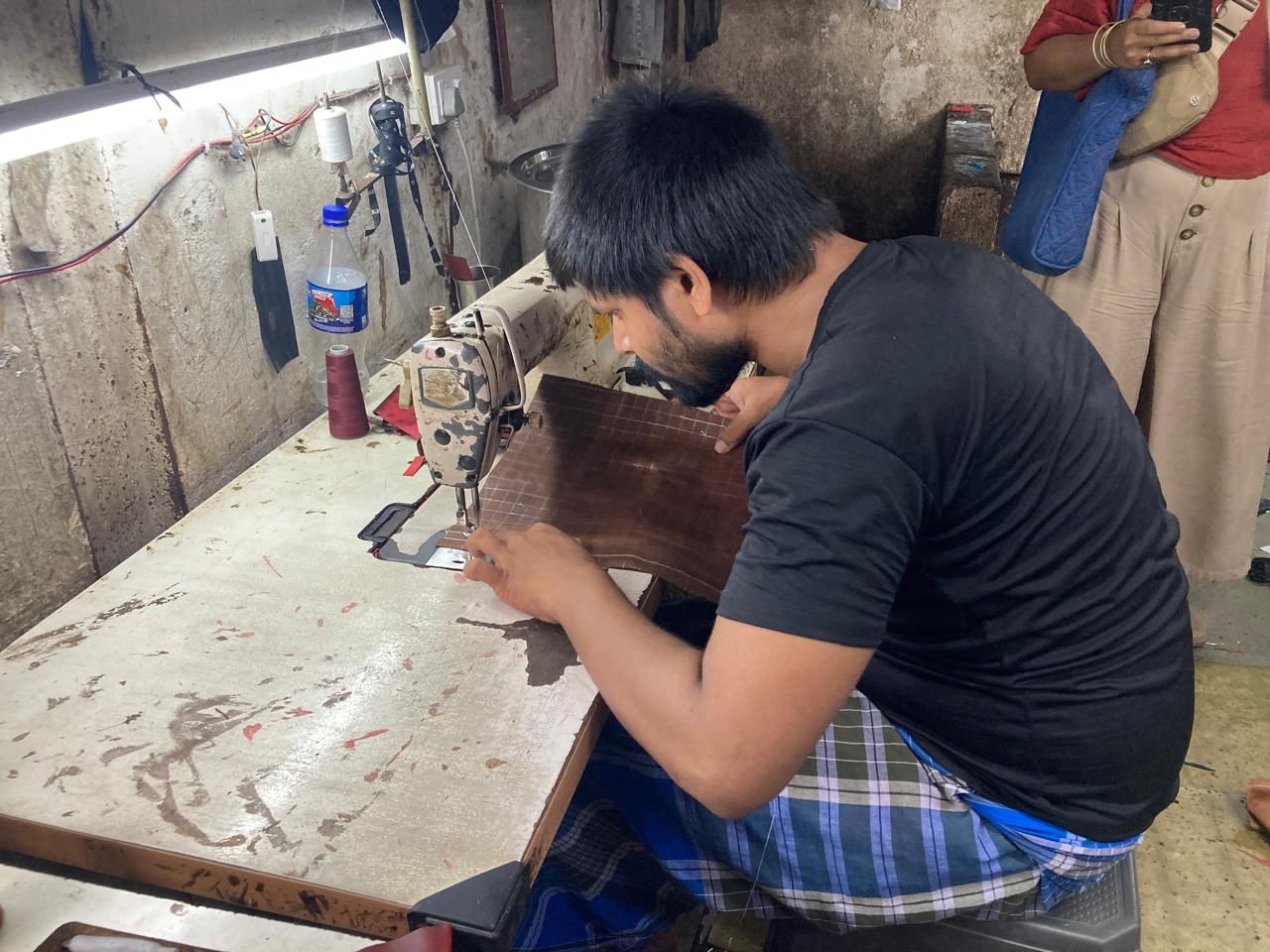
On a rainy afternoon, we visited Irfan’s workshop, somehow quieter than the surroundings. We assisted and watched him while he worked, and he narrated his story to us.

We met Mohammad Irfan Alam, aka Irfan Bhai, while on a hunt for a leather artisan for an urgent project deadline. Most of the time, you find the Diamond in the rough, especially in Dharavi. He never finished school and only studied until the eighth grade. Books didn’t feel right. “I wanted to do something,” he says. So he came to Mumbai from Bihar and to Dharavi, the city’s humming heart of work. “Whoever wants to work gets work, here in Dharavi.”
“In Dharavi, whoever wants to work gets work”
He is thirty now, but he began working in the leather industry at twenty, learning in playful moments from his elder brother, who worked in a workshop nearby. Irfan watched, learned, and slowly found his interest.
Inside the workshop, four men, Irfan, Khurshid, Danish, and Saddam, live, work, eat, and argue within a few square feet of space. Their beds and machines share the same floor, a tiffin service delivers lunch and dinner, and Wi-Fi delivers the rest. They start around ten in the morning, and work takes them late into the night. When asked why all of them have the surname Alam, Irfan bursts into laughter. “Everyone likes to put Mohammad and Alam! Makes us sound respectable!”
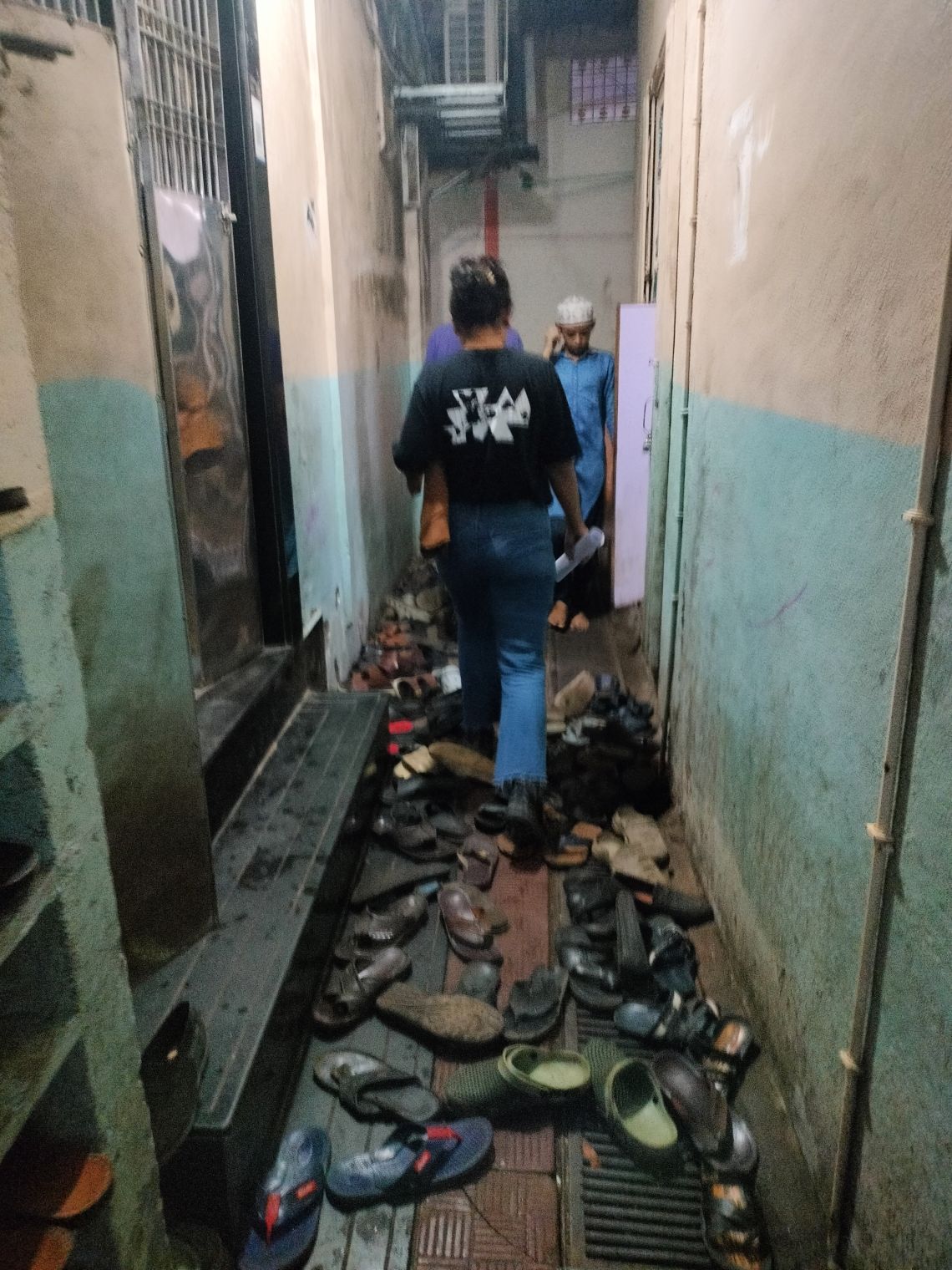
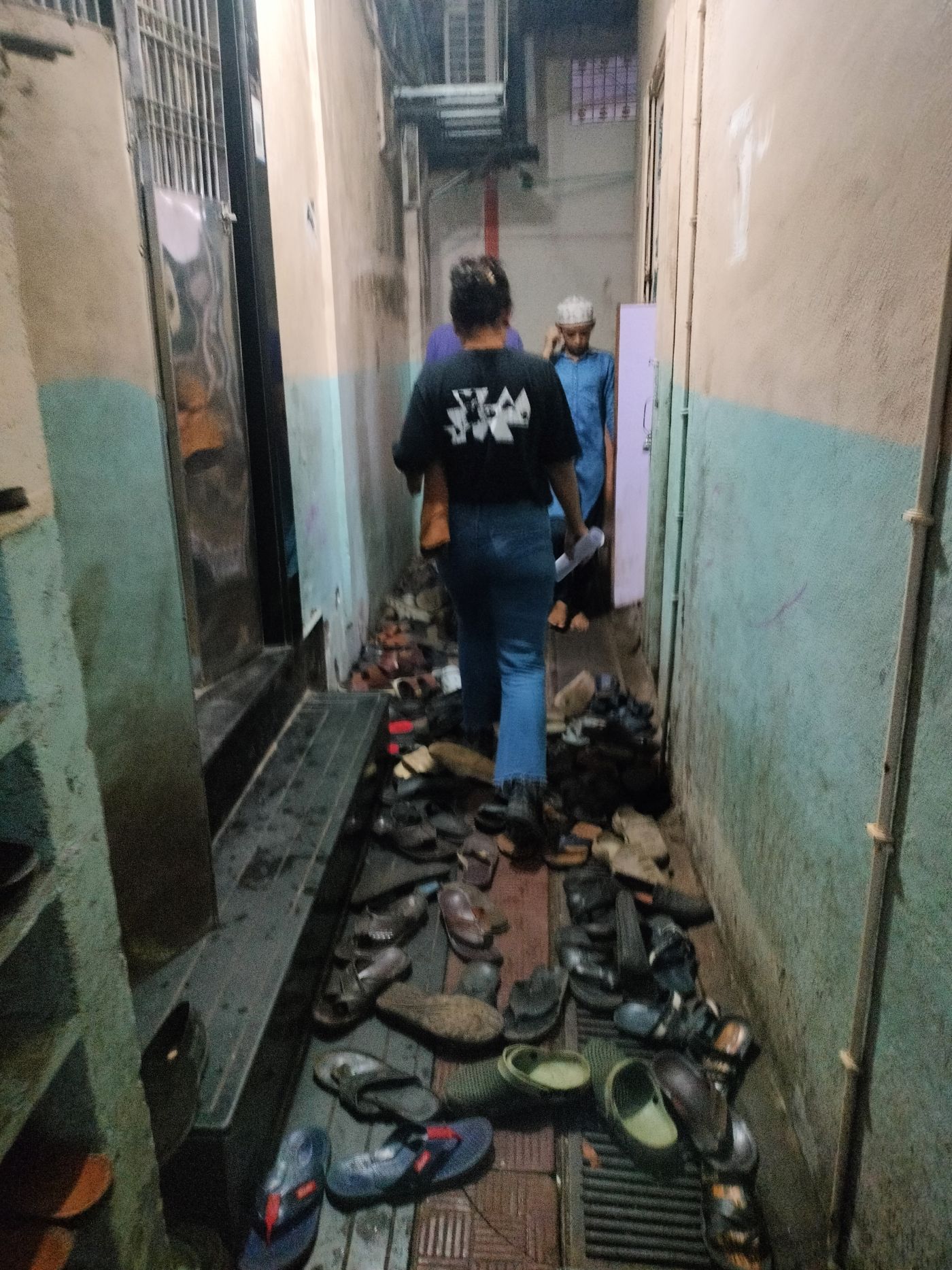
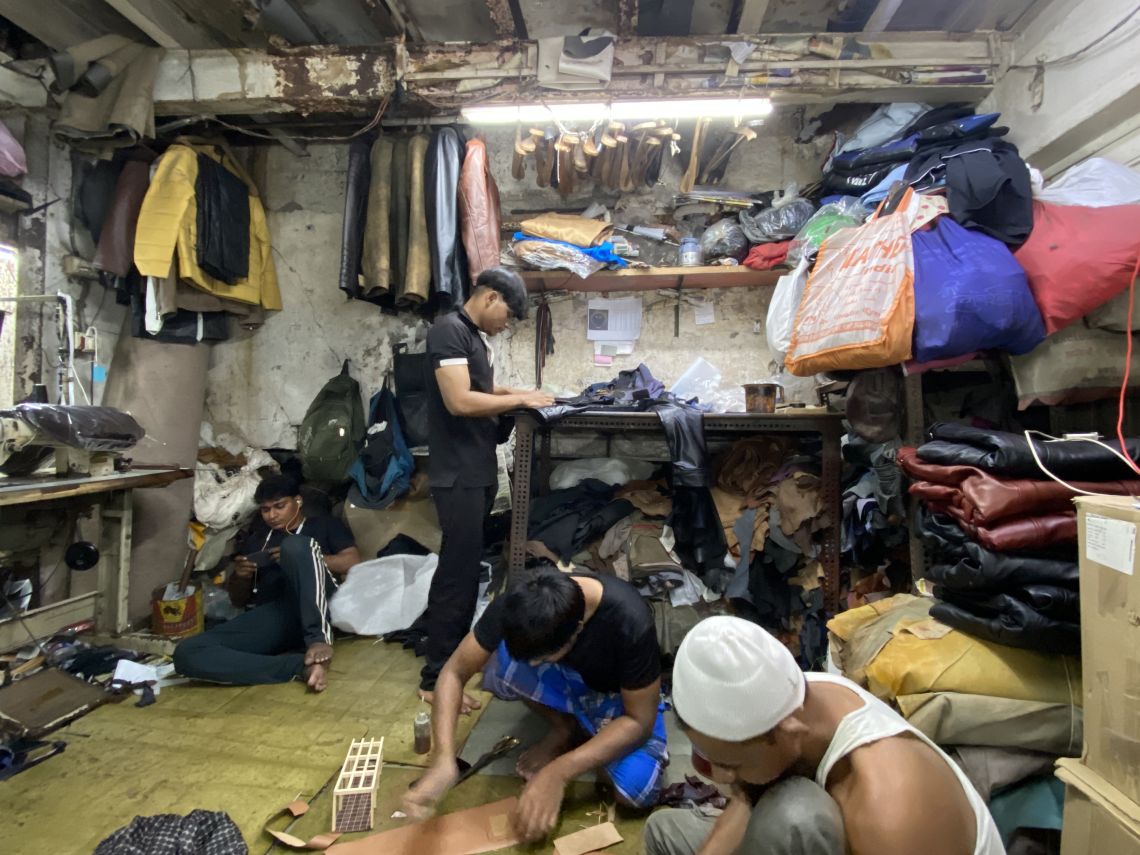
A few days of the week, Irfan becomes Masterji Irfan at the FAB Academy of Fashion. Helping fashion design students work with leather. The story of how he ended up there is a coincidental one. The design program head was wandering through Dharavi one day, and she stumbled upon his workshop and found him, just like that!
He likes it there, the respect, the structure, the quiet acknowledgement that his skill means something. He tells me there’s another Masterji who earns one lakh a month. “I look up to him and have also befriended him,” he says. Back at the workshop, Irfan is the one everyone looks up to and asks for his advice.
“Jyadatar mithi zubaan hai sabki idhar (everyone speaks nicely to each other in Dharavi)”, he says in Hindi. There are many fights, sure, but they get solved. “Sab apne gaav ke hai (Everyone here is from our village)”. Even the owner of the workshop is from Bihar. The neighbours know each other's names. In moments of crisis, the whole neighbourhood will stand together.
Every few months, Irfan goes back to his village in Seetamandi, Patna, Bihar. He’s not married yet, so he uses his time to travel. Bengal, Kashmir, wherever the train takes him. “If Irfan were married,” his friend Saddam jokes, “he’d be travelling with his wife, not with us!”
He talks about real leather with reverence. He refuses to work with artificial leather materials. “Rexine is fake, it is made fast and also dies fast. Real leather lives longer and takes relatively more time to make. It ages well, too. Sometimes, what we make today becomes someone’s heirloom.”
“Rexine is fake, it is made fast and also dies fast. Real leather lives longer and takes relatively more time to make. It ages well, too. Sometimes, what we make today becomes someone’s heirloom.”
Once, the tanneries used to be here in Dharavi itself, he tells me. Now the hides come from Chennai, but the rhythm continues. In a world sprinting towards convenience, Irfan and his colleagues persistently and efficiently add value to the craft of making by hand, a gentle reminder that the best things sometimes take a little more time!
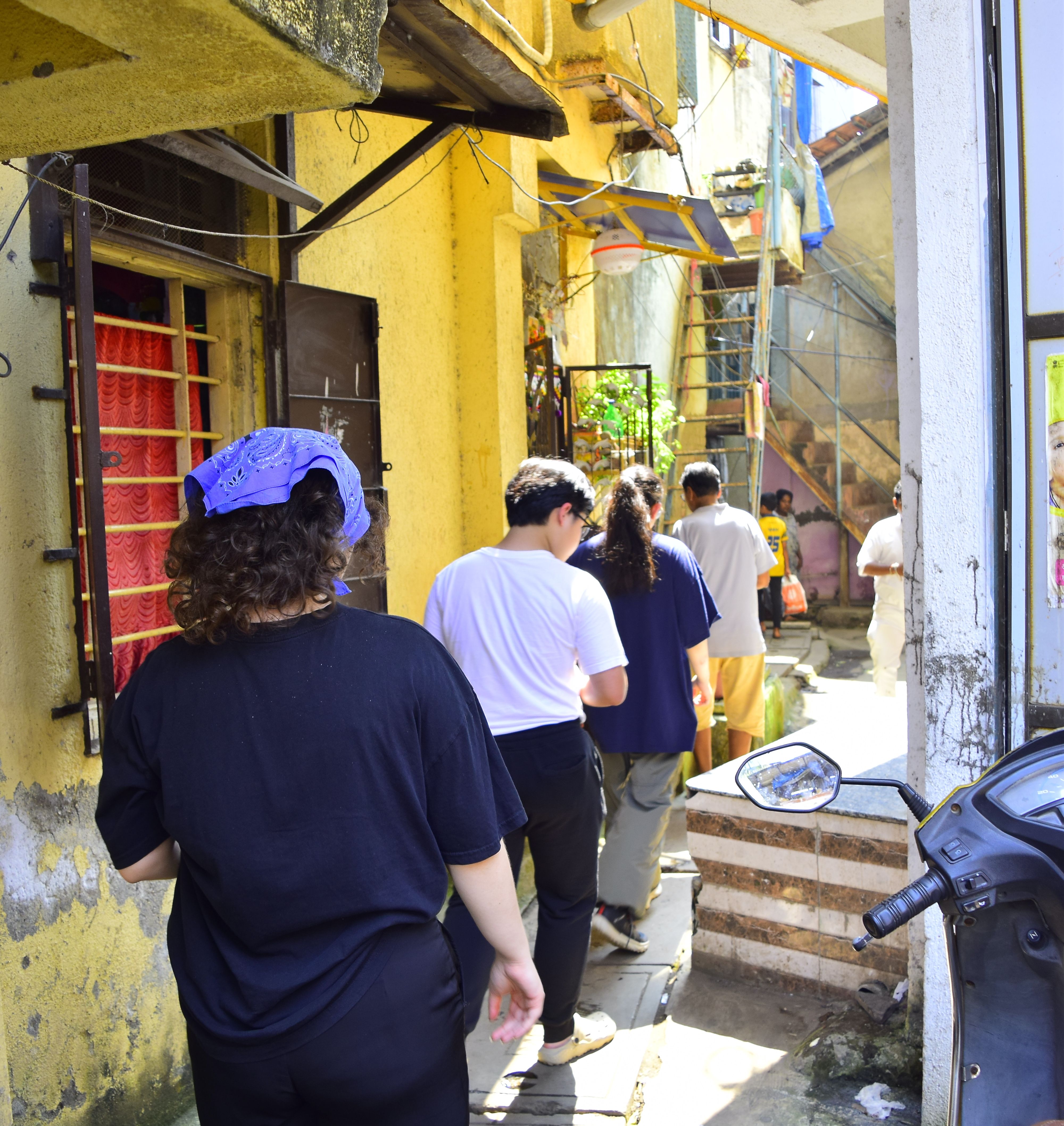
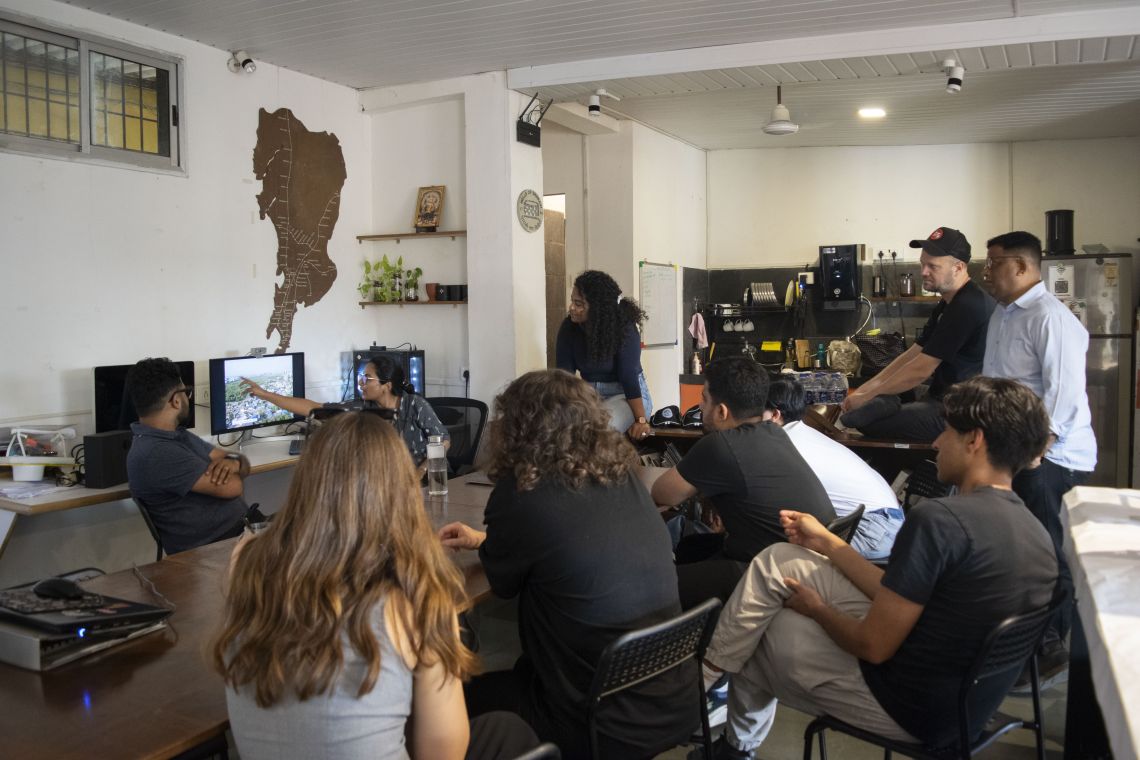
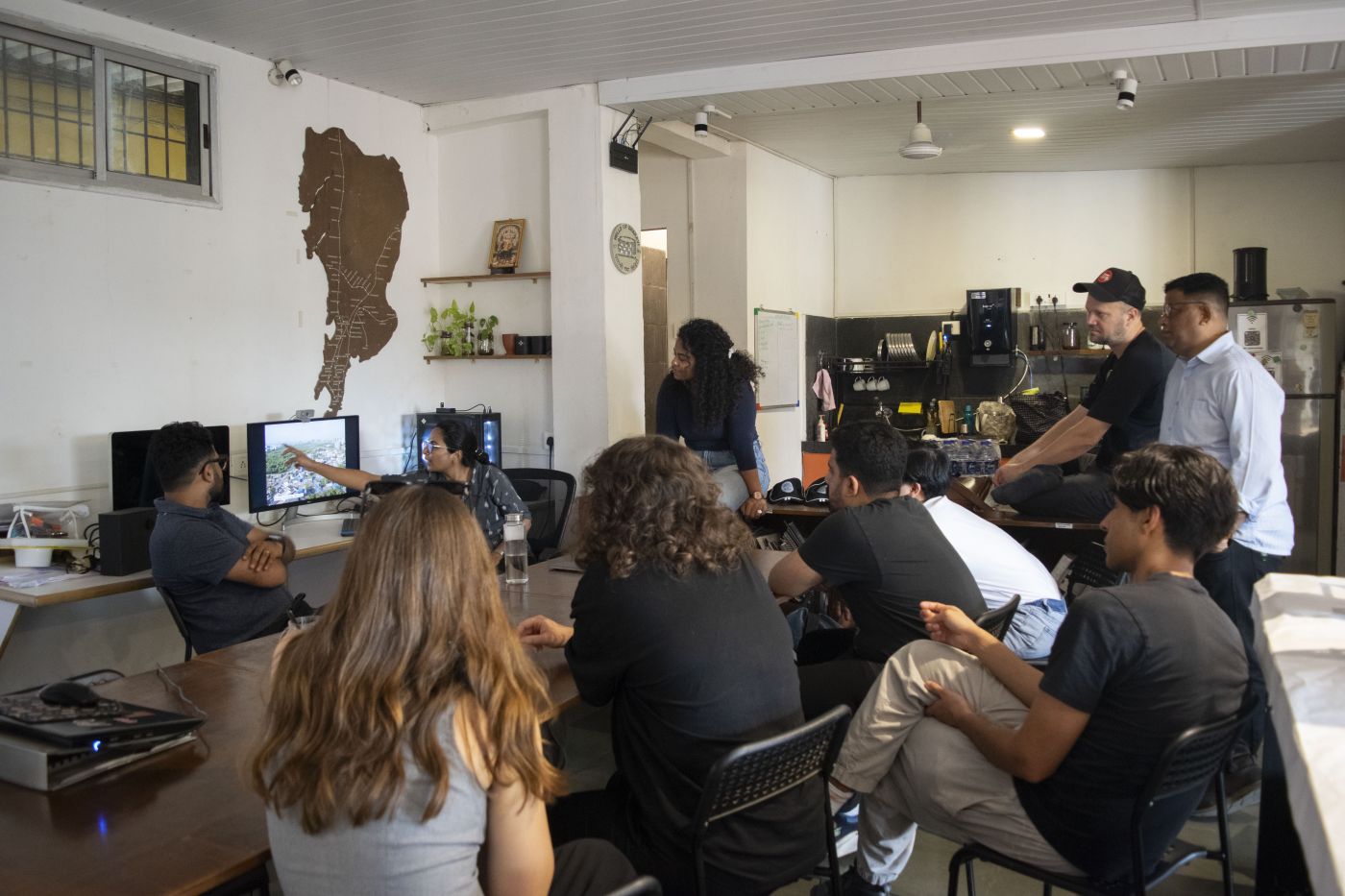
The Handstorm workshop in Dharavi, with the Engineers for Social Impact from NYU, Abu Dhabi took place for the second time this year in October, 2025. We walked through the lanes of Dharavi Koliwada, observing Water in the diverse and unexpected paths that it took to and from people’s homes. Students diligently followed the water, listening carefully to the stories it had to tell.


The Handstorm workshop in Dharavi, with the Engineers for Social Impact from NYU, Abu Dhabi took place for the second time this year in October, 2025. The soon-to-be engineers embarked on a week-long journey to understand the way water flows through Dharavi Koliwada.
The urban indigenous fishing village of Dharavi has a complex relationship with water, which takes on different meanings ranging from the spiritual, the providential and the domestic. While the Kolis worship the waters around them and possess a deep ecological understanding of the estuarine landscape, their current struggle is to deal with the waters that circulate to and from their homes in an intertwined network of pipes and drains.
"One very special way in which the dual nature of water shows is water’s ability to purify as well as to clean. Water communicates its purity by touching or waking the substance of a thing and it cleans by washing dirt from its surface" - Ivan Illich, H20 and the Waters of Forgetfulness
Illich asks us to make the distinction between water that is used to purify and water that is used to clean and goes on to explore the symbolic functions of the ability of water to clean “what sticks to people, to their clothes or their streets.”
We conducted a practical exploration of these very waters. Students diligently followed the water, listening carefully to the stories it had to tell.
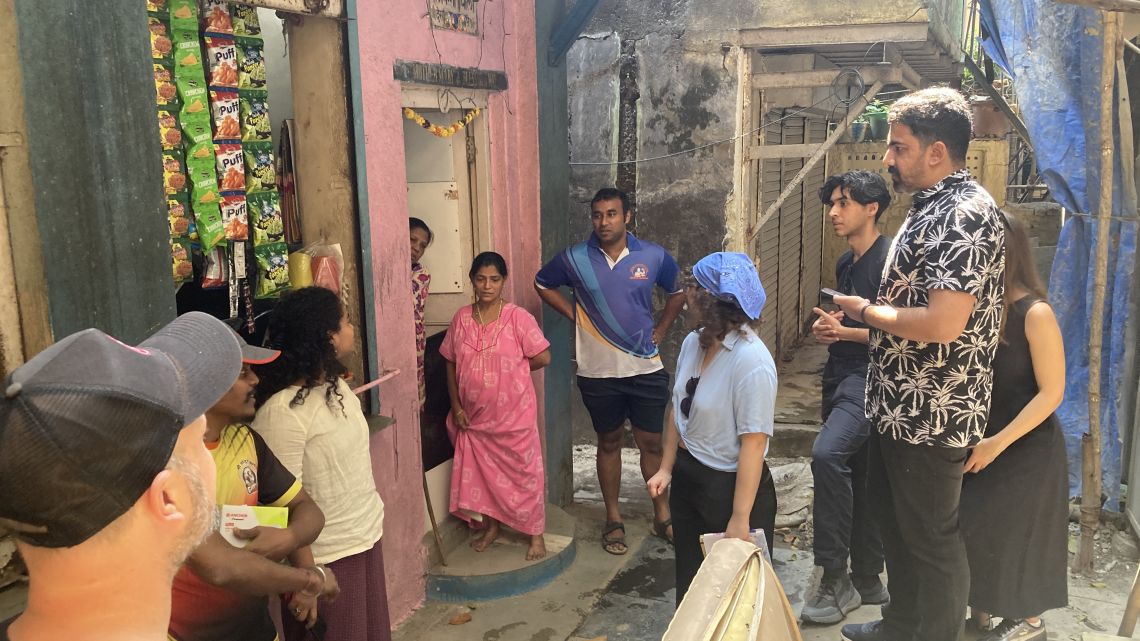
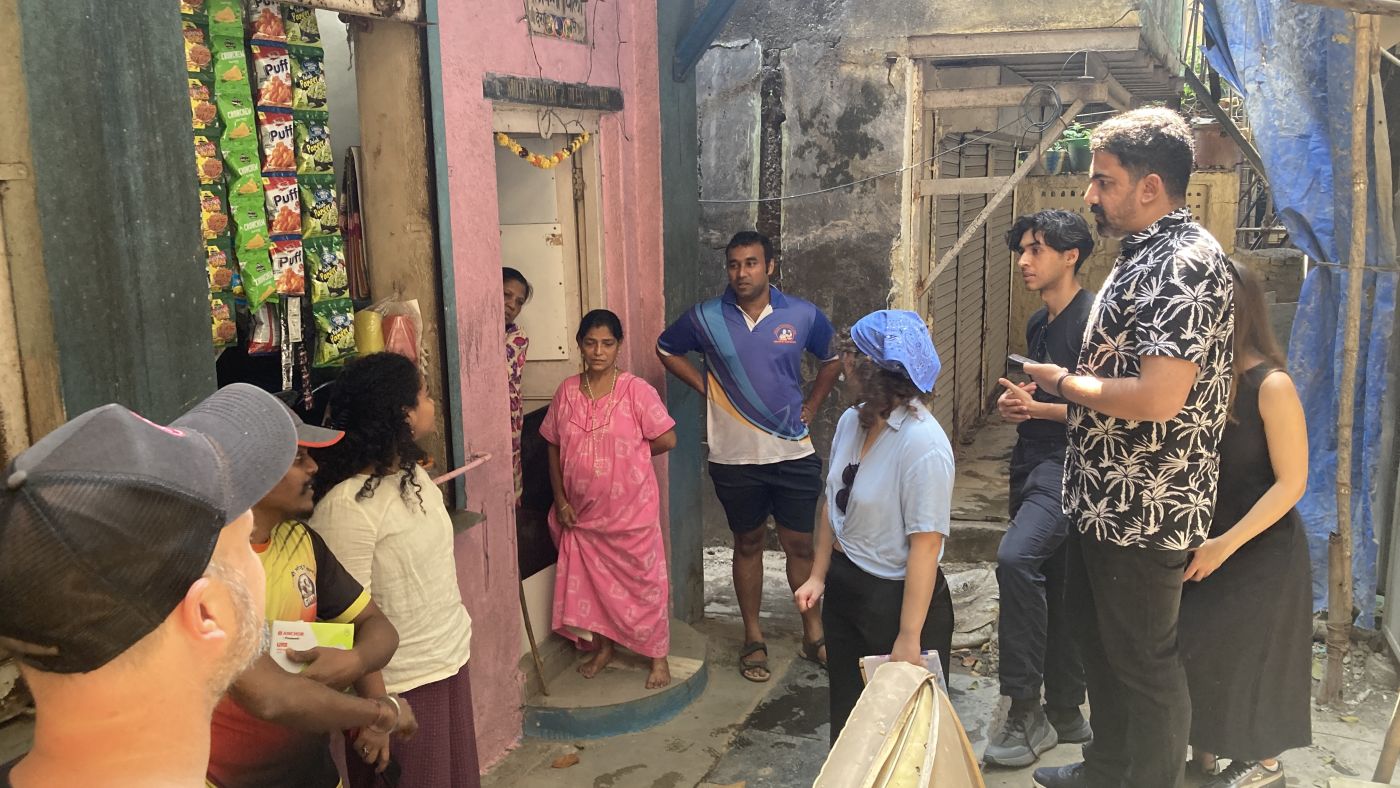
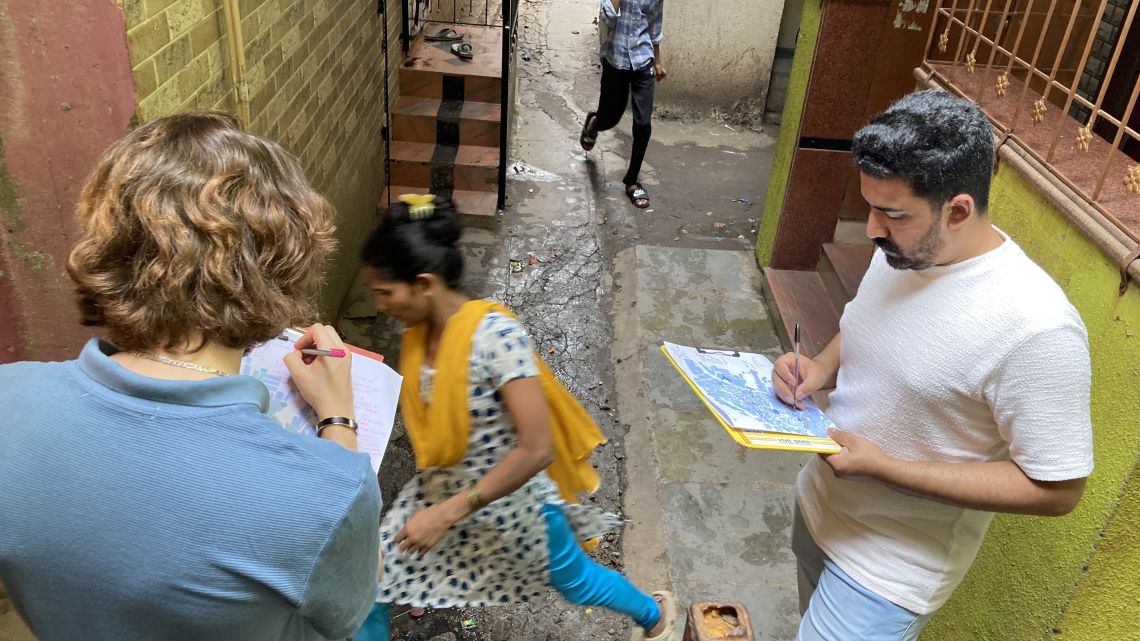
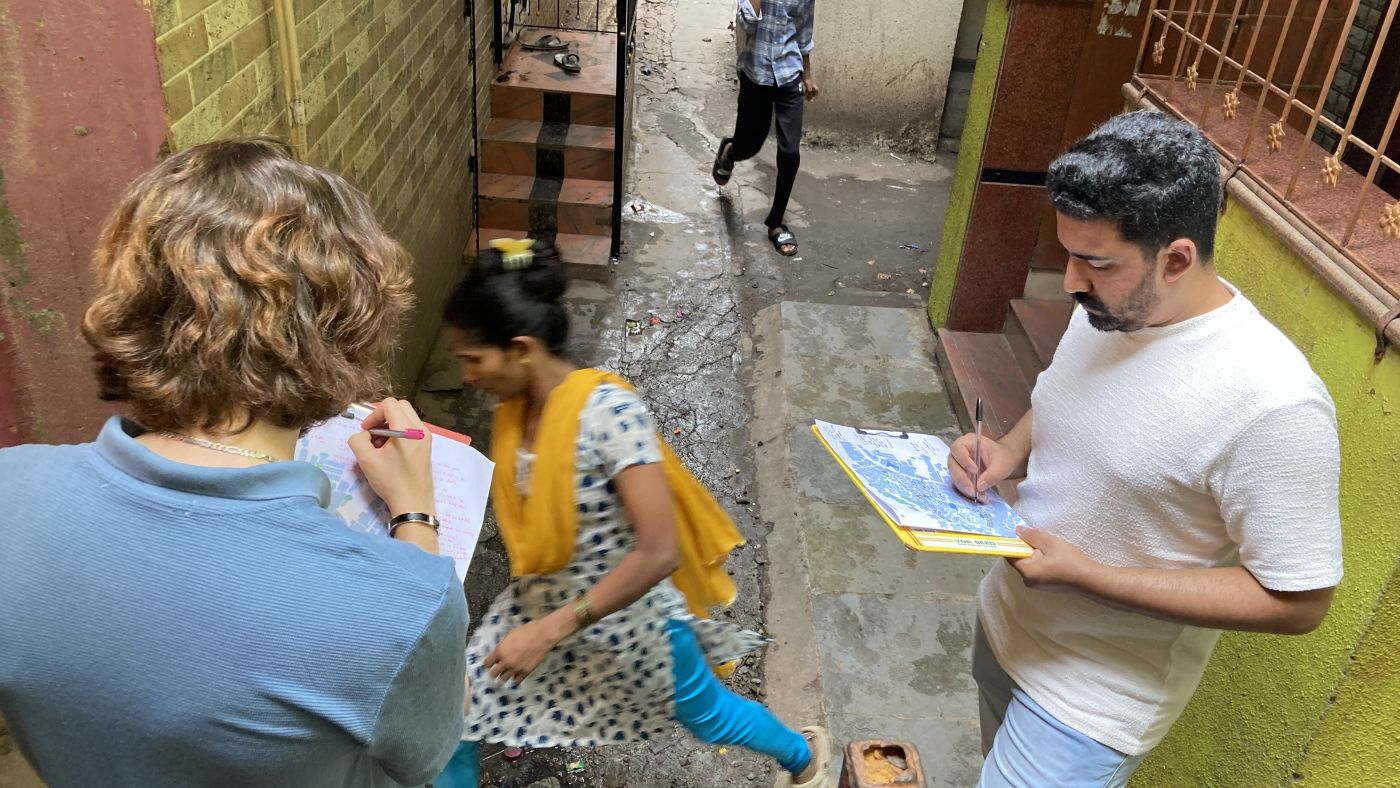
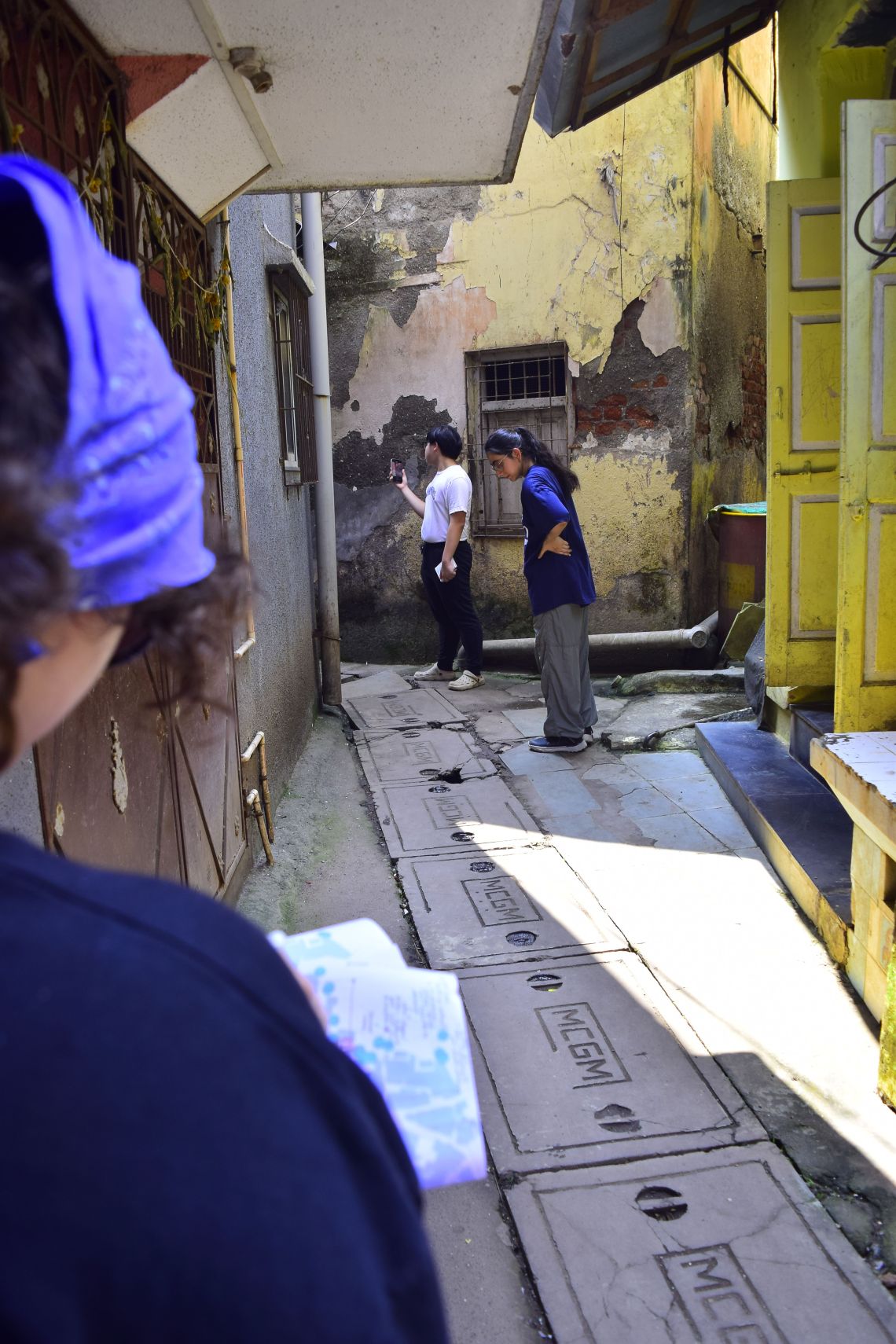
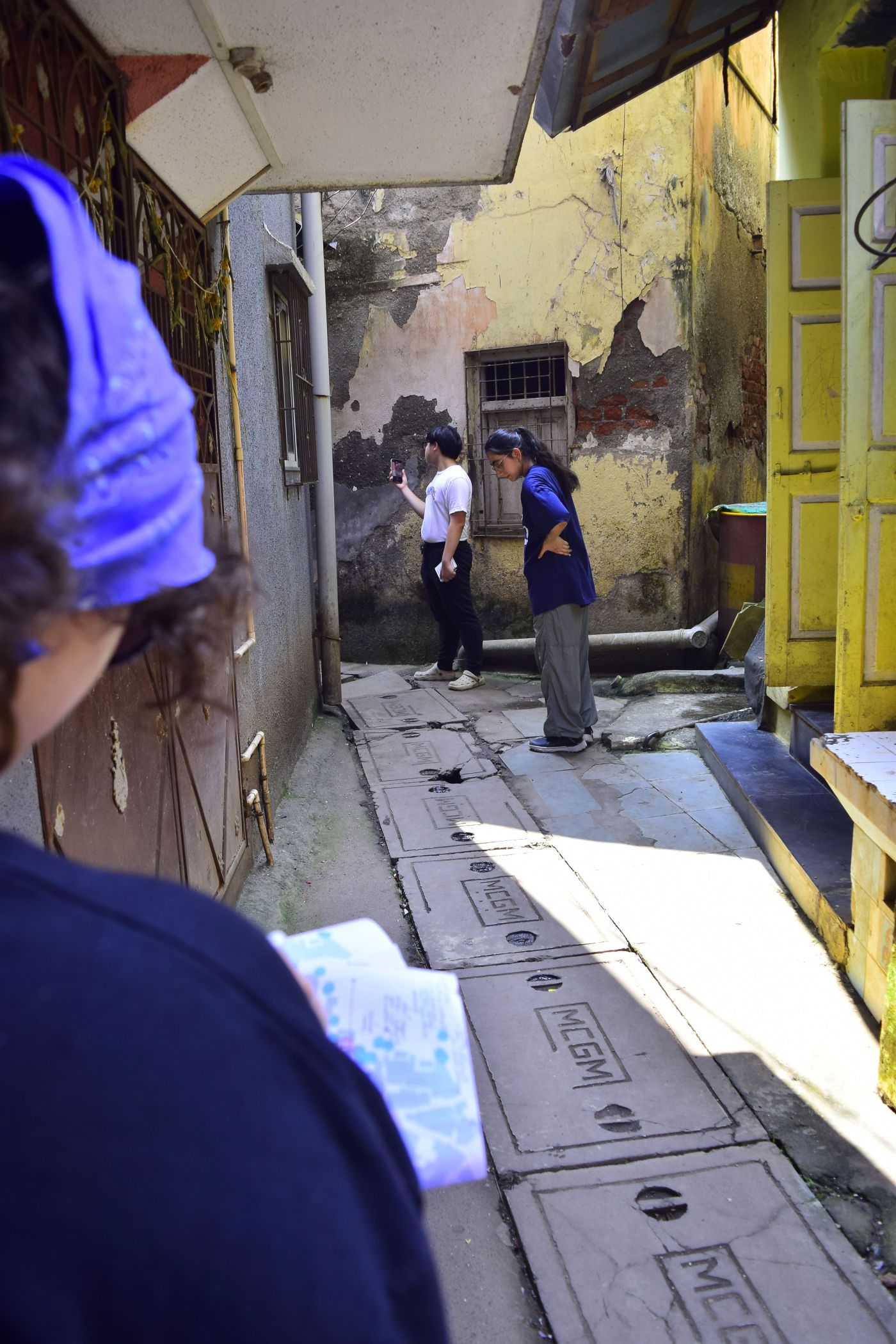
Over a week, we walked through the lanes of Dharavi Koliwada, observing Water in the diverse and unexpected paths that it took to and from people’s homes. From dripping taps, condensation from AC units, detergent-laden water used to wash clothes and vessels on the street, water burdened with sewage and other plastic waste, mysterious sources of water that trickled out of buildings and water that seeped out of the reclaimed marshy ground beneath our feet.
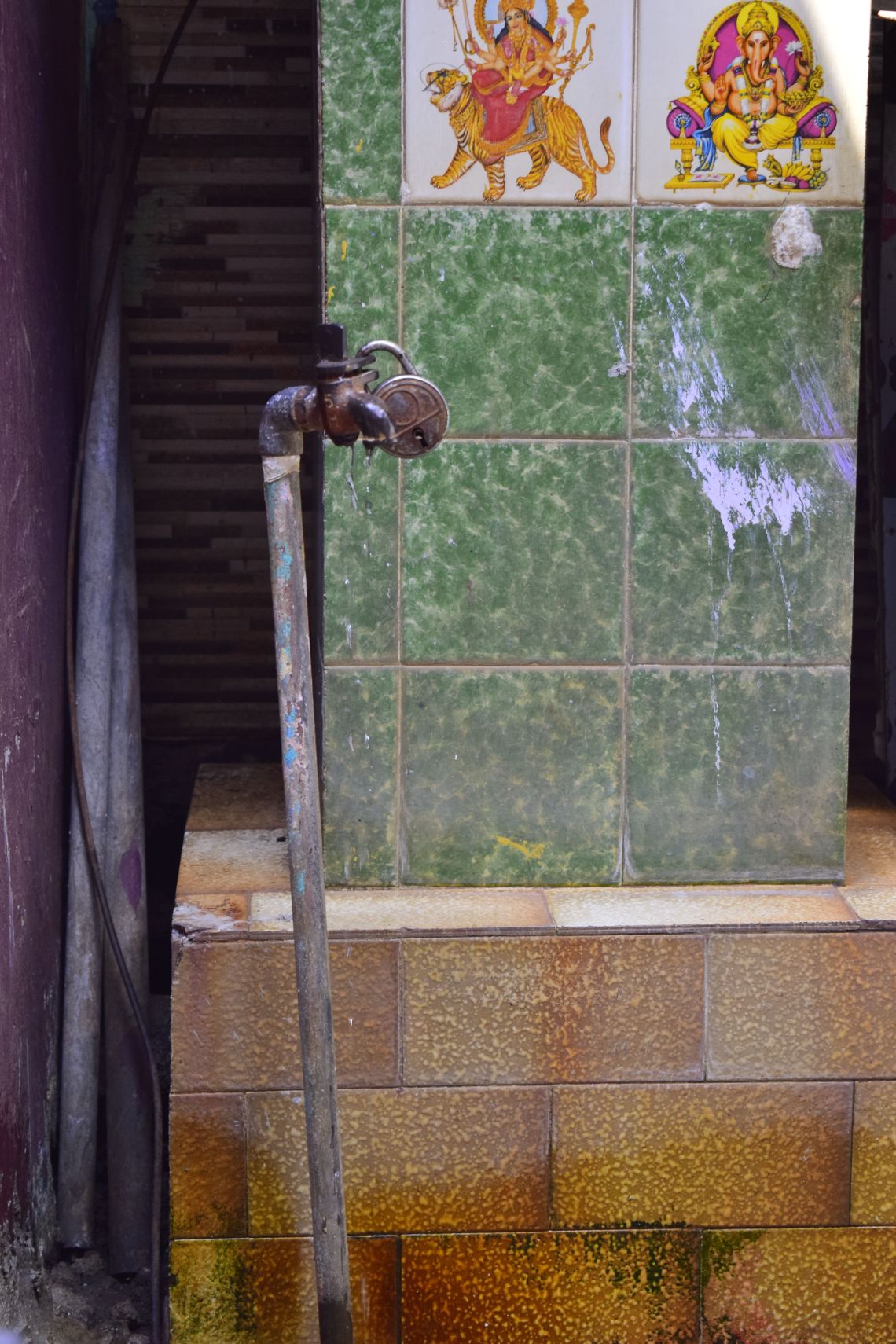
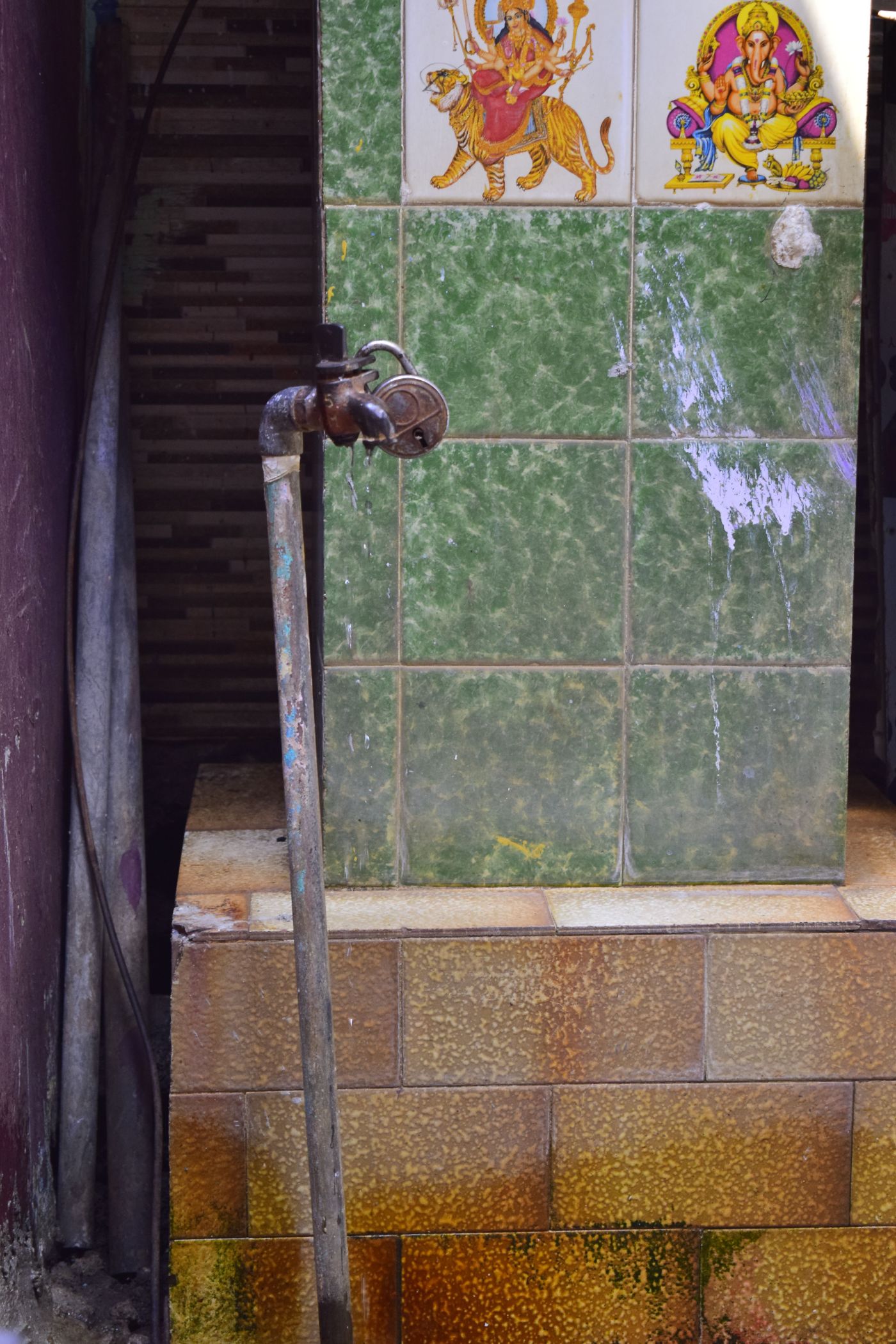
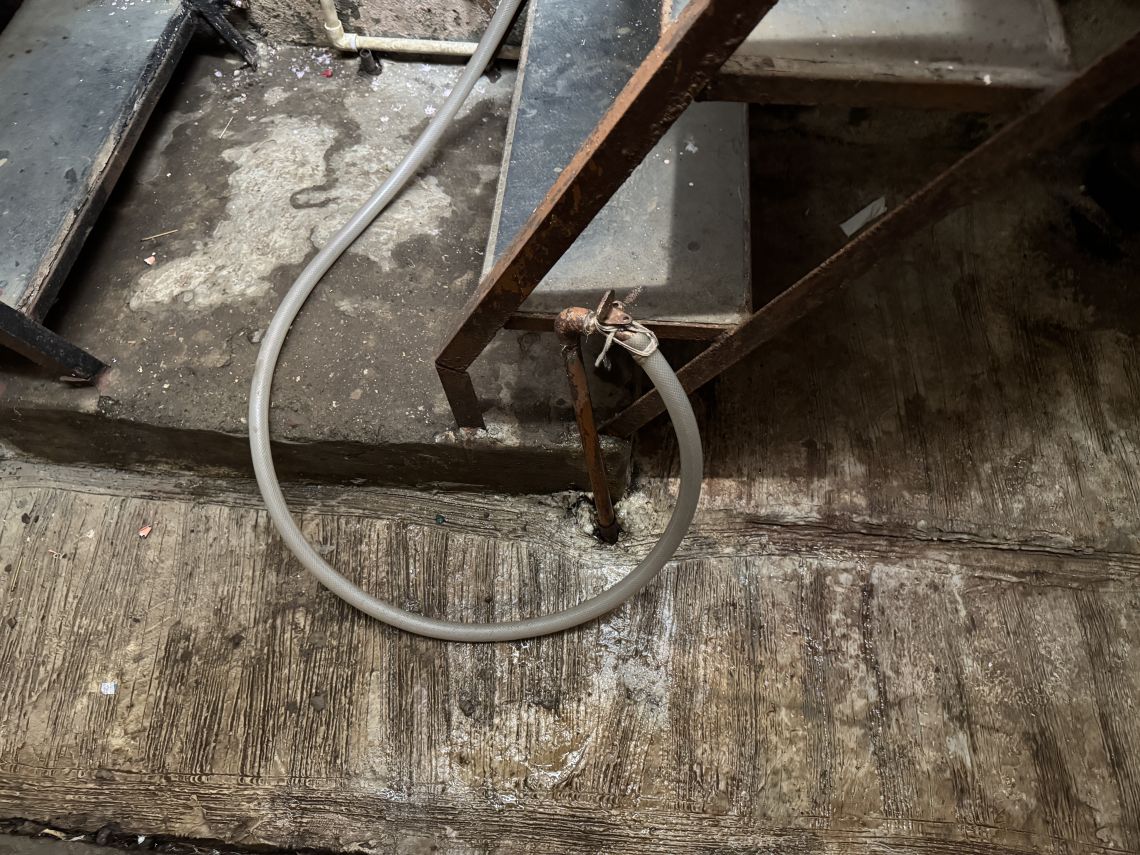
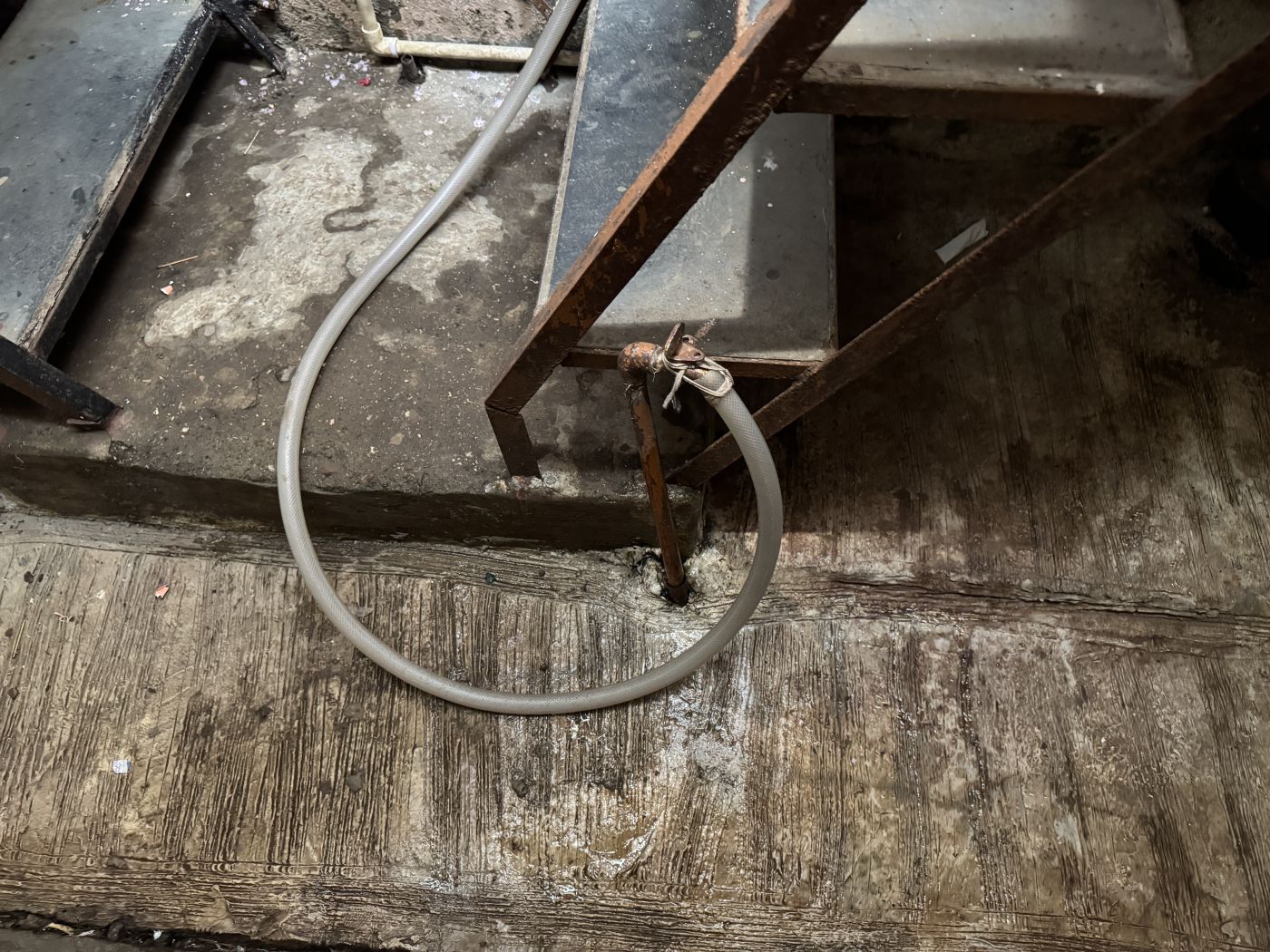
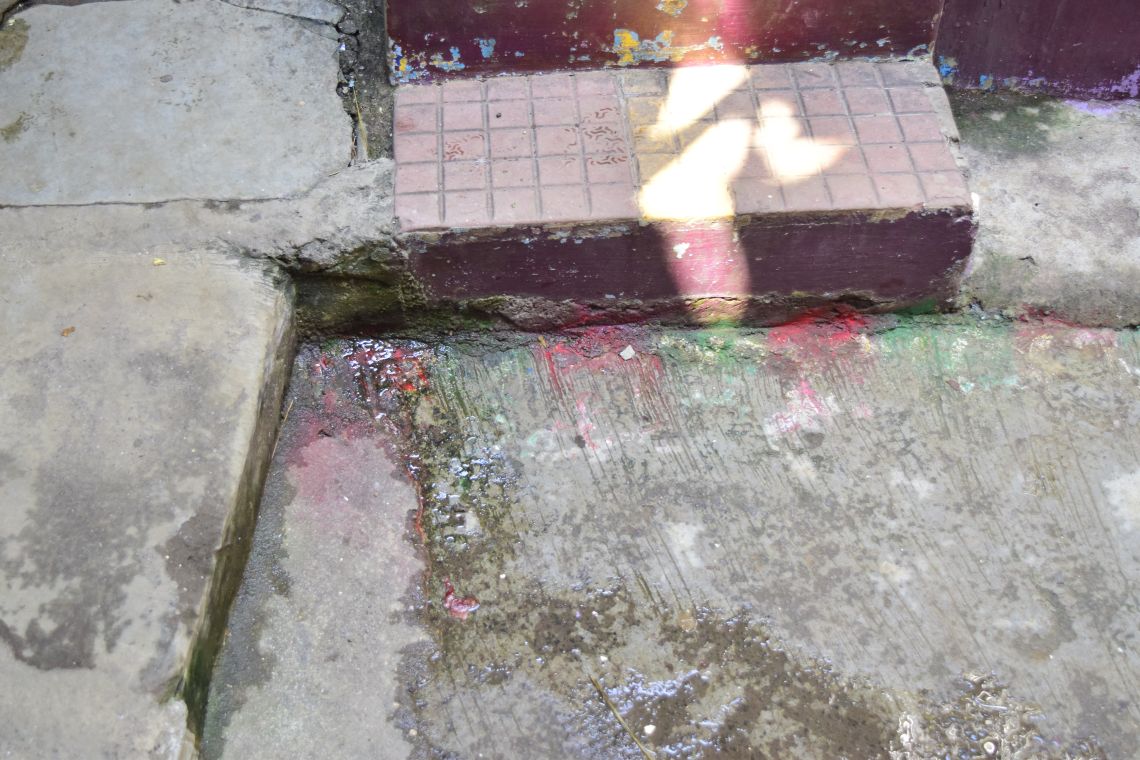
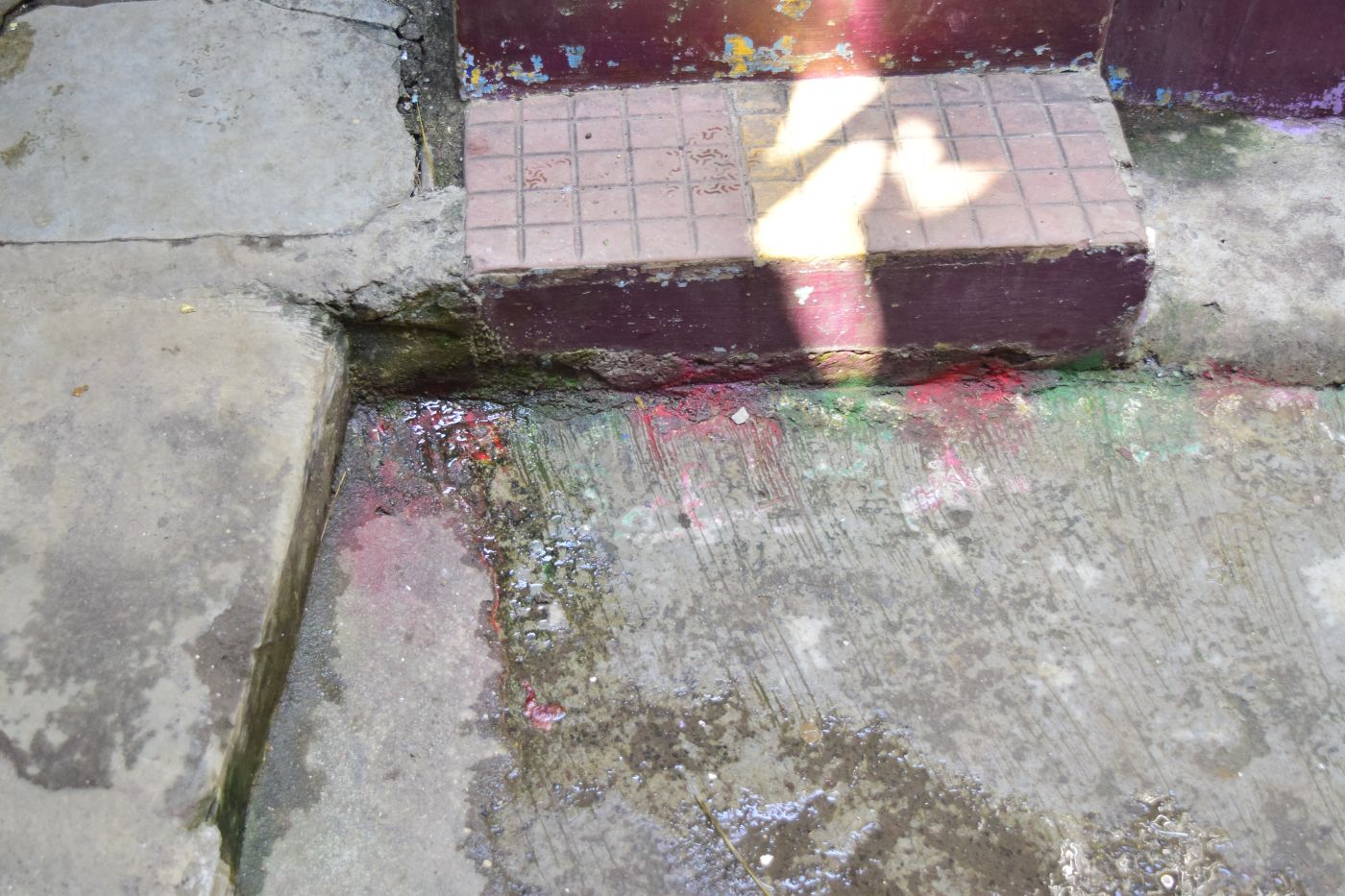
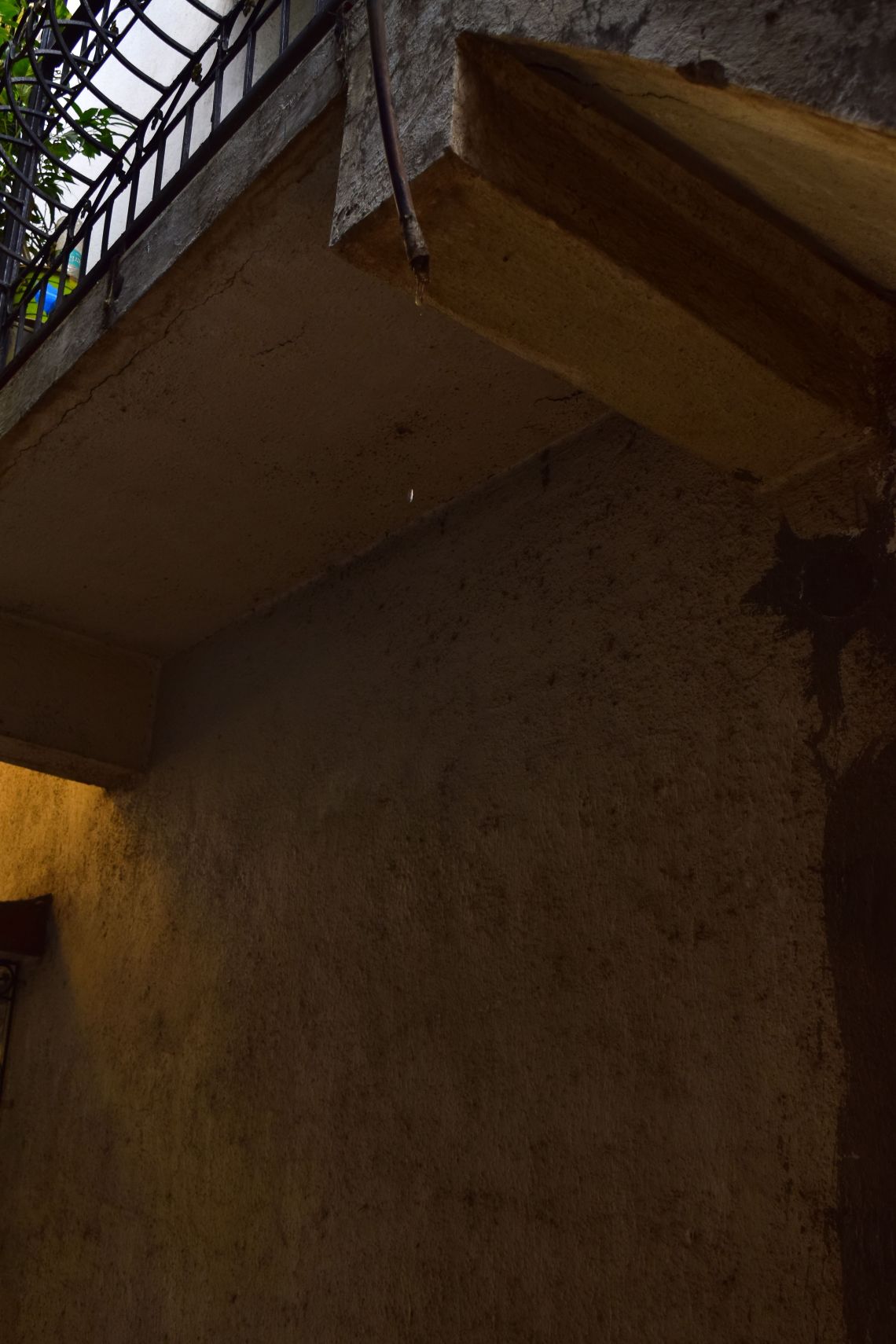
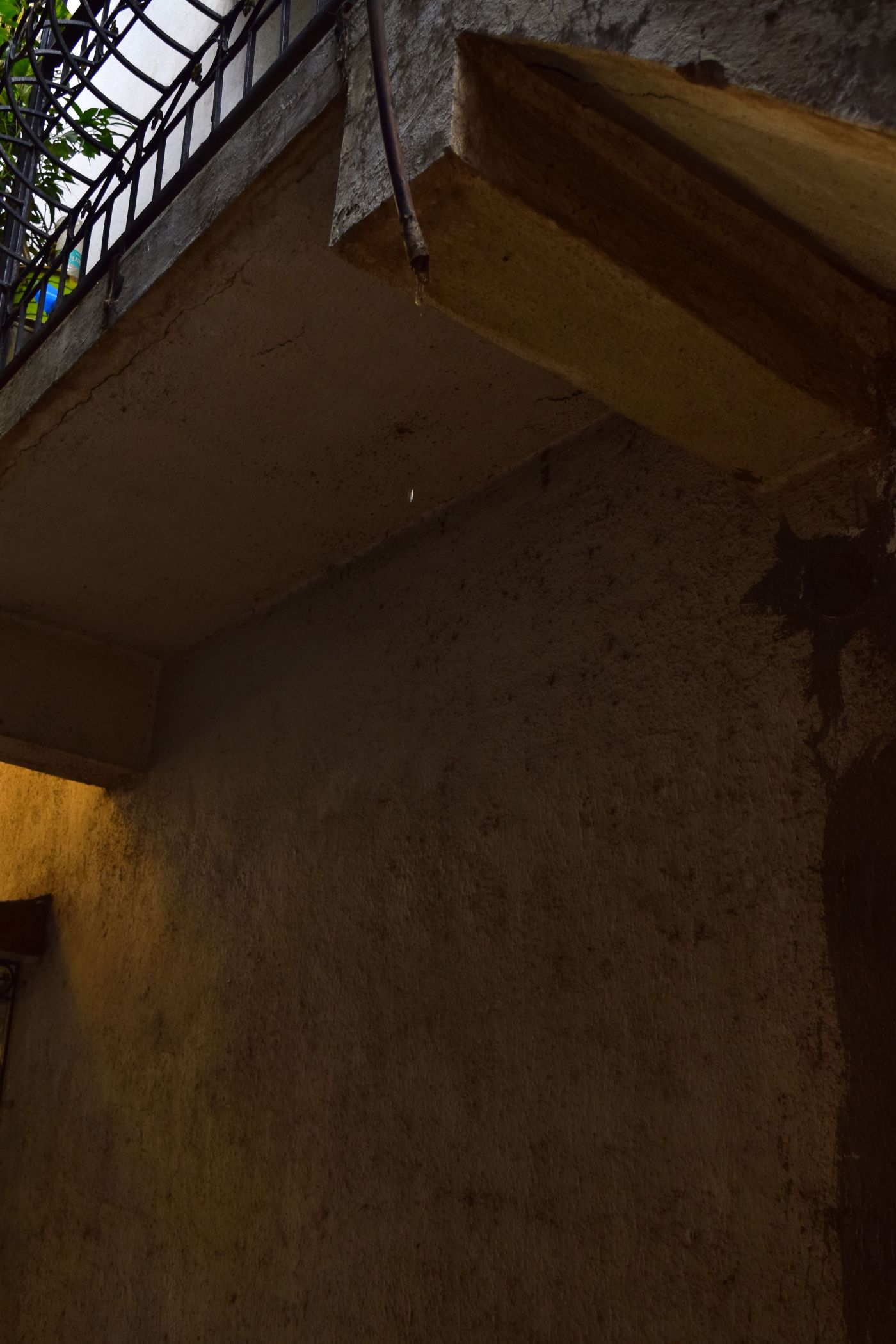
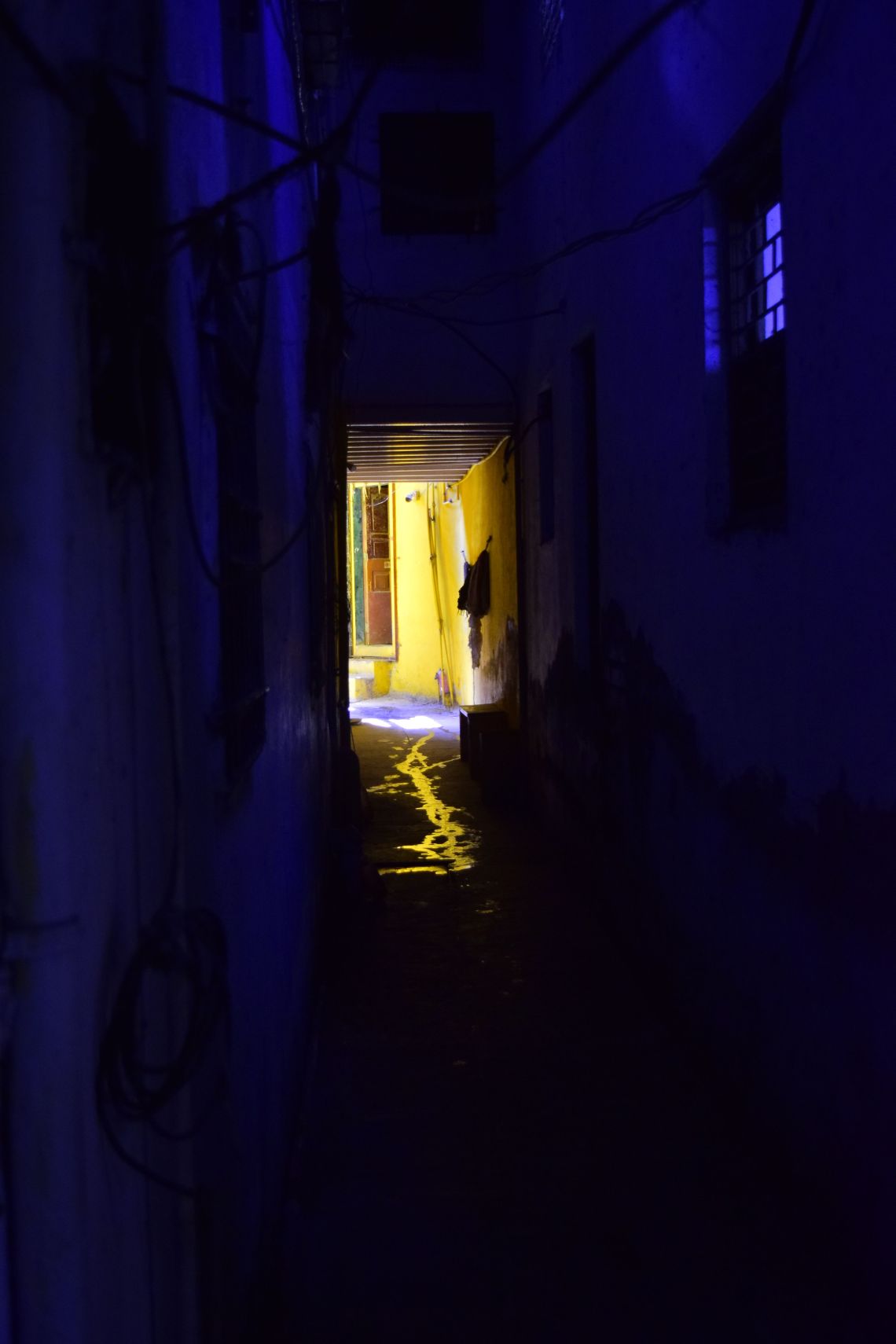
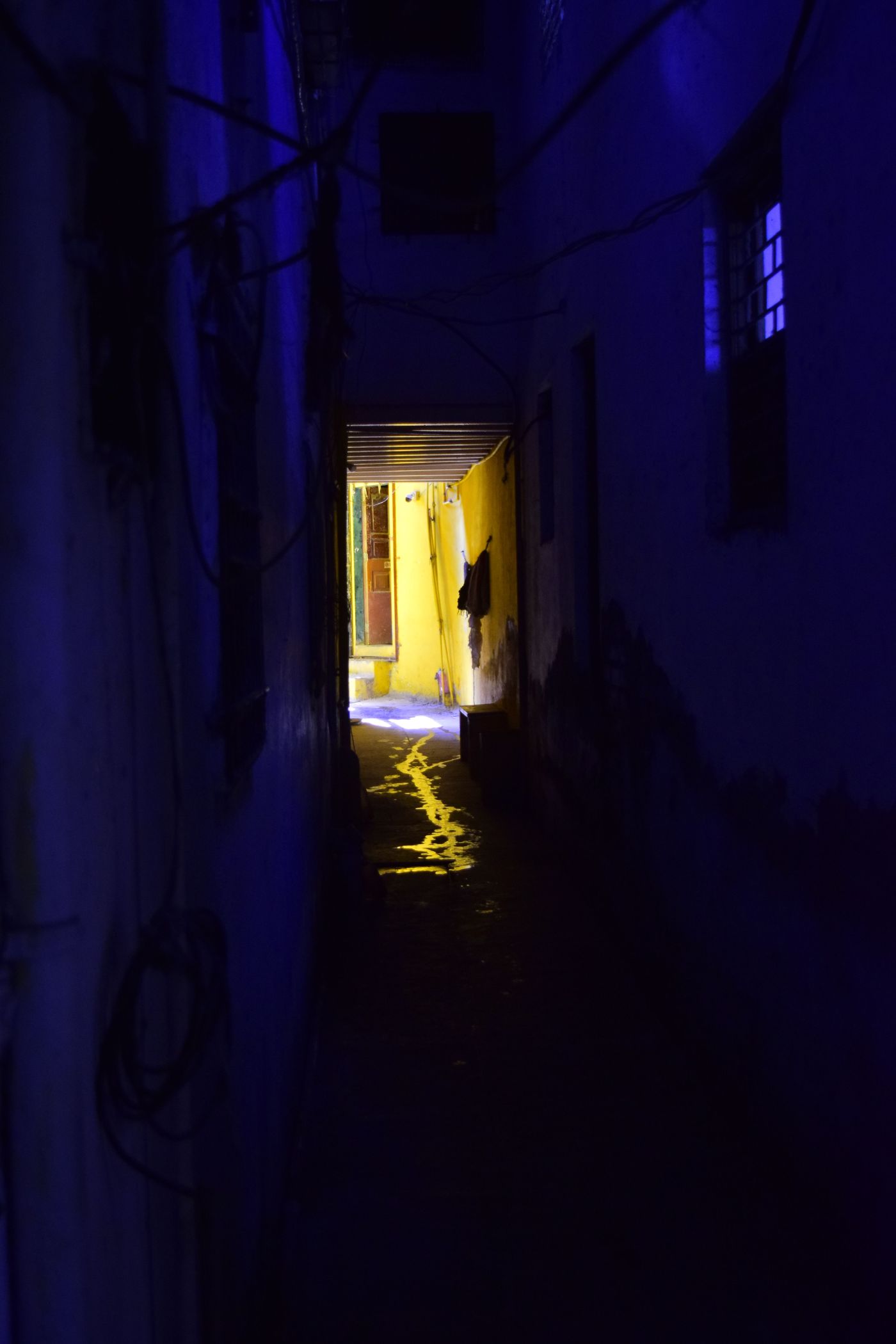
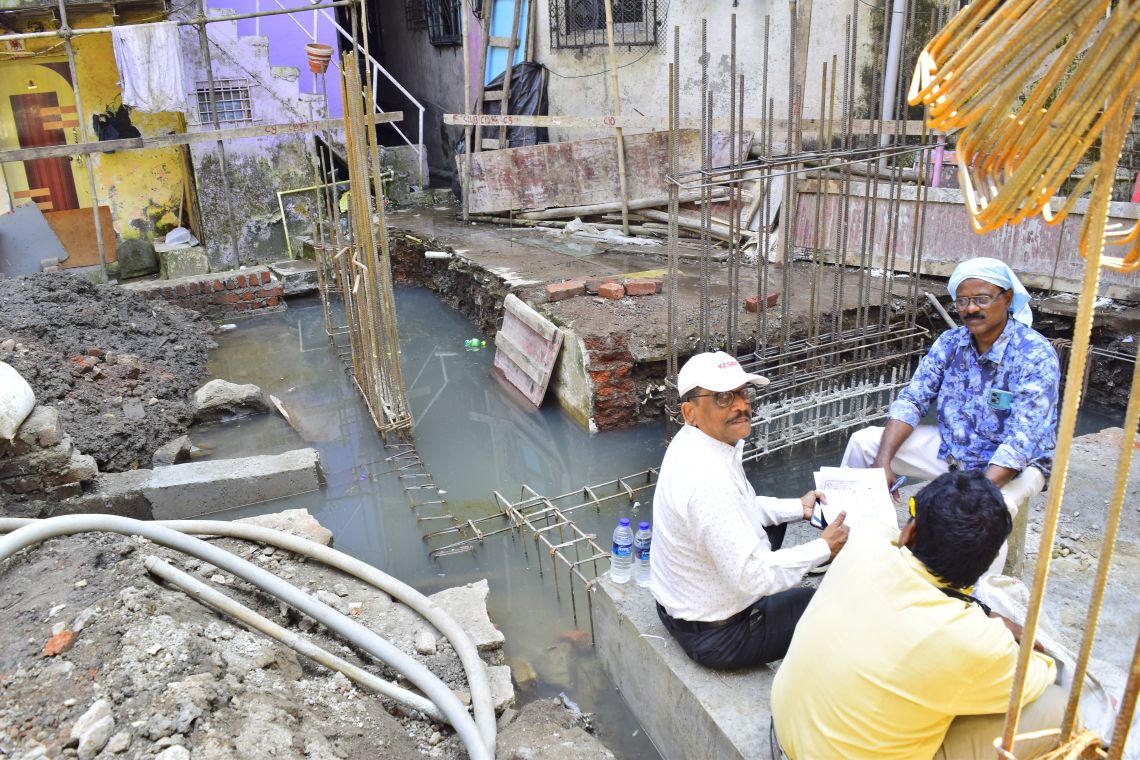
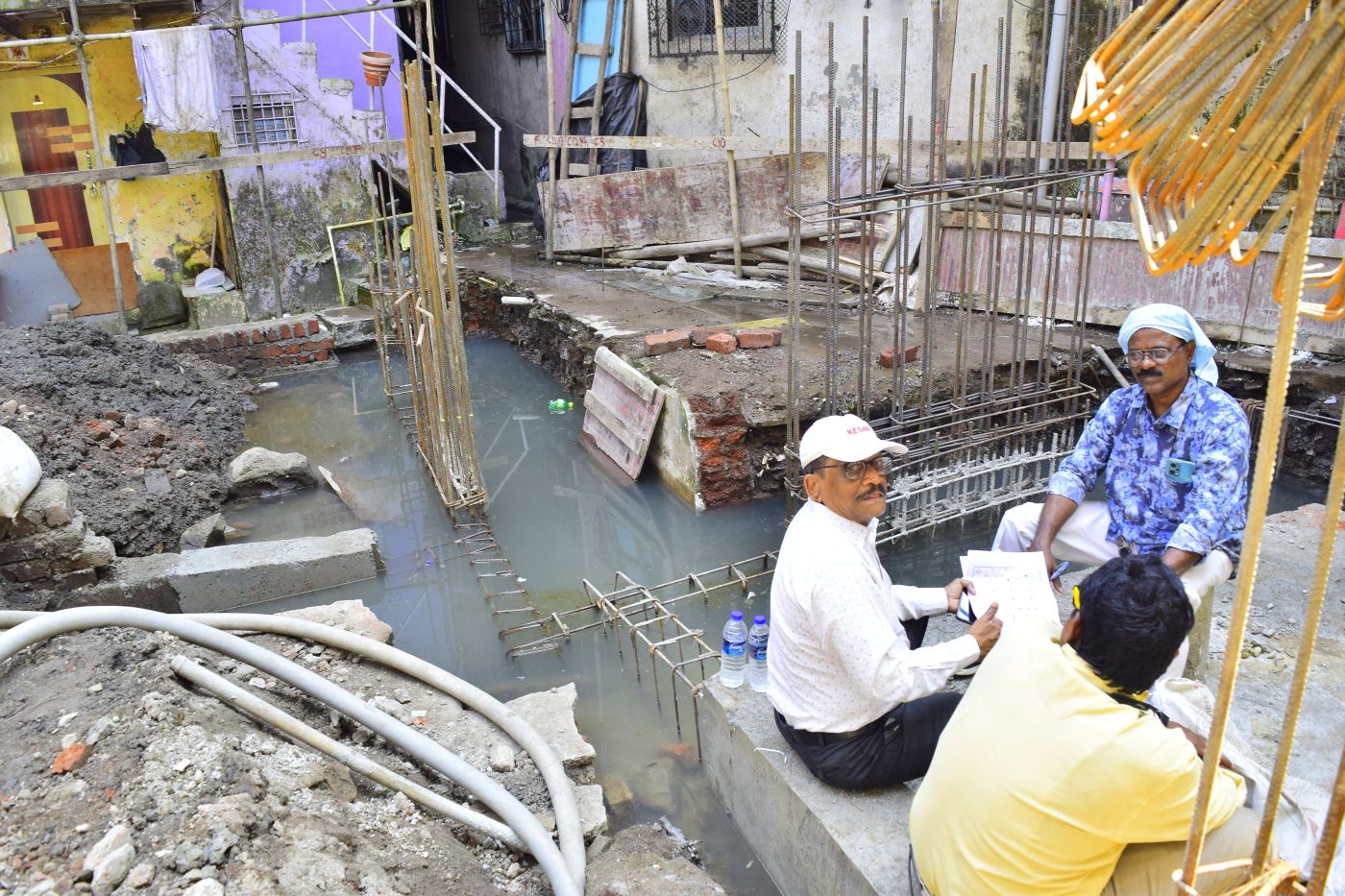
They say all living things are 70% water. This couldn’t be truer for Dharavi Koliwada. The indigenous fishing village that was once embedded in a watery landscape is now straitjacketed in a network of pipes and drains, with no room to manoeuvre without rupture. We have been working on the ABCD of Koliwada, a project that includes the development of an alternative water infrastructure system to replace the existing one. The alternative system that urbz is working on needs to be mindful of the fabric of Koliwada, the typology of its street network and its surface and sub-surface hydrology. Moreover, it needs to seamlessly transition from the existing infrastructure without disrupting the rhythm of daily life - to which water is central.
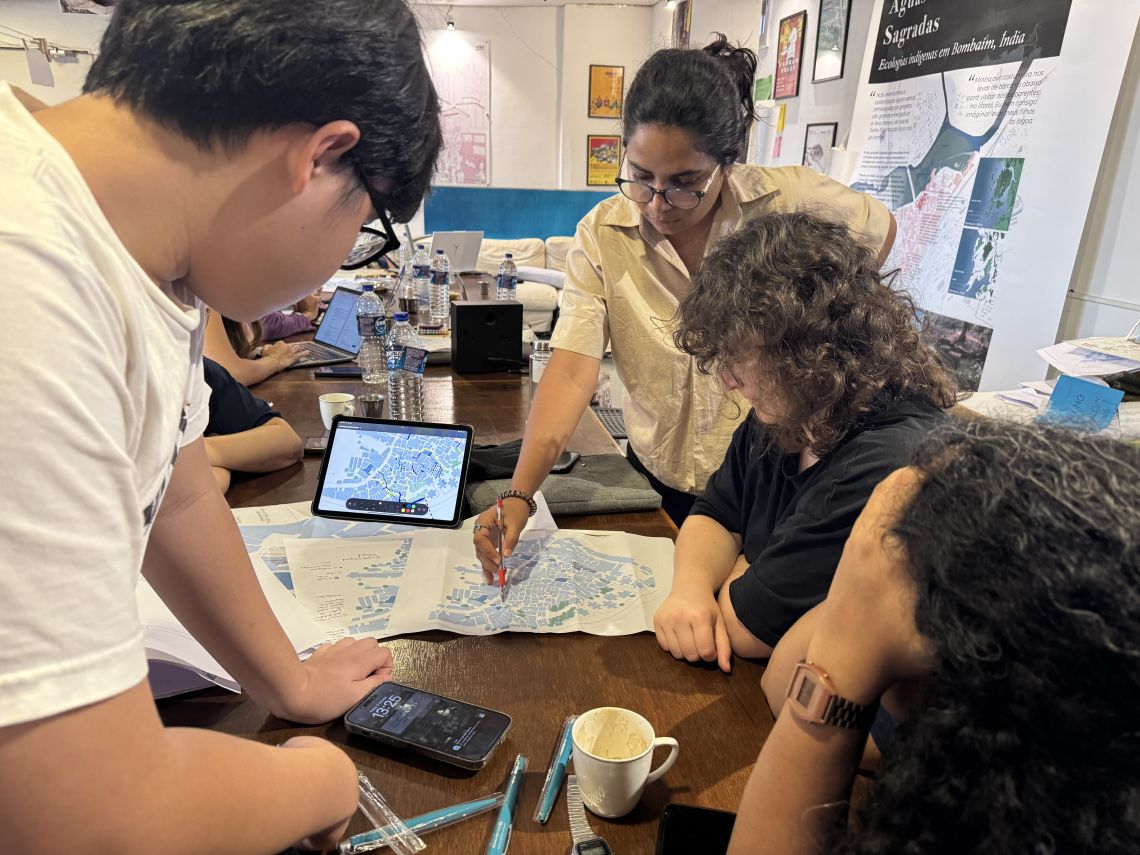
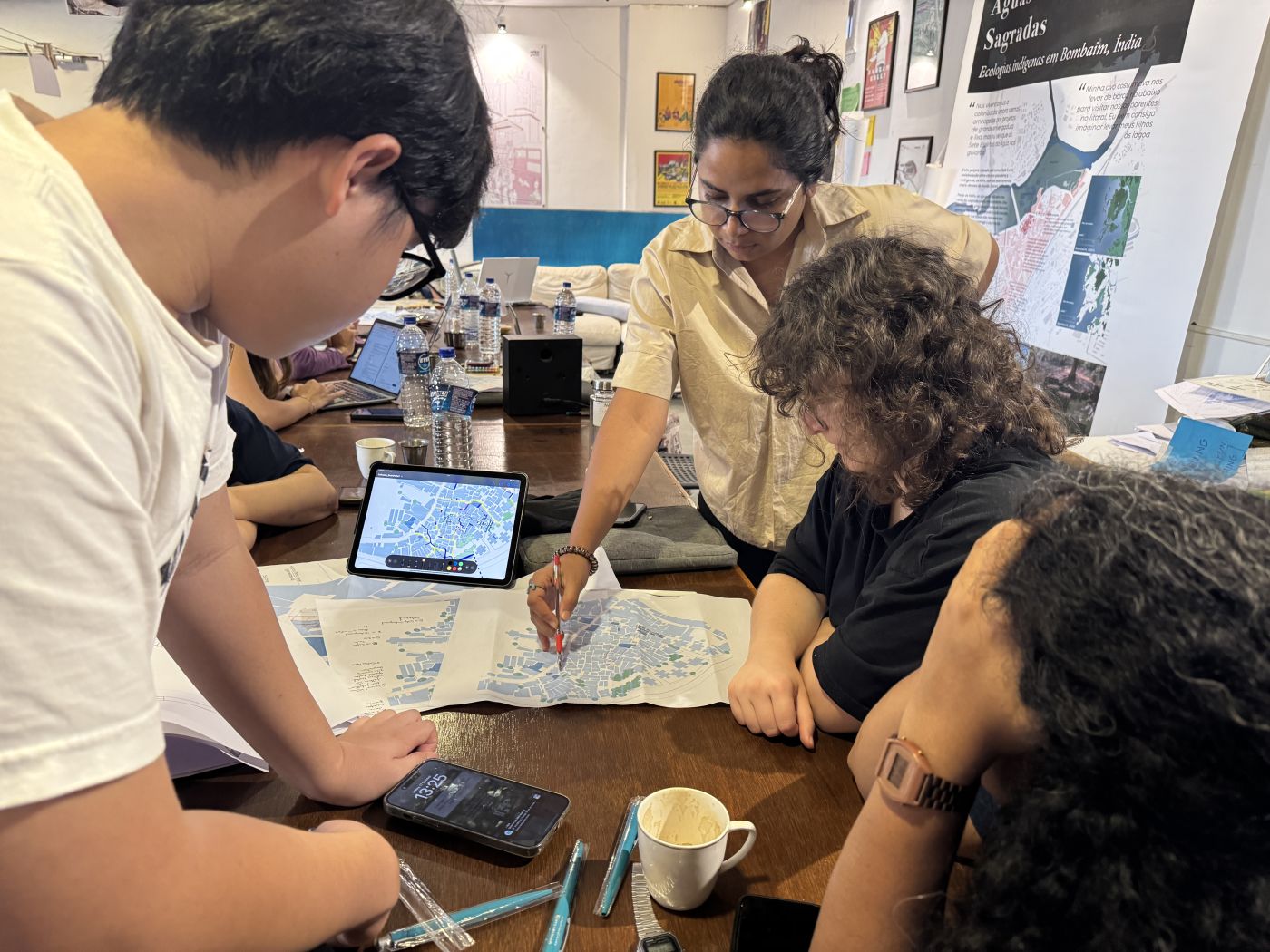
We have been documenting existing water networks, for which we rely on the resident Koli population to help us understand and unravel. During our walks with the students, we met friends from Koliwada who enlightened us on the water infrastructure flowing beside or under us, sharing anecdotes from the past and concerns about the present. This community participation helped build a picture of the ad hoc infrastructure that quenched and cleaned Koliwada.
To convey a broader urban narrative to the students, we needed to position this evolving picture within the landscape of the Mithi River system that neighbours Dharavi Koliwada. The Mithi River is a product of a manufactured urban landscape and has been gradually transformed into a giant sewer that transports soiled waters into the Sea. We took students into the Mithi to see the man-made fishing ponds of the Kolis. Protected by mangroves and manual labour, the ponds help to maintain their link to traditional livelihood and identity. Here, the students got to witness another relationship with Water, one more primal and unmediated by civic infrastructures, but shaped by collective effort, traditions and ritual.
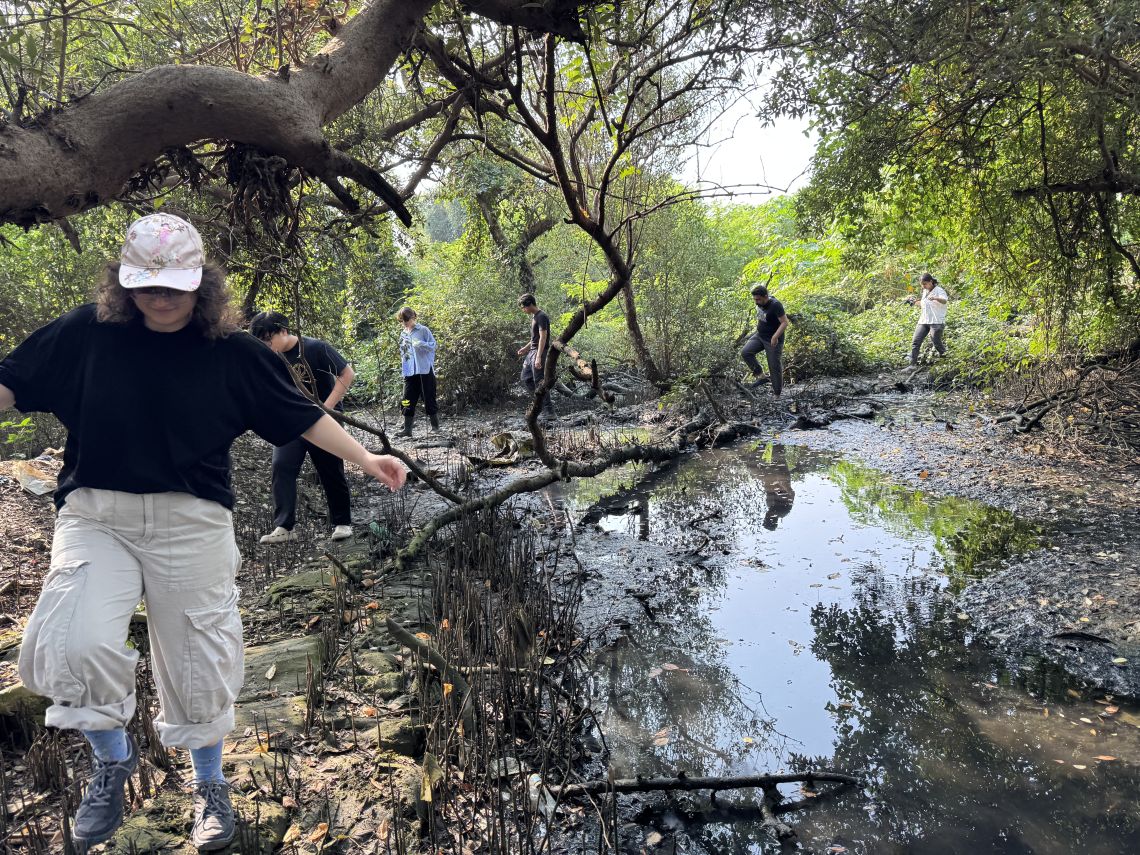
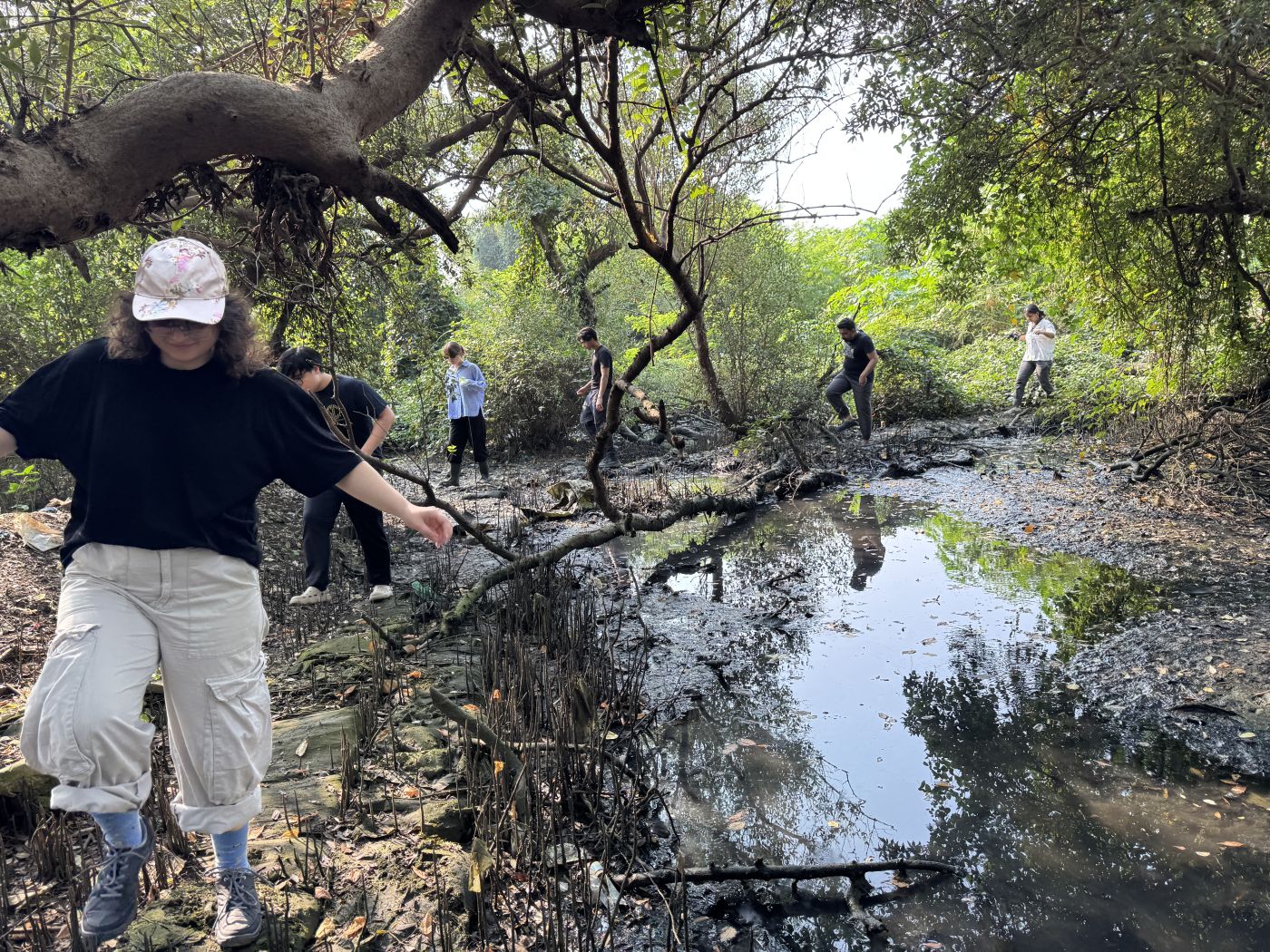
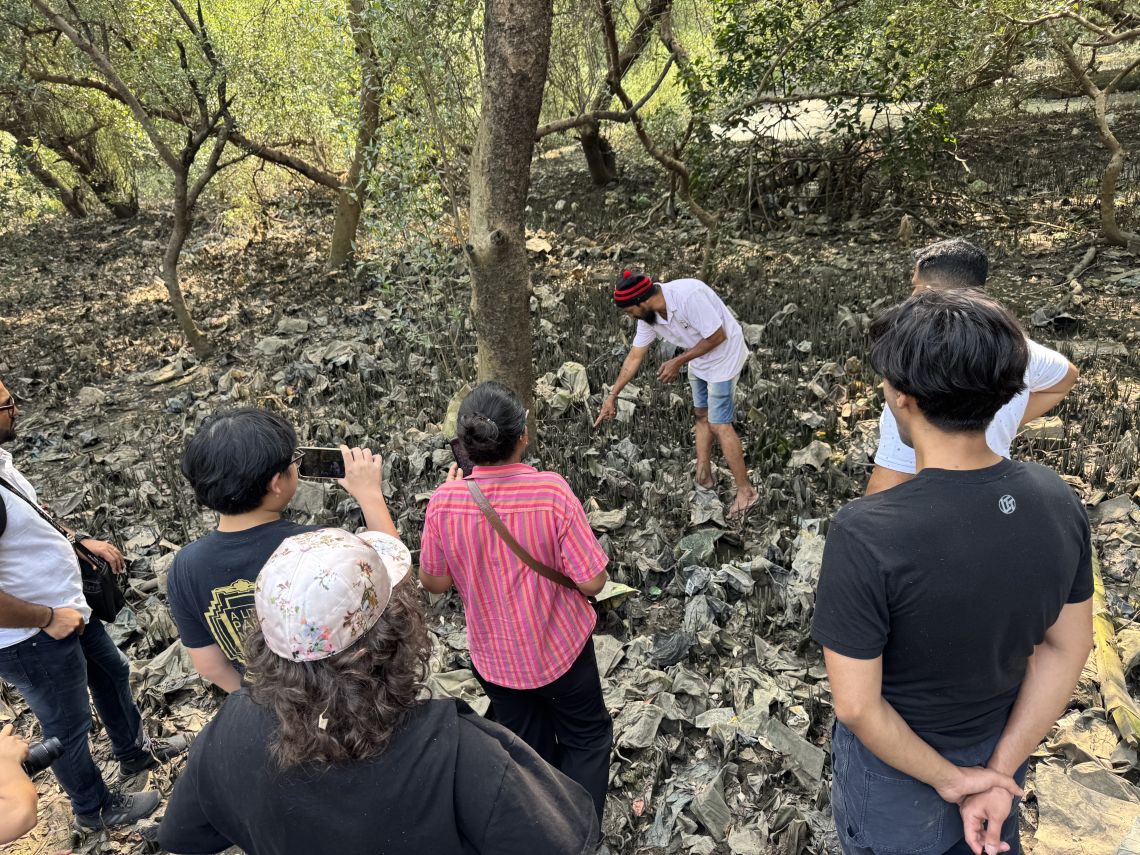
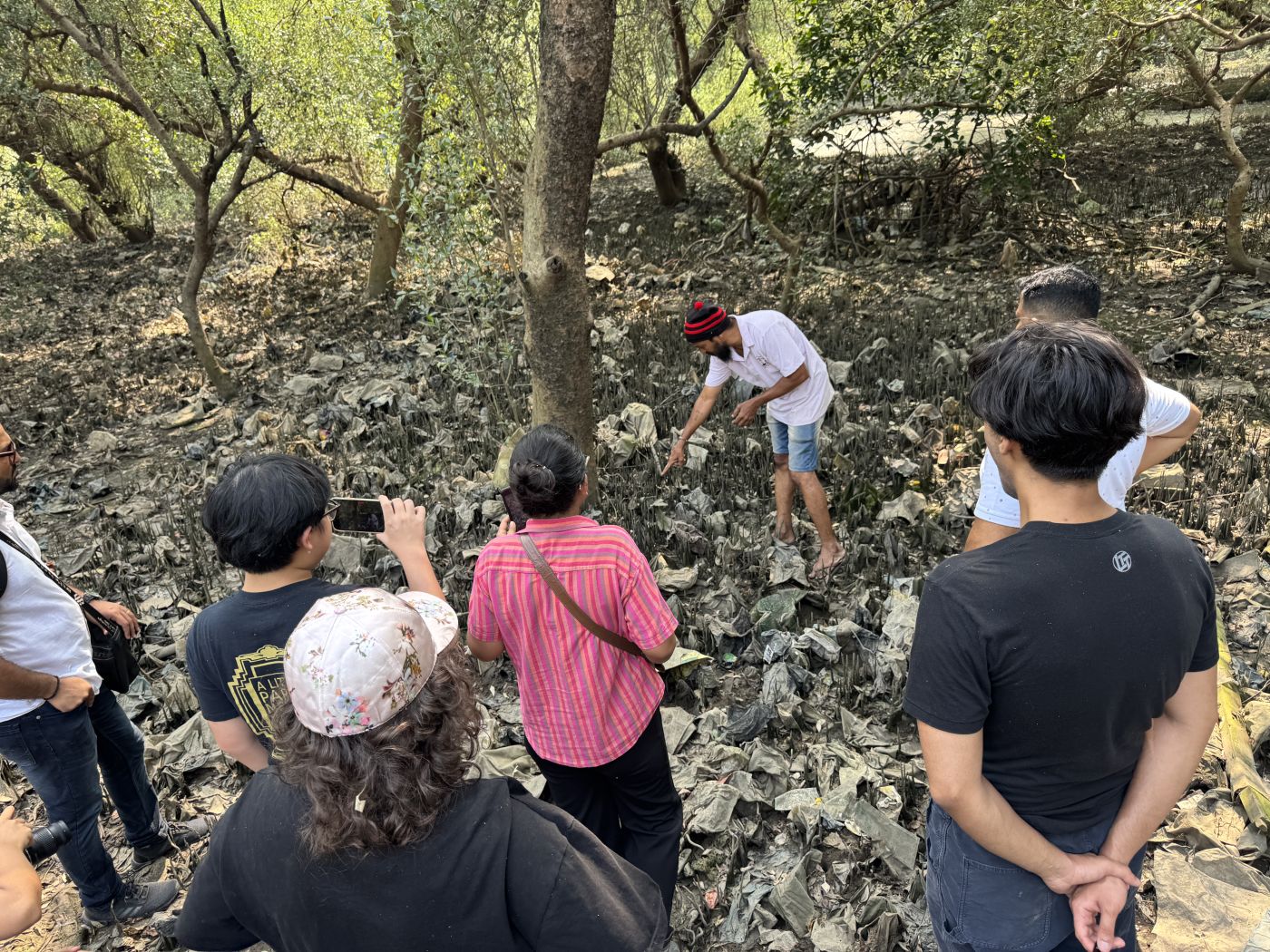
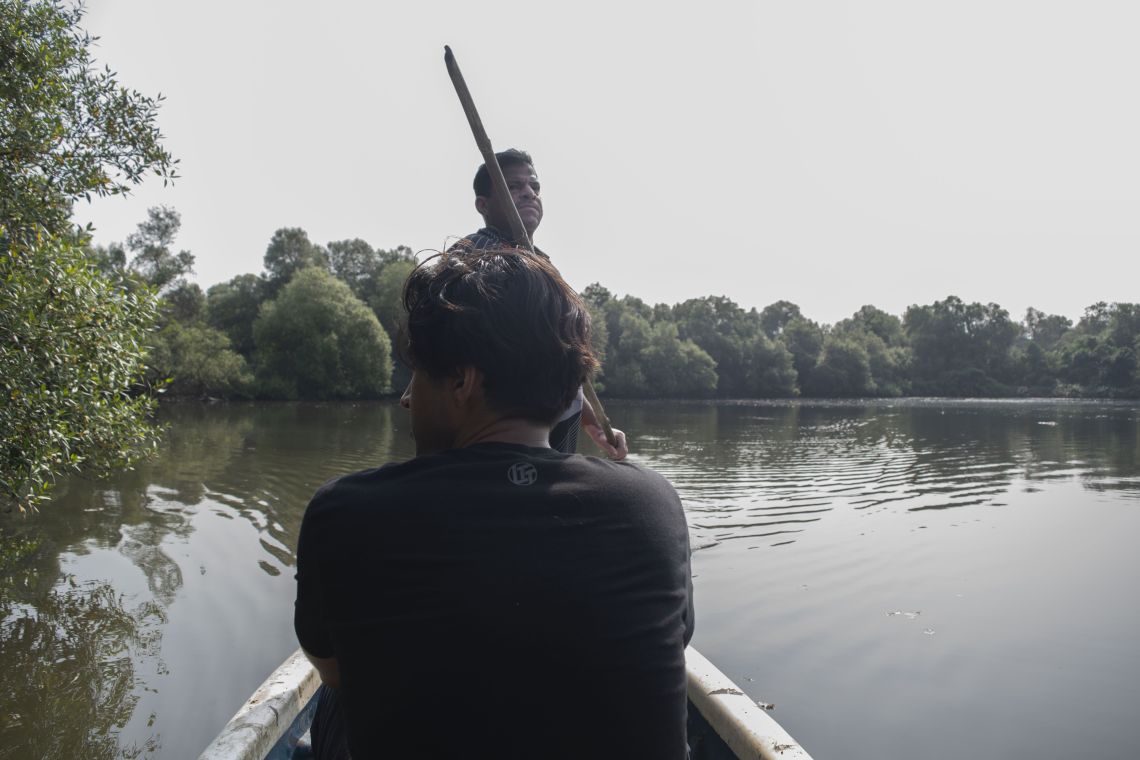
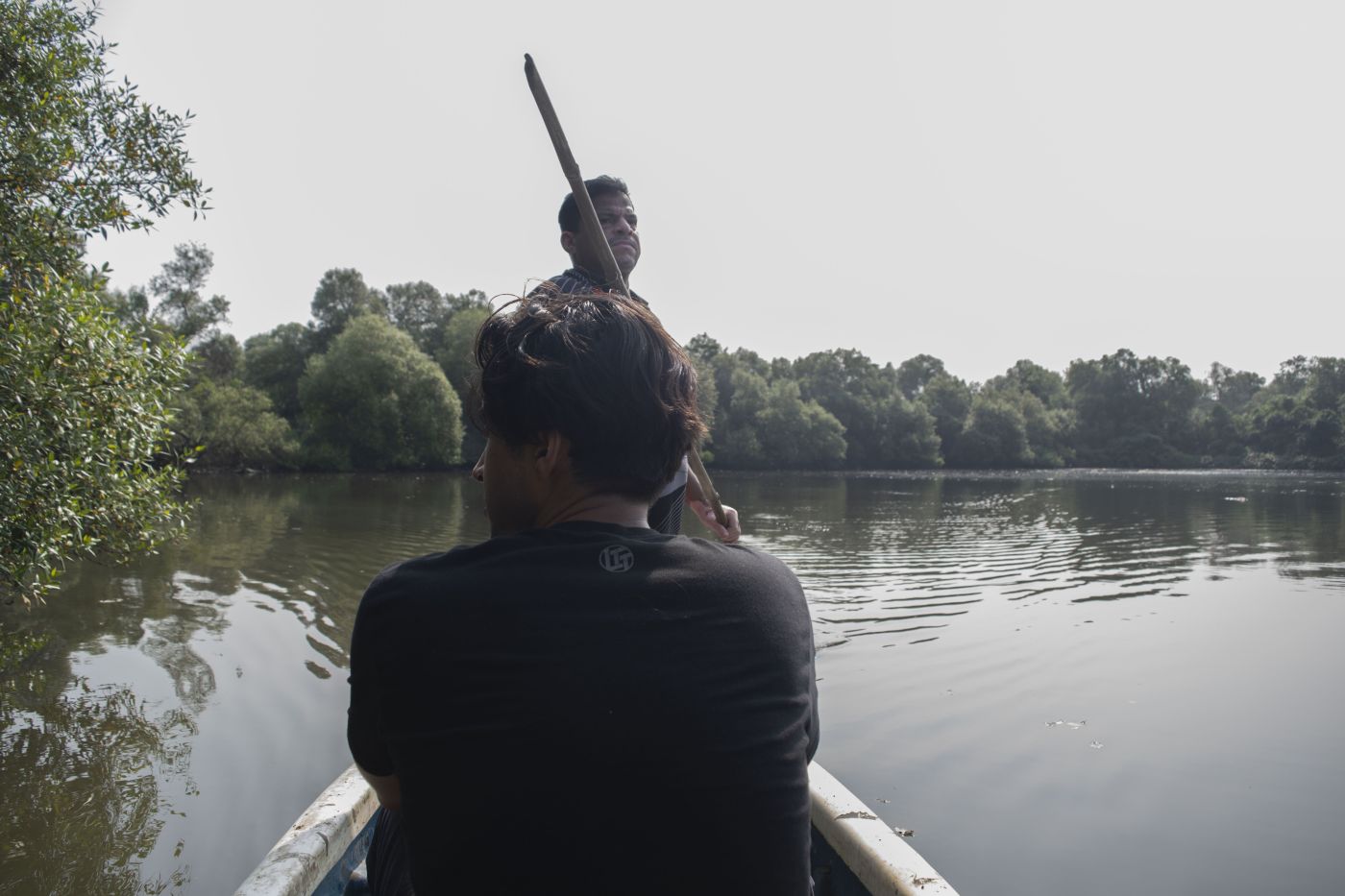
The students made their observations by scanning, mapping and investigating the ways in which Water used for cleaning and ablutions exits the neighborhood, most of which makes its way to the Mithi.
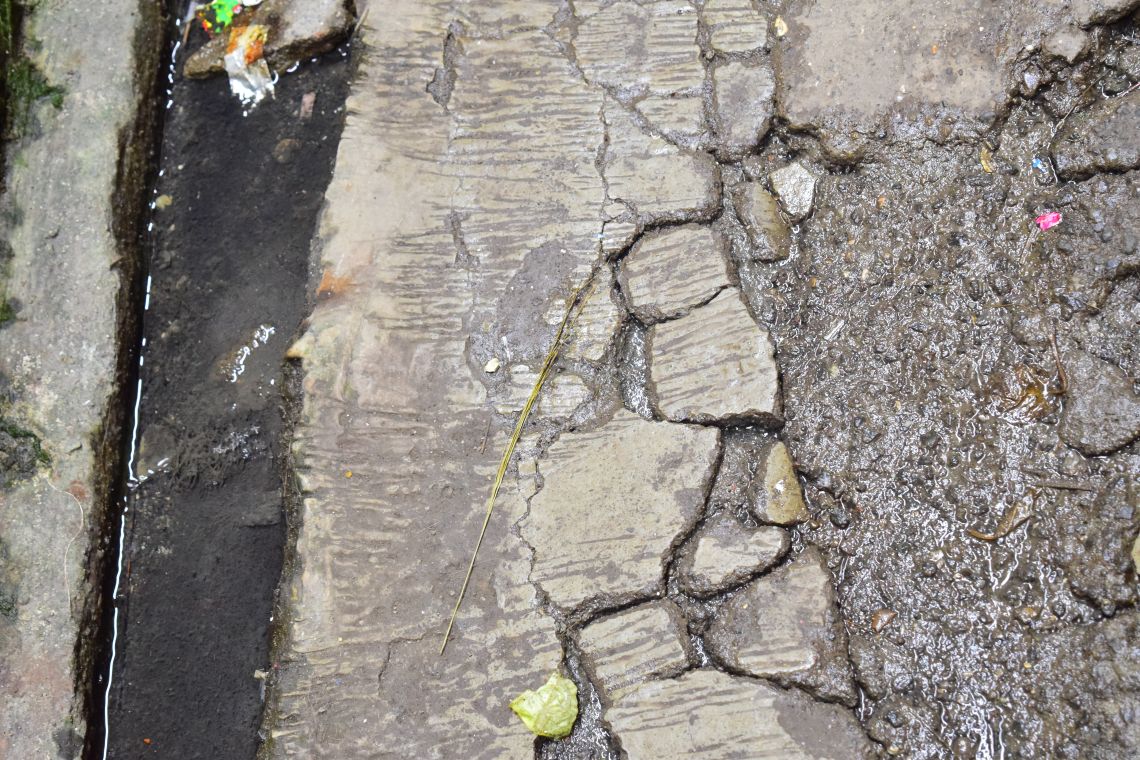
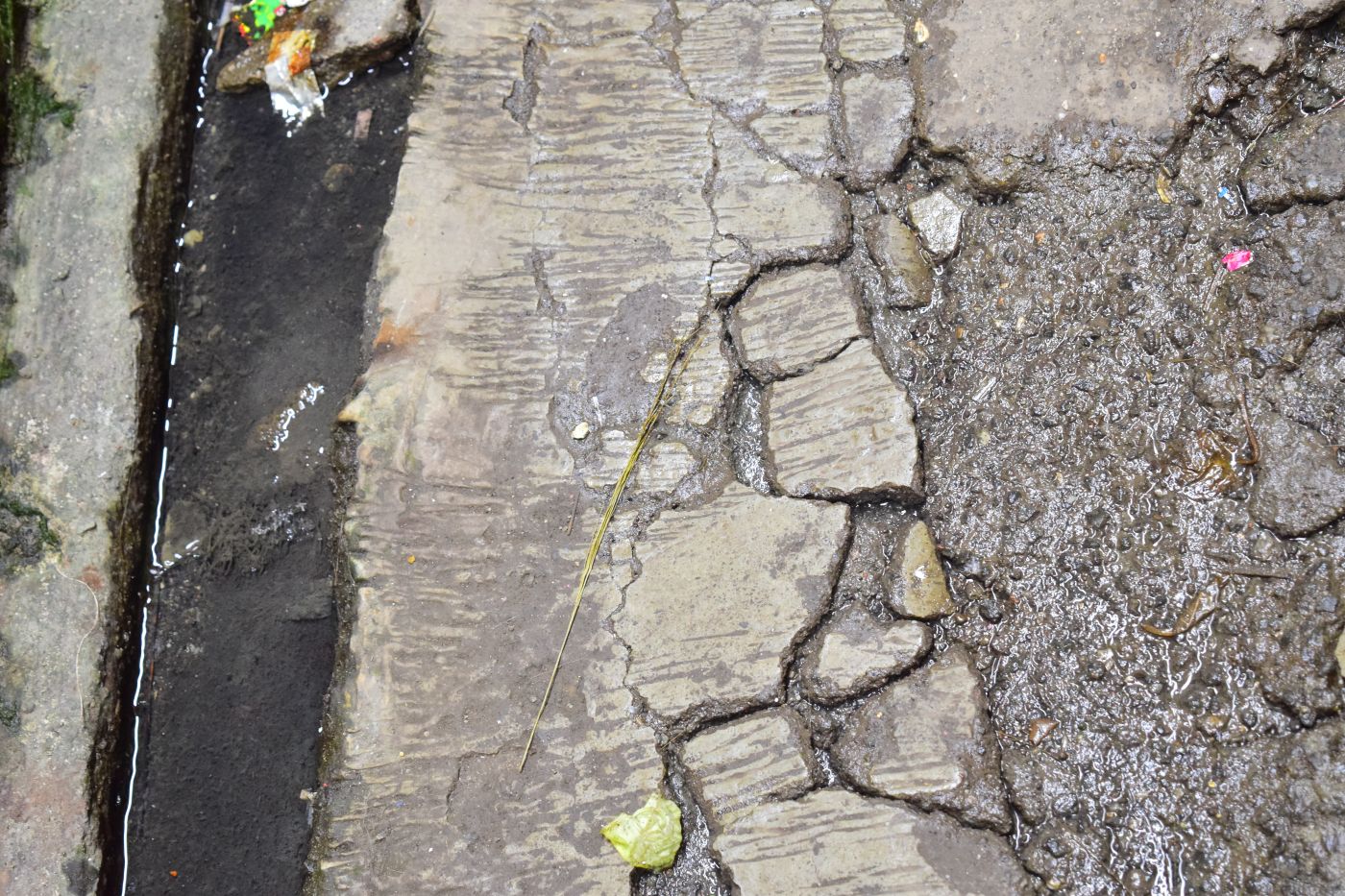
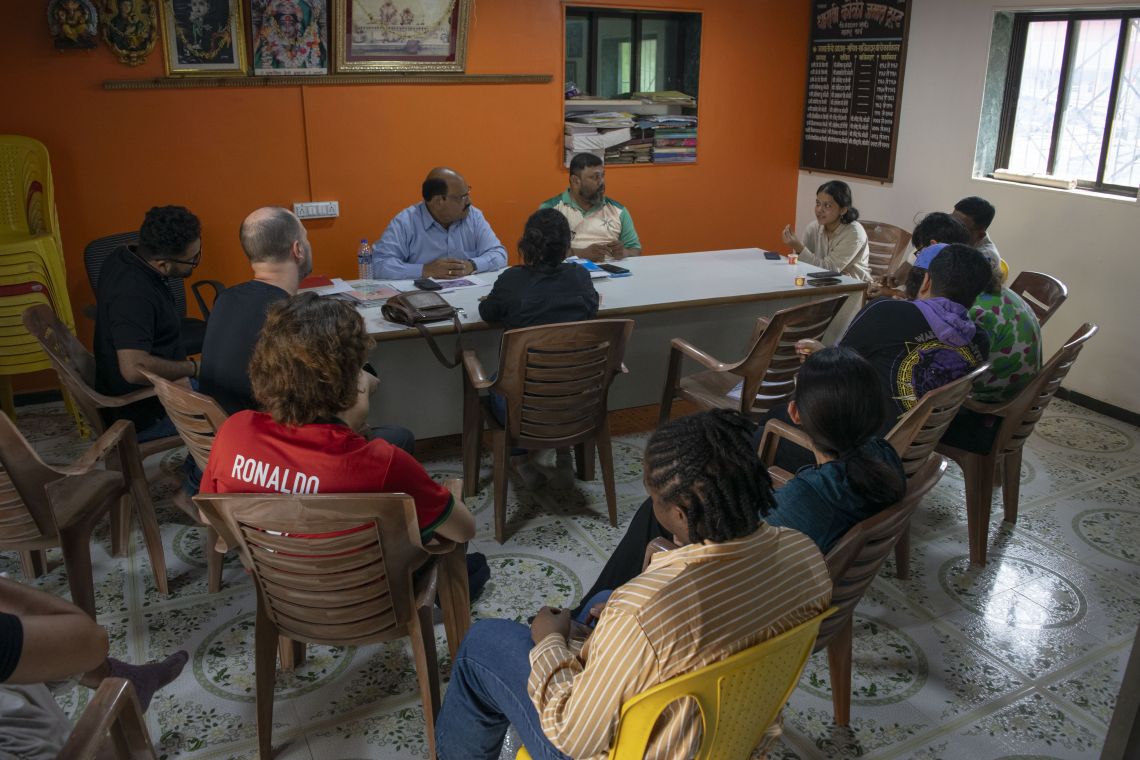
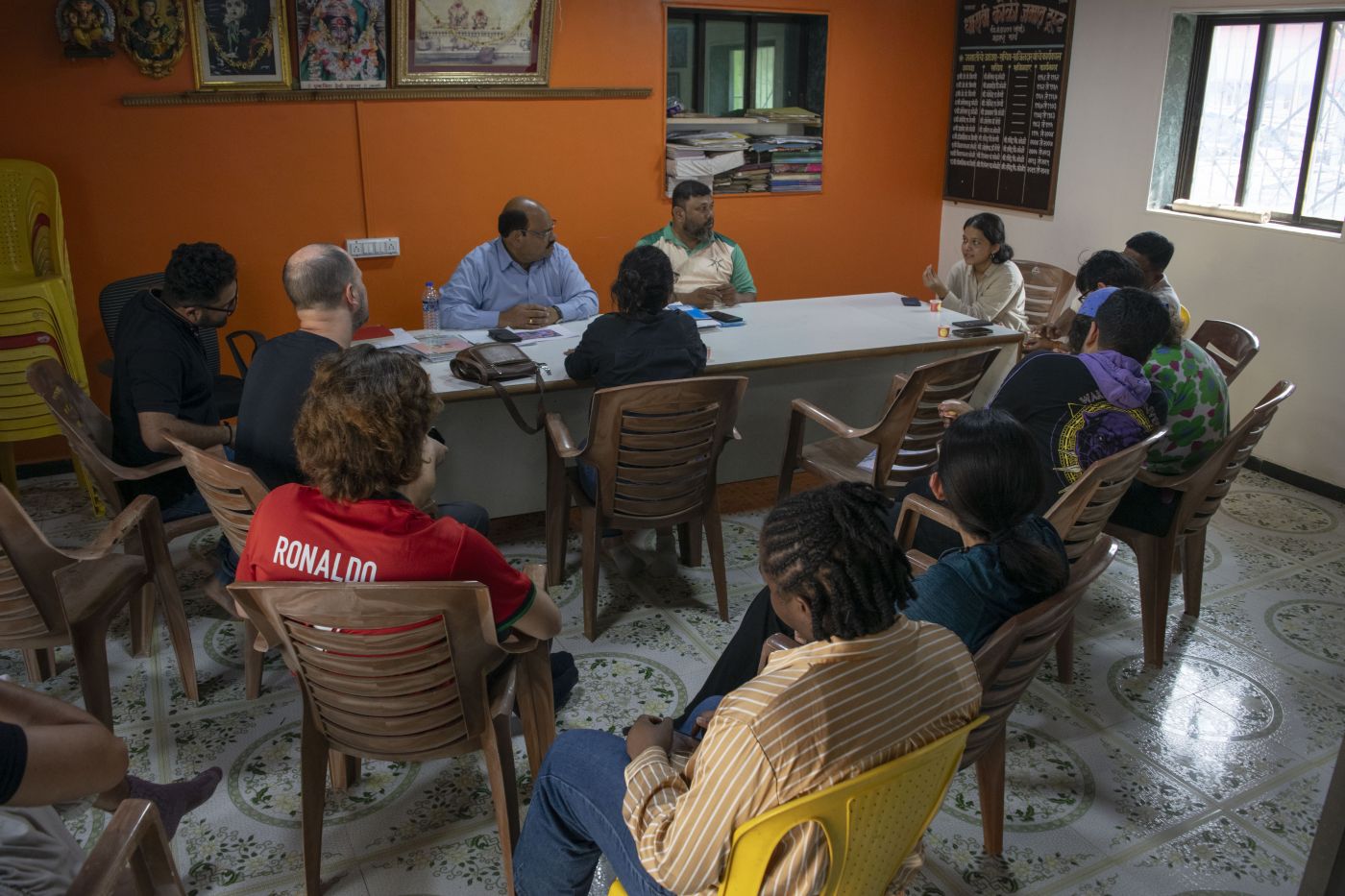
A meeting with the Dharavi Koli Jamat helped the group focus their attention on a smaller but relevant need that they could address without buy-in and investment from the municipality - a solution for the crumbling pedestrian infrastructure. The paths through the village are essentially all pedestrian and inseparable from the network of pipes and drains. Many drains also function as footpaths.
In the coming months the students will be putting together an open source collaborative mapping workflow for our team to use, we will also be working with them to come up with paving solutions that are affordable, easy to put together and dismantle - keeping in mind the changing water infrastructures beneath, strong enough to take the load of the occasional two wheeler and most importantly permeable to flows of rain and marshy groundwater. A tall order from the Dharavi Koli Jamat but nothing that the engineering students from NYUAD can't handle!
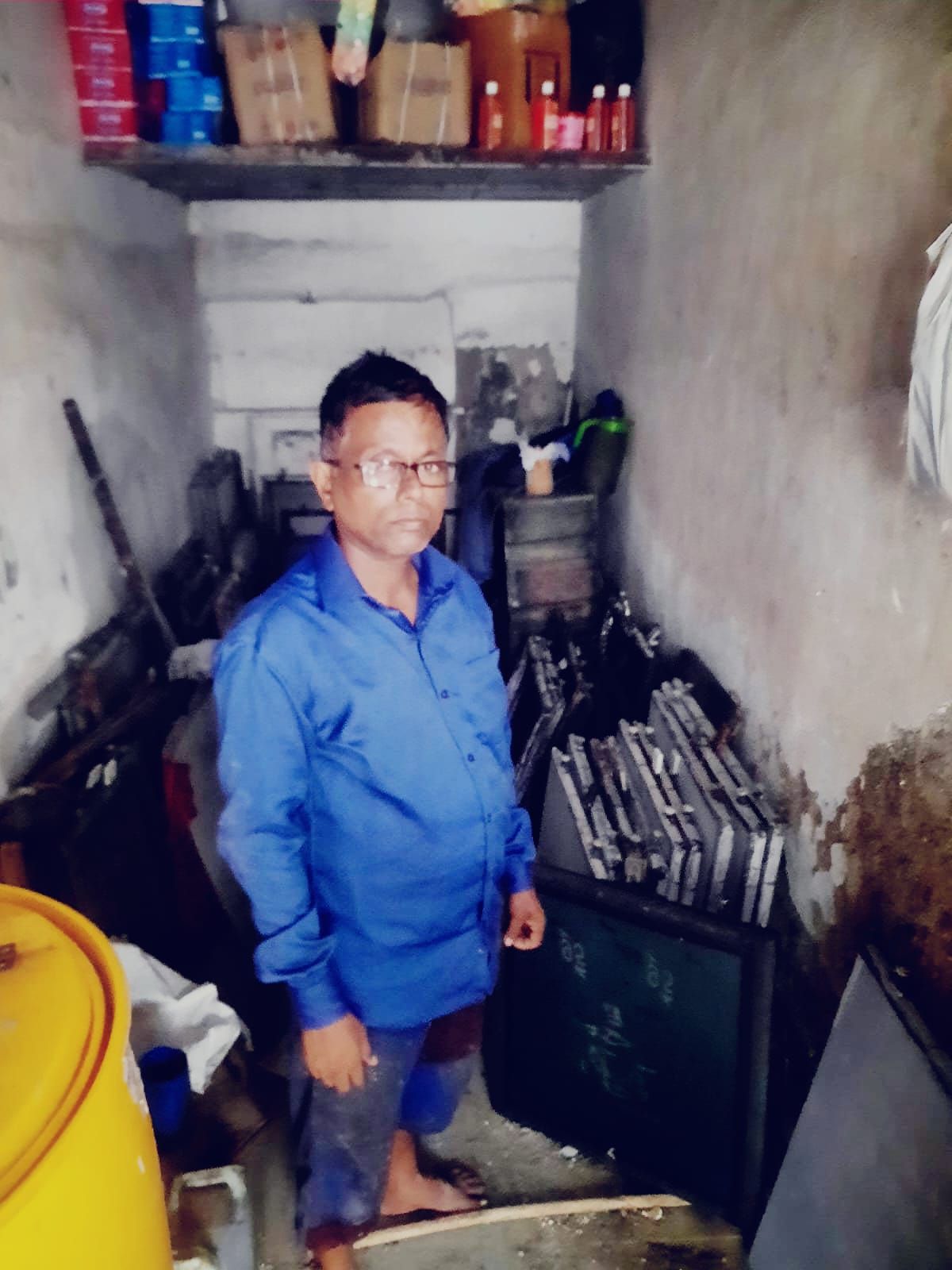
Originally from Ratnagiri, Ravi built his career over three decades in Dharavi’s vibrant informal economy. Despite relocating to Diva, he remains deeply rooted in the locality, valuing its close-knit support system. The piece highlights his concerns over redevelopment, the resilience of Dharavi during the pandemic, and the socio-economic networks that sustain livelihoods like his. Ravi’s journey reflects the intersection of creativity, survival, and community in urban informal settlements.

Ravi’s story is deeply rooted in the dynamic landscape of Dharavi, one of Mumbai’s most densely populated and economically vibrant informal settlements. Originally from Ratnagiri, a coastal town in Maharashtra, Ravi moved to Dharavi in 1995 due to financial constraints. His father, who had found work in Mumbai as a painter, had already begun establishing a foothold in the city. Ravi followed in his footsteps, driven by necessity and the pursuit of economic stability.
Upon arriving in Dharavi, Ravi began working in the screen-printing industry, initially making frames and designs for textile printing. Over the years, this skill became both his livelihood and passion. With more than 30 years of experience in this field, Ravi has since established his own business, which he has been running for the past decade. His work is not only technical but deeply creative. He designs and constructs the frames used in screen printing, adapting them to the specific preferences of his customers. Much of this work is done manually, requiring a meticulous and practiced hand. Ravi demonstrated this process, laying a frame on a light table that projects the design onto a mesh surface, a technique central to the production of printed textiles like T-shirts and pants.
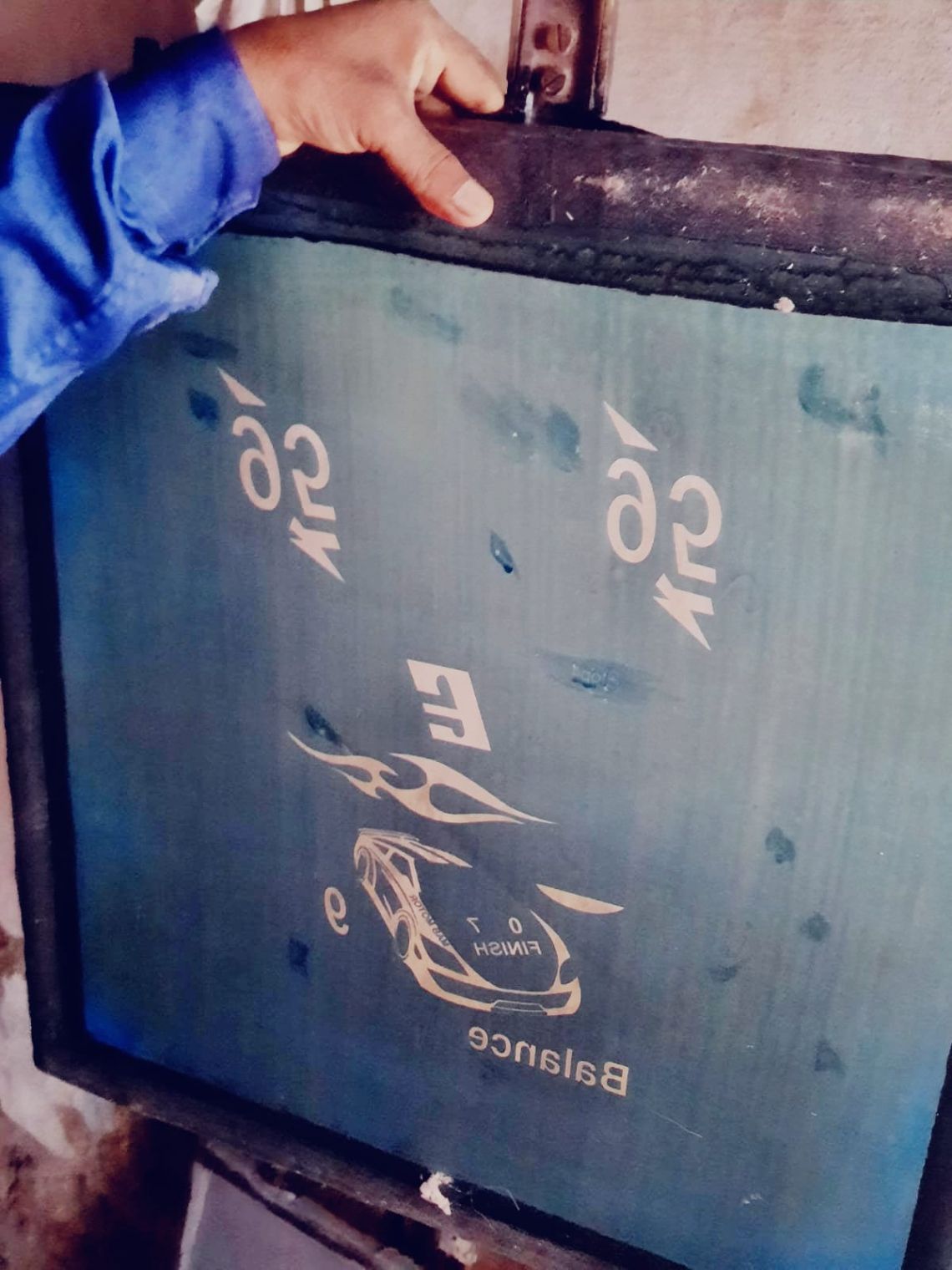


Much of the material Ravi works with comes from different corners of Mumbai, particularly Kalina Nagar. Essential items such as the CS5 chemical, gum, mesh, and locally-sourced wood make up the bulk of his supplies. His studio in Dharavi remains the core of his operations, even though he now resides in Diva, a small town adjacent to Mumbai, following a family dispute that led him to leave the small room his father had left for him and his brother.
Despite a daily two-hour commute involving both bus and local train, Ravi remains deeply connected to Dharavi. As he puts it, “To be very honest, no one can leave Dharavi. It is impossible for people to leave this space.” For him, Dharavi is more than just a place of work; it is a support system. It offers the environment, resources, and networks essential for the smooth functioning and growth of his business. His studio, for which he pays a monthly rent of ₹9,000 excluding electricity charges, is strategically located amidst the bustling informal economy of Dharavi. This ecosystem, shaped over decades, has allowed micro-entrepreneurs like Ravi to flourish.
However, Ravi also expressed concerns regarding the proposed redevelopment of Dharavi. While he acknowledges the potential for improved infrastructure, he fears that such changes may disrupt the existing economic structure. According to him, “redevelopment may be a good initiative, but it is uncertain whether local businesses like mine will survive in the aftermath.” He predicts that large-scale unemployment could follow if the organic networks of informal labour and production are dismantled.
Ravi also reflected on Dharavi’s resilience, particularly during the COVID-19 pandemic. Despite the high population density, Dharavi reported remarkably low case numbers and demonstrated a collective strength that surpassed many expectations. This, he believes, is a testament to the strong social fabric and communal solidarity that defines the area. People from various castes and religious communities cohabit and work together harmoniously, something Ravi values deeply and sees as central to Dharavi’s identity.
Outside his professional life, Ravi is a family man. He has two children, both of whom have completed high school and are now preparing for higher education. His aspirations for their future mirror his own journey, rooted in hard work, resilience, and hope for better opportunities.
Ravi’s life stands as a compelling narrative of survival and creativity within urban settlements. His story sheds light on the critical importance of acknowledging and preserving the socio-economic ecosystems in places like Dharavi, especially in the face of top-down redevelopment agendas.
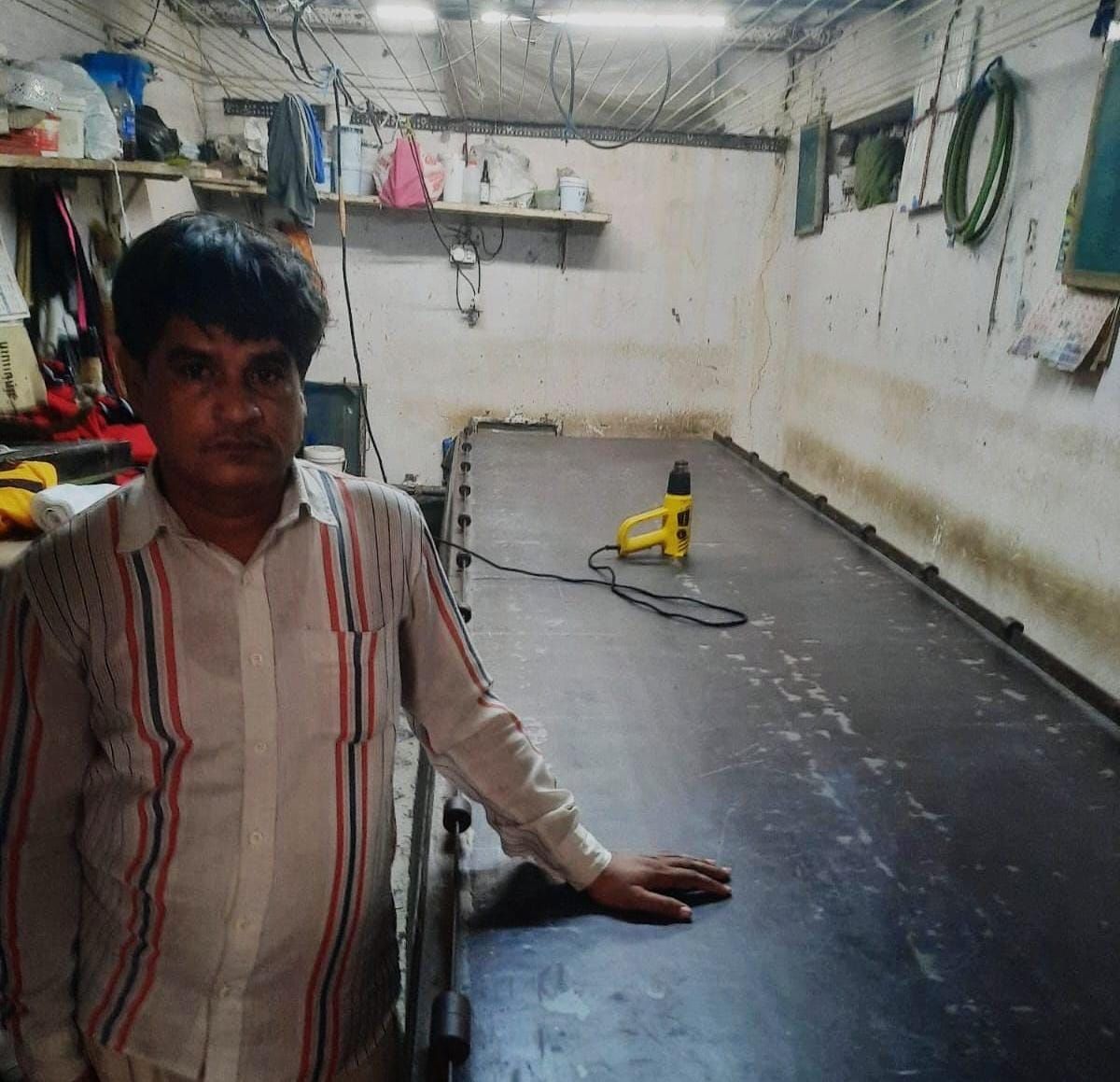
Samsuddin, a printmaker in Dharavi, Mumbai, whose small but efficient studio reflects the spirit of local enterprise. From printing school uniforms for suburban Mumbai to receiving an order from his hometown in Uttar Pradesh, Samsuddin's journey weaves personal strength with community-rooted entrepreneurship. He exemplifies how creativity and determination shape life in Dharavi. Amidst talks of redevelopment, Samsuddin advocates for progress without displacement, preserving the soul of the community he calls home.
On a narrow staircase of Dharavi, Samsuddin climbs to the first floor of a modest house, where his small printmaking studio hums with purpose. The air carries the faint scent of ink and fabric, and the rhythmic whir of a heat gun punctuates the day. Here, Samsuddin crafts t-shirts, shirts and pants adorned with logos and artwork, his hands moving with the ease of someone who has mastered the intricacies of a densely interconnected environment. Day or night, the studio is alive when orders come in, and for Samsuddin, that's precisely how he likes it.
He can print up to 20 shirts in one go, each batch taking about 30 minutes to print and dry. The pace is brisk, but it's what ensures every order, whether a handful or thousands, everything gets delivered on time. "It all depends on the orders," he says steadily. Some nights, work stretches past midnight, yet he never complains. For Samsuddin, this isn't just a job; it's freedom. "I love this work more than a stable job," he explains. "No restrictions. I can come and go whenever I want." That flexibility is his edge, drawing clients who value his speed and reliability. Most of his orders come from Badlapur and Panvel, which are located in the outer suburbs of Mumbai, especially schools needing uniforms. One order stood out: it came from his own village in Unnao district of Uttar Pradesh. "I was so surprised and happy," he says, his eyes lighting up at the memory. It felt like a small piece of home had found him in Dharavi.
Samsuddin doesn't have permanent employees, but when big orders roll in, sometimes 1,000 to 2,000 t-shirts, he hires help to keep up. The studio, though small, is a hub of efficiency, with every corner used with purpose. But it comes at a cost. The rent, a steep 9,000 rupees a month, including the power bill, is a constant weight, whether business booms or slows. Still, Samsuddin shrugs it off. "That's just how it is," he says, his pragmatism as steady as his work ethic.
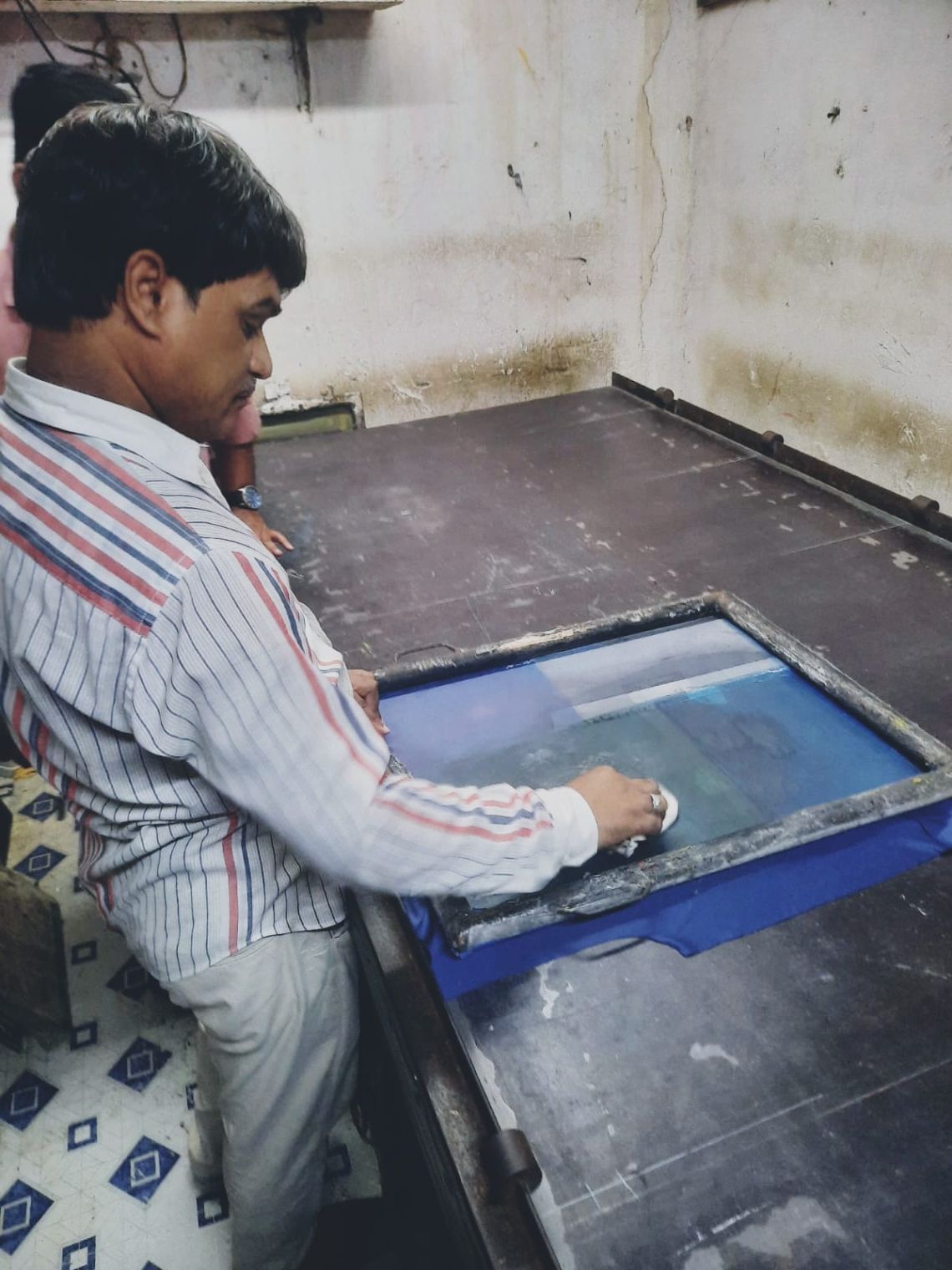

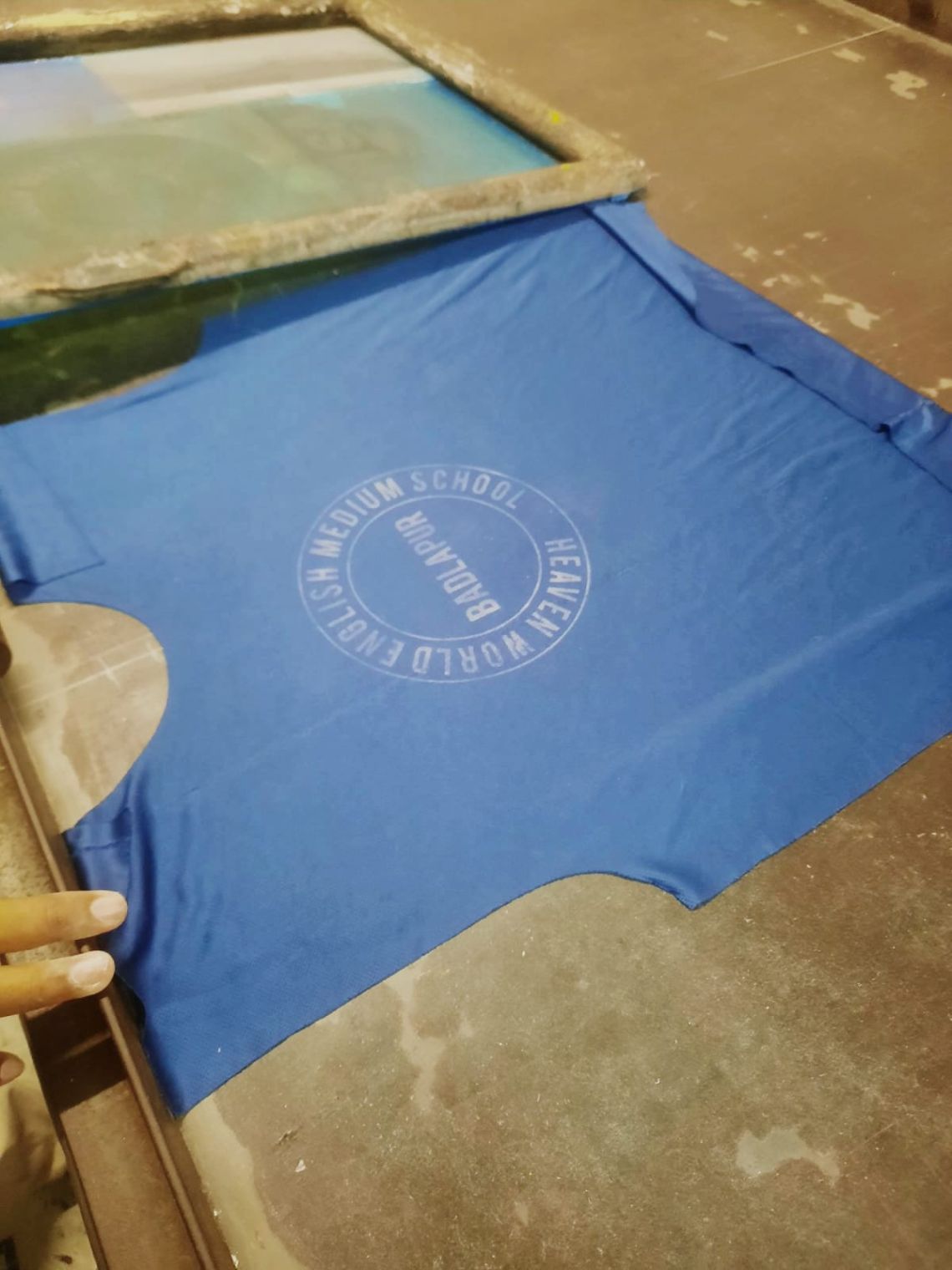

He arrived in Dharavi in 1995, leaving behind Unnao district in Uttar Pradesh. Samsuddin's journey into printmaking began with his Mamu, his mother's brother, who first guided him through the narrow lanes of Sangham Galli in Dharavi. It was there, in 1995, that he took his first steps in this trade, learning the art of transforming plain fabric into something bold and personal. "I don't know why I chose this," he says with a faint chuckle, "but I'm glad Mamu showed me the way." Back then, his first job paid just 700 rupees a month, with 400 going to food alone. "It was tough," he recalls, but he smiles when discussing Dharavi's past. "It was beautiful back then, especially Kalakilla and the leather market," he says. Life wasn't easy, though; long water lines were a daily struggle. Still, he found his way into printmaking, though he's unsure how. "I don't know how I started, but I'm happy I did," he says with a quiet laugh.
He lives in Dharavi now, just a short walk from his workshop, in a home where his children are growing up. All of them attend local schools, and one daughter is carving her own path, studying design, a spark of creativity that makes Samsuddin's eyes light up. "She's learning to make things beautiful, like me," he says proudly.
When asked about redevelopment, he pauses. "Yes, we want development," he says, "but not by pushing people out. That's wrong." He believes in improving Dharavi while keeping its heart and its people intact.
From Sangamgalli to his studio's perch, he's woven himself into the fabric of this place. Perched above the street, his studio is a testament to the hustle that defines this place. It's not about grand plans or polished spaces; it's about getting things done, one t-shirt at a time. And in the hum of his heat gun and the stack of freshly printed shirts, Samsuddin adds his own thread to the intricate fabric of Dharavi.
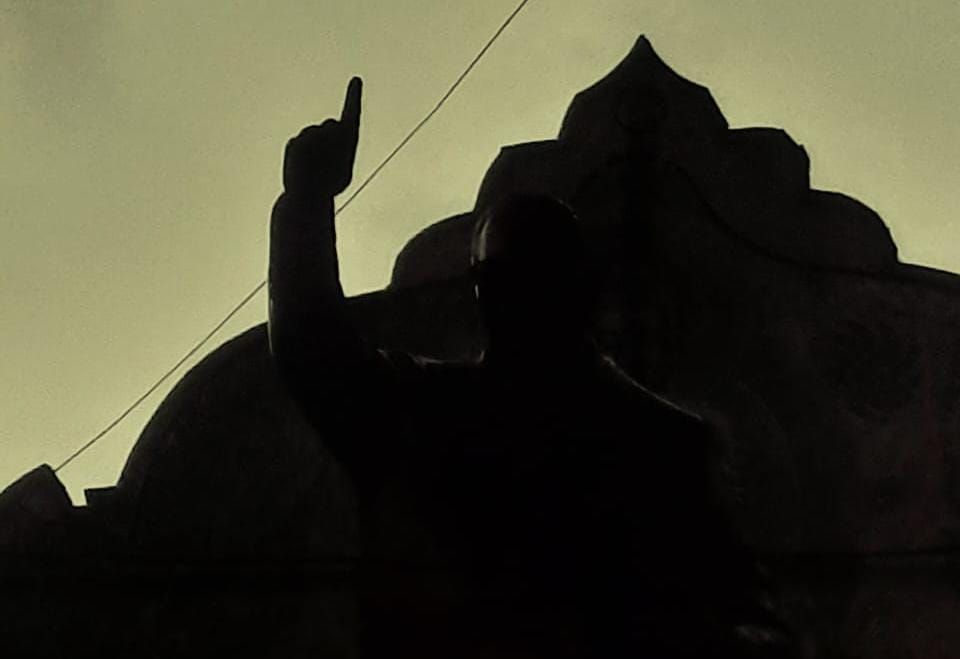
Satish Dalvi, a second-generation Dharavi resident whose journey from sanitation work to caregiving exposes the layered realities of caste, labor, and survival in Mumbai. As an outspoken activist and rationalist, his quiet rebellion against exploitation and superstition carves space for dignity and resistance in the city.
Satish Dalvi, a man in his late 30s, is a second-generation resident of Dharavi, where he was born and raised. His grandfather migrated to this urban enclave from the rural edges of Maharashtra, seeking better opportunities, and since then, Dharavi has been the heart of Satish’s world. His life reflects the resilience and challenges in Dharavi.
For years, Satish has been working as a caregiver for ill elderly residents in Vasai and Virar, suburbs far from his home. His daily commute is exhausting, marked by overcrowded trains that test his endurance. Packed tightly among countless commuters, Satish’s journey underscores the physical and emotional toll of earning a livelihood in a city that never slows down. Yet, he persists, driven by necessity and a commitment to supporting his modest household.
Satish’s role as a non-certified nurse and caregiver was not his first choice. Opportunities for work that aligned with personal aspirations for Satish were scarce. With few local options, Satish turned to caregiving, a demanding job that allows him to maintain his modest home in Dharavi, a small but dignified space that stands as a testament to his hard-earned stability.
In his younger years, as a high school student, Satish worked in sanitation across Dharavi, Chembur, and Ghatkopar. As a member of the Scheduled Caste, he secured this job through a poignant gesture, pointing a finger upward, a symbol associated with Dr B.R. Ambedkar. This gesture served as a quiet but unmistakable signal to the supervisor, indicating Satish’s caste identity. This act resonated deeply, as 98% of India’s menial sanitation workers belong to Scheduled Castes, where such roles are an unspoken reservation. However, the job soon turned into manual scavenging, a dangerous and degrading practice that posed severe risks to his health and safety, forcing Satish to leave.
Satish is a passionate activist, deeply vocal about issues affecting his community. His activism extends to challenging superstitious practices, inspired by the legacies of Govind Pansare and Narendra Dabholkar, rationalist thinkers who were tragically killed for their beliefs. Satish firmly believes that, though their lives were cut short, their ideas remain untouched and will continue to flourish, inspiring him to speak out for justice and reason.
Despite the hardships, Satish finds joy in the simple rhythms of Dharavi. His favorite pastime is strolling through its lively lanes in the evenings, a ritual that allows him to unwind and connect with the pulse of his community. For Satish Dalvi, Dharavi is a home where his family’s history, his activism, and his resilience converge, shaping a life of purpose amidst the challenges of everyday existence.
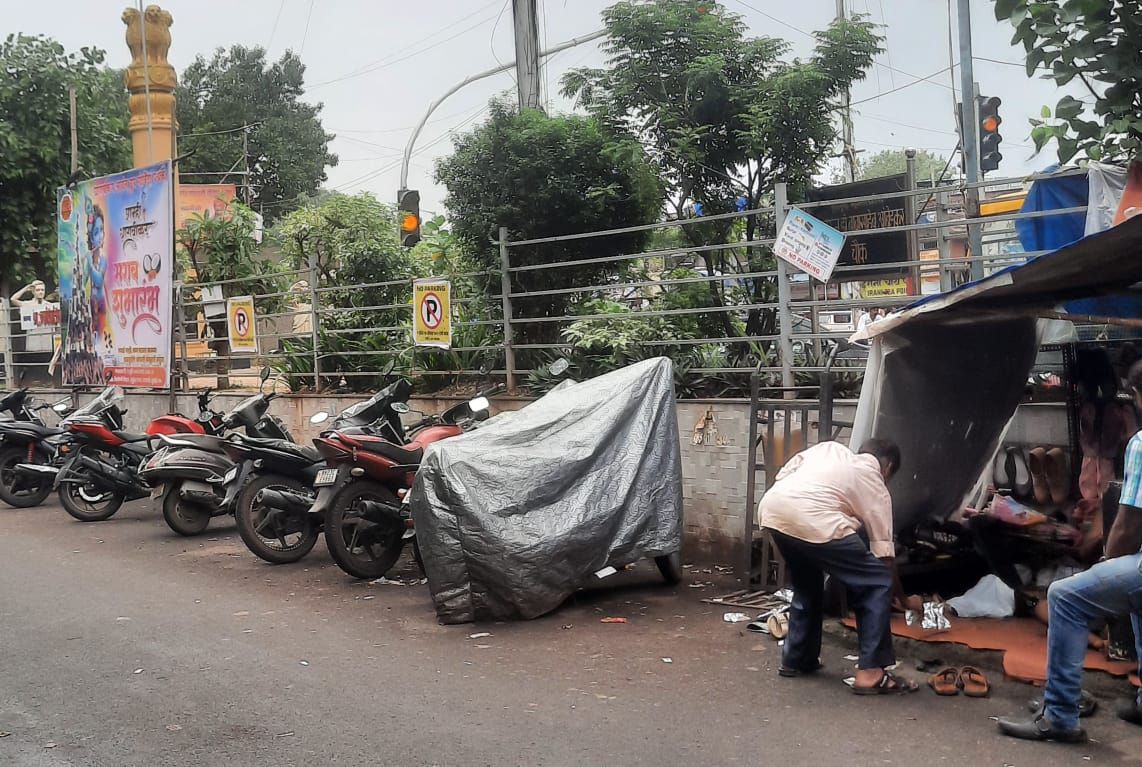
Shankar Jadhav, a 61-year-old cobbler, defies caste boundaries beneath Samvidhan Square. With calloused hands, a love for books, and quiet resilience, he mends shoes, nurtures a square, and challenges the invisibility imposed by society: one stitch, one flower, one act of dignity at a time.
The air in Dharavi hums with the rhythm of survival —vendors calling, footsteps echoing, and the faint clink of tools on leather. At the heart of this ceaseless pulse, beneath the proud silhouette of Samvidhan Chowk, sits Shankar Jadhav, a 61-year-old cobbler whose weathered hands stitch more than shoes. They weave a life of defiance, dignity, and quiet devotion. Over the steam of his tenth cup of chai, Shankar's voice carries the weight of decades, his words painting a vivid portrait of a man who has made a corner of Mumbai his own.
Shankar has lived in Dharavi all his life, as did his father before him. His grandfather, from rural Maharashtra, migrated to Dharavi in search of socio-economic mobility, spurred by Dr.Ambedkar’s call for Dalits to seek opportunity in cities. In the early 20th century, Mahars flocked to urban centers like Mumbai and Nagpur, hoping urbanization would erode the rigid caste-based stratification that confined them. For Shankar’s family, Dharavi became home—a place where dreams of mobility met the gritty reality of survival. Yet, within this crowded mosaic of workshops and homes, Shankar carved out his own space, his cobbler’s stall.
I met Shankar in his small workspace under the Chowk's shadow on a sun-soaked afternoon. His tools—a hammer, a few nails, and a worn leather strap—lay neatly arranged, each item a testament to his craft. He sipped his tenth chai, the cup's warmth cradled in his calloused hands, and began to unravel his story. A Mahar by birth, Shankar was born into a caste which was ostracized, stigmatized and tied to sanitation work, a role society deemed his destiny. Yet here he sits, mending soles, a trade traditionally imposed by the rigid caste structures. "In Dharavi," he said with a wry smile, "we swap burdens, but they're still heavy."
A friend joined us as we spoke, adding another layer to the tale. A Chambhar by caste, he works as a sanitation worker, a mirror image of Shankar's defiance. The two men laughed softly, their camaraderie a quiet rebellion against the rigid lines of caste. "We've traded places," Shankar's friend said, "but we're still in the same arena." He gestured vaguely as if to encompass the continued discriminatory practices in India. Shankar nodded, adding a detail: "I'm the only Buddhist cobbler here. No one else in Dharavi does this work" His Buddhist faith, inspired by Dr. B.R. Ambedkar's teachings are a cornerstone of his identity, setting him apart in a community where caste and occupation often intertwine.
Shankar's workspace is no ordinary corner. Samvidhan Chowk, named after the Indian Constitution, is a place of pride; it's Ashoka Stambh gleaming under the sun. He led me around the square, his steps deliberate, pointing out the vibrant flowers. "I keep this place alive," he said, his voice tinged with pride and weariness. The Chowk's beauty is his doing, a labour of love born from early mornings spent sweeping and planting. Yet, not everyone sees the value in his work. "Some frail social actors," he said, his tone sharp, "think this job is low." Their scorn stings, but Shankar brushes it off, focusing on the Chowk's dignity.


His days begin long before the sun rises. Shankar wakes in the quiet hours when Dharavi's clamour softens to a murmur. He sits with a book, the pages worn from countless readings, his mind wandering through literature that costs anywhere from Rs. 10 to Rs. 1,000. Despite his modest earnings, he collects these books, each a small rebellion against the constraints of his life. "Reading feeds me," he said, his eyes bright. Food, however, two meals a day, one at noon, the other at midnight. These sustain him as he provides for a large family with two daughters and four sons, their needs pressing against his cobbler's income limits.
Dharavi is no ordinary neighborhood. Its live-work spaces, where homes double as workshops, set it apart from Mumbai’s so-called planned communities. Shankar’s stall, tucked under the chowk, embodies this ethos. Here, work and life intertwine, the clink of his tools blending with the hum of daily existence. This fusion increases efficiency, Shankar explained, his eyes glinting with pride. “In Dharavi, we don’t travel far to work. It’s all here, and it keeps life affordable.” The live-work model reduces costs, making survival possible in a city that often feels unforgiving.
The rhythm of Shankar's life is relentless but deliberate. After his morning reading, he takes his place under the Chowk, hammering and stitching as the world moves around him. The chai vendor knows his order by heart, delivering cup after cup to fuel his long hours. Shankar watches the square between customers, ensuring its flowers bloom and its pathways stay clean. The Ashoka Stambh, a symbol of justice, is a silent witness to his efforts. "This chowk is ours," he said, his voice firm. "We make it what it is."
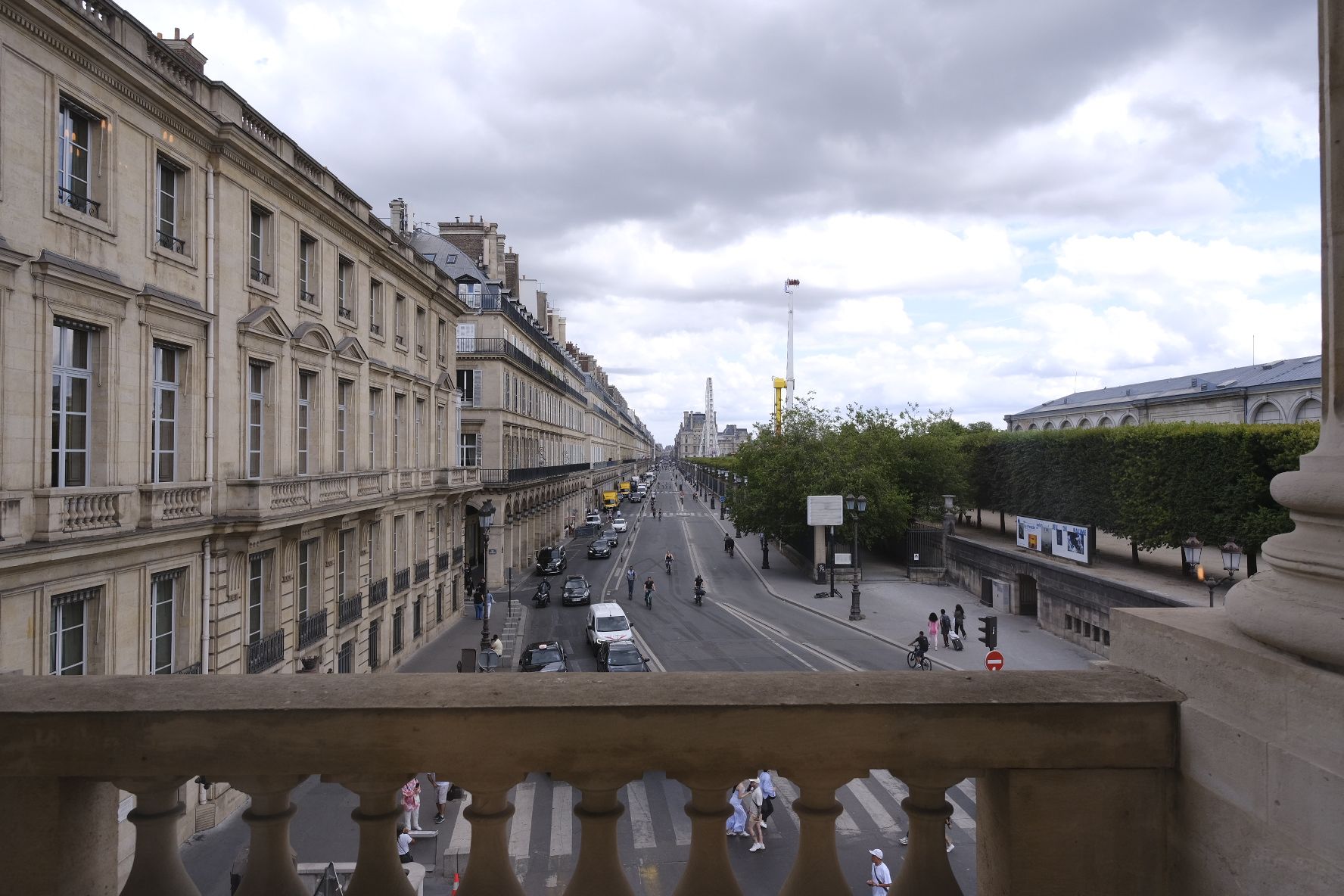
This article argues that Haussmann’s transformation of 19th-century Paris was driven by speculative strategies — both political and financial — to reshape the city for elite interests under the guise of modernization. The piece frames Haussmann’s Paris as a blueprint for today’s neoliberal urban projects, like the Dharavi Redevelopment Project (DRP), highlighting how large-scale urban interventions often prioritize investment and control over genuine social improvement, and lead to the depoliticization of public space.

Haussmann's Paris, often romanticized for its aesthetic unity, was (as I argue) fundamentally shaped by speculative urbanism—a nexus of financial activities, political power, and transformative urban interventions. As an analysis framework, I believe it to be a relevant lens to analyze urban transformation today, like the Dharavi Redevelopment Project. This article is setting the stage for a second one, making the link between the past and present (and future?) of large-scale urban transformations in the 21st century.
The enduring image of Haussmann's Paris—its grand boulevards and uniform architecture—belies a complex interplay of power, finance, and social engineering. This article argues that Haussmann's project was not merely a modernization effort but a deliberate strategy of speculative urbanism, where urban governance served as an investment strategy embedded within a distinctly Western, neoliberal, and progressive paradigm (better known as modernization).
Setting the Stage: Paris in the 19th Century
The transformation of Paris under Haussmann must be understood within the context of 19th-century France—a period marked by political instability and profound socio-economic changes. Following the French Revolution, France experienced a succession of shifting political regimes (republic, empire, monarchy, and so-on). Furthermore, the rise of industrialization spurred massive migration from rural areas to urban centers, particularly Paris.
During the first half of the 19th century, Paris was characterized by overcrowding, unsanitary conditions, and high levels of crime. Imagine a picture a medieval city, spurred with small, dark and intricate lanes, and where one couldn’t see what was waiting for them in the corner. The cholera epidemic of 1832 underscored the urgent need for urban reform. Paris was increasingly viewed as a source of disease and social disorder, necessitating restoration, transformation, and modernization.

Modern Paris: Work in Progress, Credit photo : Charles Marville / BHVP / Roger-Viollet – Retrieved from Paris.fr
It was within this complex context that Napoléon III seized power in 1851 (after being elected President of the Second Republic three years earlier and following his uncle’s steps), facing the need to legitimize his rule, address public health concerns, and navigate a growing industrialization and globalization. In 1853, he appointed Georges-Eugène Haussmann as Prefect of the Seine, tasking him with transforming and 'beautifying' what was going to become the ‘most beautiful city on Earth.’
Haussmannization as Speculative Urbanism
The need for Paris to be transformed dates back to the mid-1700s, but political and social challenges relegated these debates to the background. With the political context of the Second Empire, Napoléon III provided Haussmann with extensive power to transform the Parisian landscape, aiming to address political challenges.
Inspired by Saint-Simonism – top-down political philosophy believing in industrialization, technocratism, progress and a rational organisation of society – Haussmann envisioned a project to create a myth of radical break from the past, constructing a new city for a new era in French history. To legitimize his power, Napoléon III needed to erase the revolutionary sentiment prevalent in 1853.
To do so, Haussmann created an illusion of equality through the city's transformation: a modernistic, clean, and pleasant city supposedly for everyone. With the implementation of a the specific haussmannian architecture (ground floor for shops, first floor for the bourgeoise, then the middle class, and finally the house staff under the roof), Haussmann transformed how people used the public space: it was not for political purposes anymore, but for hedonistic activities and consumption (he actually invented the concept of window shopping!).
Tools of Speculative Transformation: Political, Financial, and Urban
Replacing revolutionary sentiment with a 'capitalistic mindset,' allowing the bourgeoisie to continue their speculative activities and maintain power over society, Haussmann's project can be defined by the notion of speculative urbanism — processes of urban planning and governance tied to finance operations. Haussmann's transformation of Paris was made possible by a combination of political authority, financial strategies, and urban planning tools.
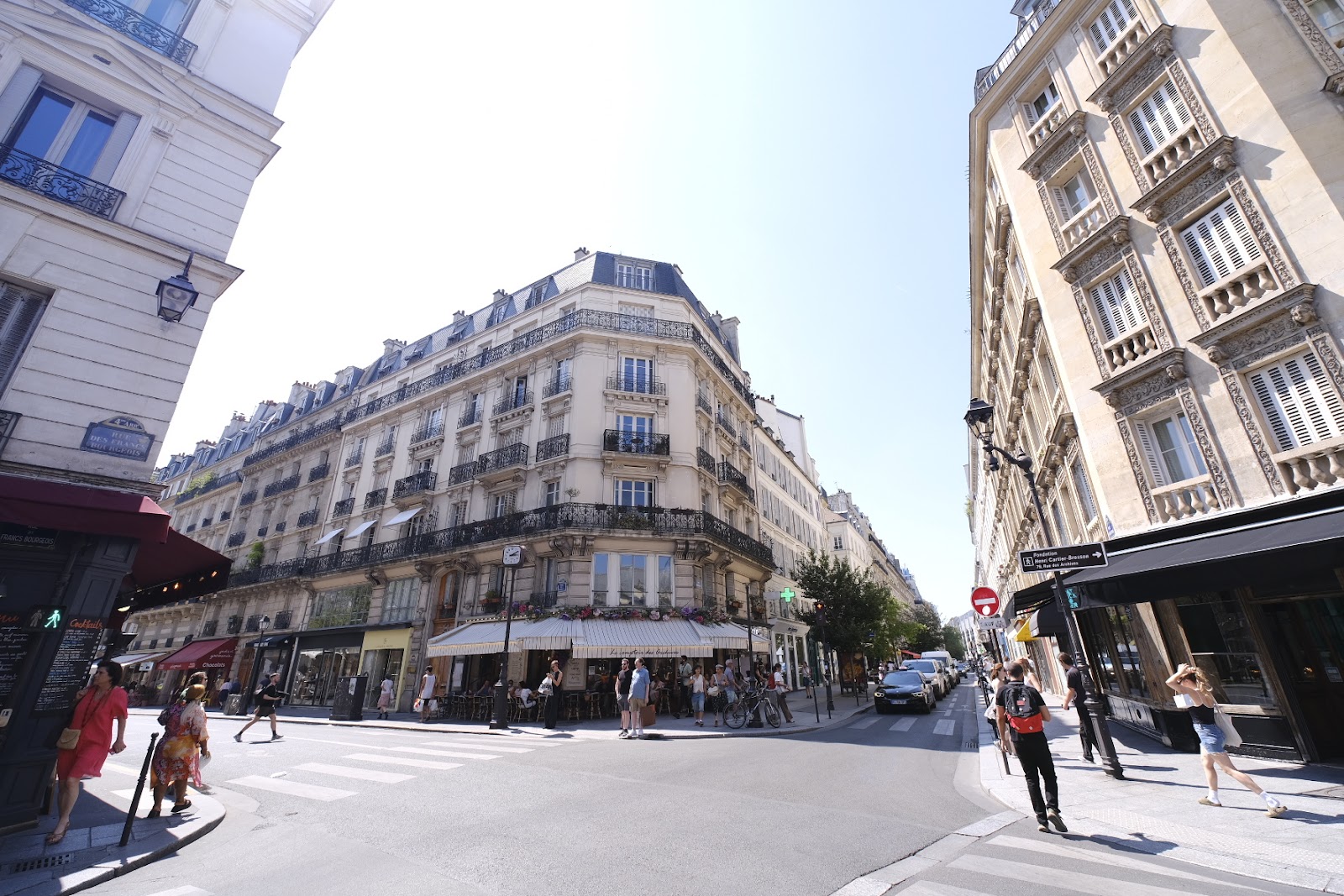
Haussmannian architecture in the neighborhood Le Marais, Paris
Firstly, Haussmann operated with extraordinary authority, reporting directly to the Emperor and insulated from political opposition. The centralized and authoritarian form of the imperial regime provided the necessary conditions for the implementation of such an ambitious urban project.
Secondly, Haussmann secured funding through the mobilization of private capital. This financial strategy enabled the rapid execution of large-scale infrastructure projects, complying with the interests of oligarchs who provided loans directly to the Emperor. Additionally, Haussmann used public credits, particularly in the form of loans guaranteed by future tax revenues.
Thirdly, Haussmann orchestrated the annexation of surrounding municipalities, expanding Paris's administrative boundaries. This simplified the implementation process and improved mobility and transport, facilitating economic activities by extending the Parisian market.
This process was accompanied by widespread expropriation, disproportionately affecting working-class populations. Displaced residents were given new places to stay and financial compensation, but the displacement contributed to the social reconfiguration of Paris, pushing lower-income residents to the city's periphery.
Haussmann prioritized the creation of straight, wide boulevards and avenues, addressing public health concerns and improving circulation for people and goods. Architecturally, Haussmann imposed a coherent, symmetrical, and uniform aesthetic, emblematic of the ideals of progress and modernization.
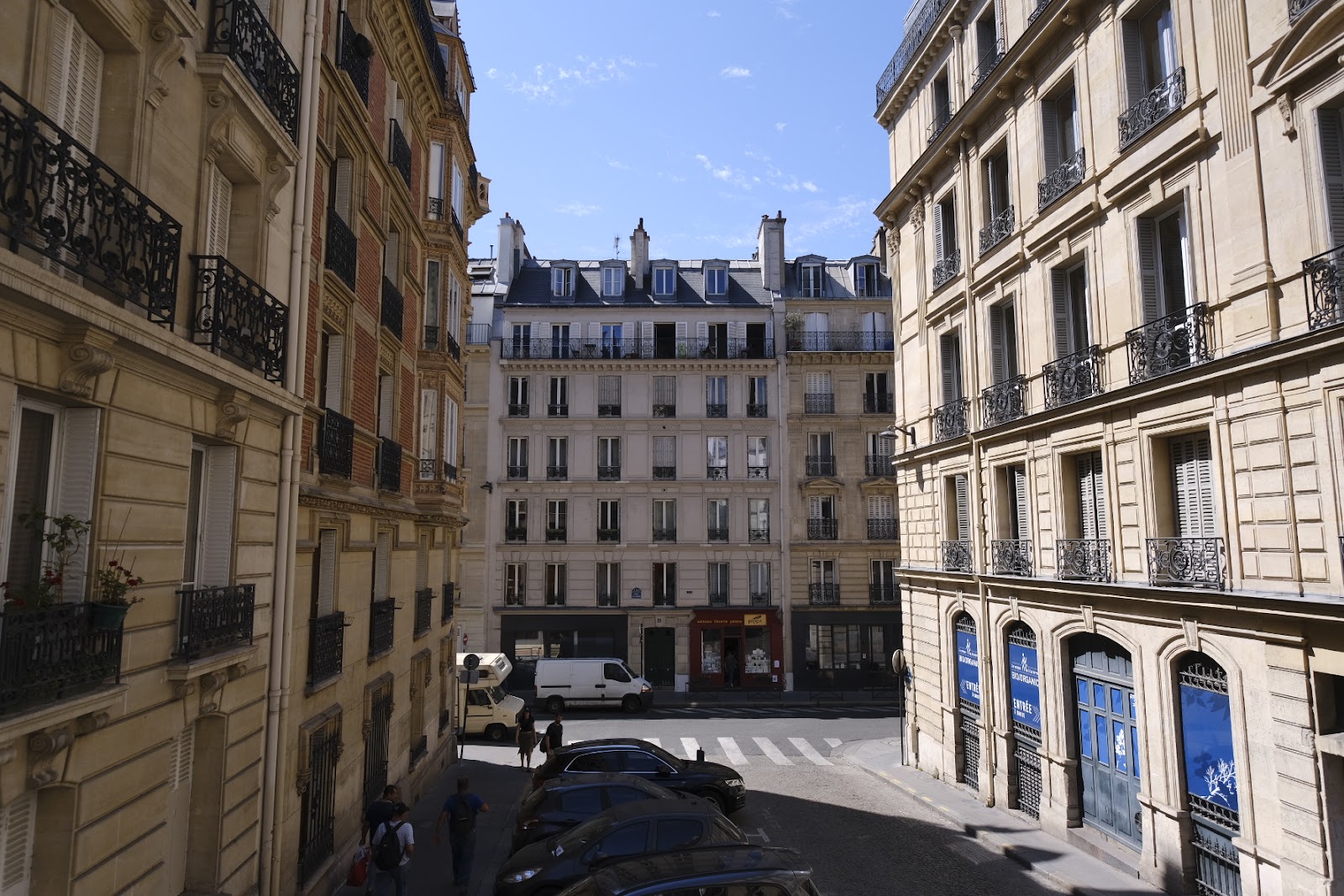
Haussmannian architecture in the 5th arrondissement, Paris
Conclusion: Depoliticization of the Public Space
Haussmann's transformation of Paris represents a pivotal moment in urban development, extending beyond aesthetic or infrastructural improvements. One of the most significant consequences was the depoliticization of public space.
The creation of wide boulevards dismantled the dense networks of narrow streets that characterized Parisian urban fabric. With the invention of 'window shopping,' people used public space for consumption activities rather than political reunions. Boundaries between the roles of citizens and consumers blurred, diverting individuals from their role within the city and providing an illusion of equality.
This is problematic regarding democratic values, diverting popular classes from political life and enhancing the power of oligarchs with financial capital—a tendency that seems to concretize in contemporary French politics.
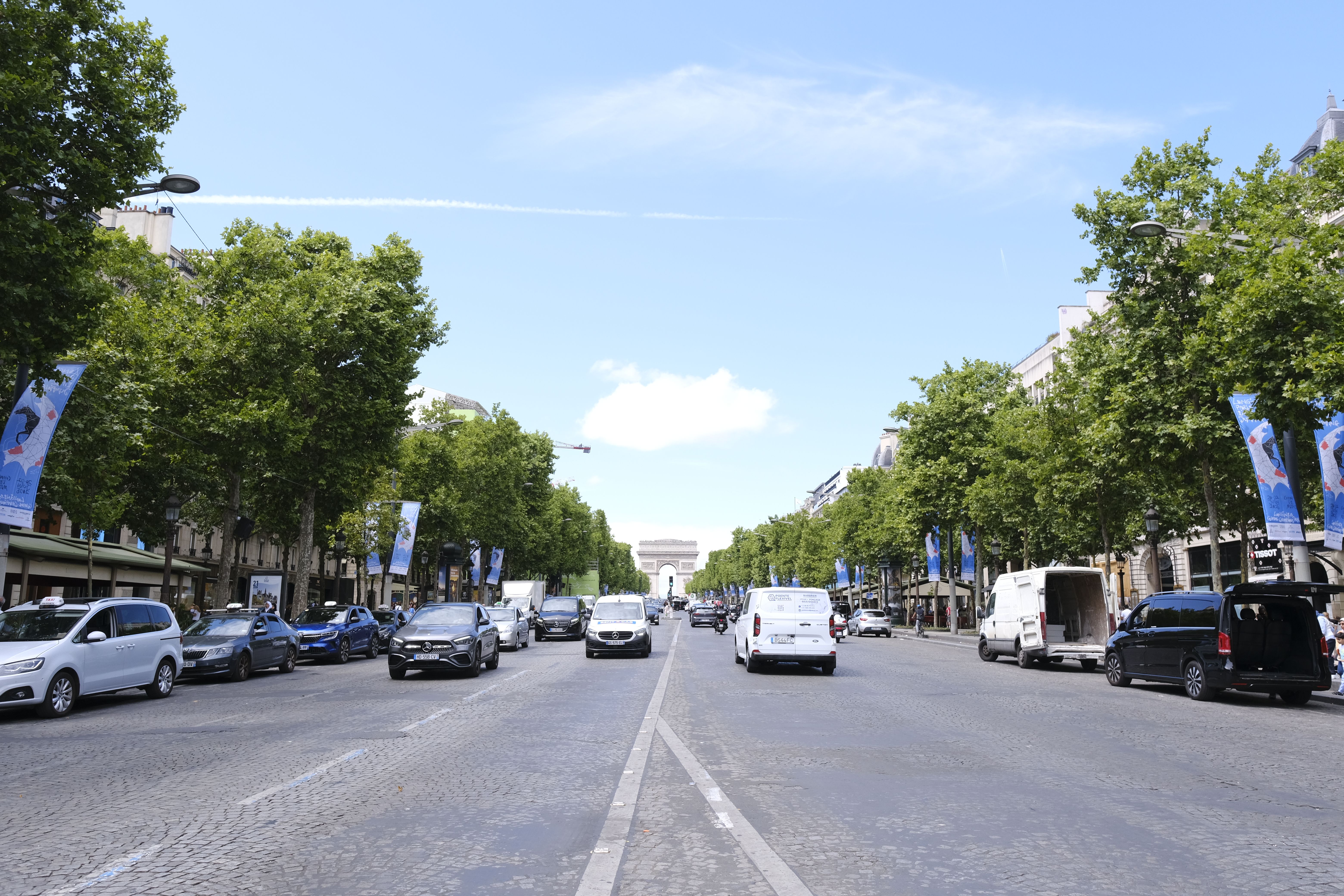
This article draws parallels between the Dharavi Redevelopment Project (DRP) in Mumbai and Haussmann’s 19th-century transformation of Paris, arguing that both are examples of neoliberal urbanism—where large-scale city projects are driven by investment interests and state power, often at the expense of the local urban fabric. Both projects use narratives of modernization, hygiene, and public order to justify top-down interventions, but ultimately serve elite and capitalist interests by turning urban space into a site for profit.
At the time I write this article, the Dharavi Redevelopment Project (DRP) has never been so tangible. The government of Maharashtra and Adani’s conglomerate released their plan, residents have been interviewed, parcels across the city have been bought for relocation. This article follows another one, setting the stage and presenting Haussmann’s project to transform Paris during the 19th century. The aim of this short piece is to provide context for the DRP, and see that we’ve been through almost 200 years of history of speculative, large-scale urban transformation, and that arguments haven’t changed much (this is actually quite the opposite).
I support the argument that urban megaprojects follow a logic of speculative urbanism, referring to the process by which urban space is transformed not merely for functional or social improvement, but as a site of investment strategy. This concept foregrounds the role of financial capital, state power, and specific forms (and symbols) of urban transformation. Both the Dharavi Redevelopment Project in Mumbai and the transformation of Paris under Georges-Eugène Haussmann and Napoleon III exemplify speculative urbanism, albeit in different historical and geographical contexts. Each project mobilizes urban space as a speculative asset, leveraging state authority and private capital to reimagine the city in ways that serve elite interests, often at the expense of existing communities.
Despite the temporal and cultural distance between 19th-century Paris and contemporary Mumbai, the Haussmannization of Paris and the Dharavi Redevelopment Project share striking similarities. Both initiatives are characterized by large-scale interventions that seek to radically reshape the urban fabric. In each case, the projects are justified through discourses of modernization, hygiene, and public order, but are fundamentally driven by speculative logics: the anticipation of increased land values, the attraction of private investment, and the creation of urban environments tailored to the needs and desires of the capitalist elite. The projects also rely on the exercise of top-down political power, with state authorities orchestrating expropriation and demolition in the name of progress.

Maps of Paris during the 17th century – Musée des Archives Nationales, Paris
Hygienism — the invocation of public health and sanitation as a rationale for urban transformation — serves as a powerful tool of speculation in both Paris and Mumbai. In 19th-century Paris, Haussmann’s boulevards and sewer systems were justified as necessary interventions to combat disease and overcrowding, yet they also facilitated the clearance of working-class neighborhoods and the creation of new, profitable real estate. Similarly, the Dharavi Redevelopment Project is framed as a response to the “unhygienic” conditions of the « slum area », legitimizing the displacement of residents and the construction of high-value commercial and residential developments. In both cases, hygienism operates as a form of moral speculation, transforming the city under the guise of health while enabling the capitalization of urban land.
Central to both projects is the exercise of top-down political power, manifest in the processes of expropriation and creative destruction. Haussmann, empowered by Napoleon III, wielded extraordinary authority to demolish entire neighborhoods, displacing thousands in order to realize his vision of a modern Paris. This process of creative destruction — the concept of David Harvey, destroying the old to make way for the new — was justified by appeals to public interest but served the interests of property owners and investors. The Dharavi Redevelopment Project similarly involves the expropriation of land and the displacement of long-standing communities, with the state acting as both facilitator and beneficiary of speculative redevelopment. In both cases, the violence of urban transformation is obscured by narratives of progress and modernization.
A defining feature of both Haussmann’s Paris and the proposed redevelopment of Dharavi is the imposition of a modern urban aesthetic designed to attract and please the capitalist elite. Haussmann’s wide boulevards, uniform façades, and monumental public spaces were intended to signal Paris’s status as a global capital of commerce and culture, while also facilitating the circulation of goods, people, and capital. The Dharavi project similarly envisions a sanitized, orderly, and visually appealing urban environment, one that can attract investment and integrate Mumbai more fully into global circuits of capital (take Dubai as a model). Aesthetic transformation is inseparable from economic speculation, as the visual order of the city becomes a means of producing and capturing value.

AI-generated image of 'a projection of Paris in the 21st century if Haussmann wouldn't have implemented his project'
The creation of large, straight streets is emblematic of both projects. Haussmann’s boulevards not only improved circulation of goods and people (at the metropolitan scale, but also at the national and international level by connecting railway stations for example) but also increased the value of adjacent properties, enabling speculative investment and development. The Dharavi Redevelopment Project similarly proposes the insertion of wide roads and new infrastructure, facilitating access for capital and signaling the transformation of the area from informal settlement to formal, investable space. In both contexts, the straightening and widening of streets is a spatial strategy for enabling and accelerating speculative urbanism.
Both Haussmann’s Paris and the Dharavi Redevelopment Project are predicated on the mobilization of private capital, either through public-private partnerships or simply through loans and credits. In Paris, the transformation was financed through a combination of state funds, public credits and private investment, with banks and developers playing a central role in the redevelopment process. The Dharavi project similarly depends on public-private partnerships, with developers incentivized by the promise of lucrative returns on investment. In both cases, the city becomes a site of financial speculation, with urban transformation driven by the logic of capital accumulation.
Finally, in both cases, a narrative of radical break is sold to support the implementation of the project. In Paris, it aimed to legitimize Napoleon III’s power and erasing the revolutionary sentiment, in Dharavi, erasing completely it’s spatial and social representation. In short, and in both cases, deleting urban fabric and replacing it with a narrative of modernization to enhance speculative activities.
Critics of Haussmann in the 19th century, including writers like Victor Hugo and Charles Baudelaire, condemned the social and spatial violence of his interventions. They decried the displacement of the poor, the destruction of historic neighborhoods, and the transformation of Paris into a city for the wealthy. But, first and foremost, they condemned the total eradication of the Parisian urban fabric. These critics argued that Haussmannization prioritized profit and spectacle over social justice and community. The critique centered on the loss of social fabric, the commodification of urban space, and the exclusion of marginalized populations from the benefits of modernization.
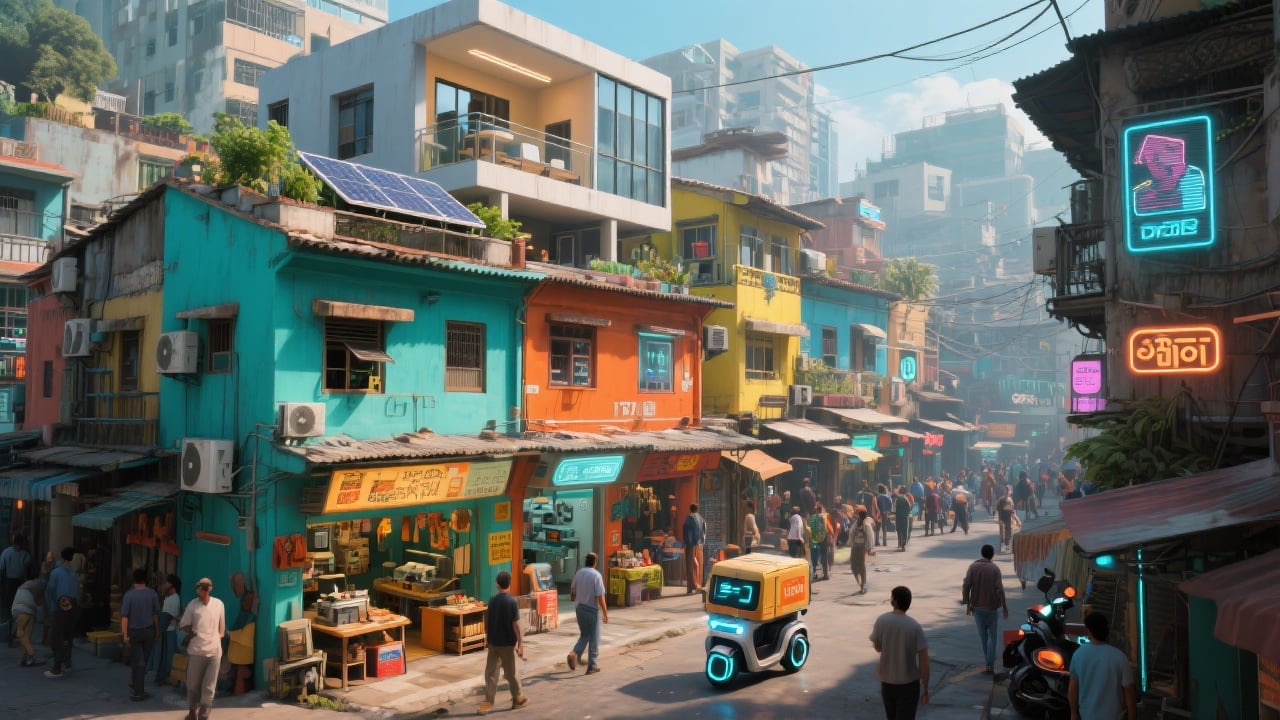
AI-generated image of 'a projection of Dharavi if it would develop incrementally'
Just like urbz is opposed to the current form of the DRP, it would also have been really critical of Haussmann’s vision and project. The critiques leveled against Haussmann remain profoundly relevant in the context of contemporary speculative urbanism, as exemplified by the Dharavi Redevelopment Project. The displacement of vulnerable communities, the prioritization of elite interests, and the transformation of urban space into a site of speculation and profit are enduring features of capitalist urbanization. The language of hygiene, order, and modernization continues to legitimize the expropriation and marginalization of the urban poor – a phenomenon that Shripad Sinnakaar, a Dharavi-born poet, calls ‘politics of dirtification.’ As such, the lessons of 19th-century Paris are instructive for understanding and contesting the dynamics of urban transformation in the 21st century, highlighting the need for more inclusive, equitable, and democratic approaches to city-making.