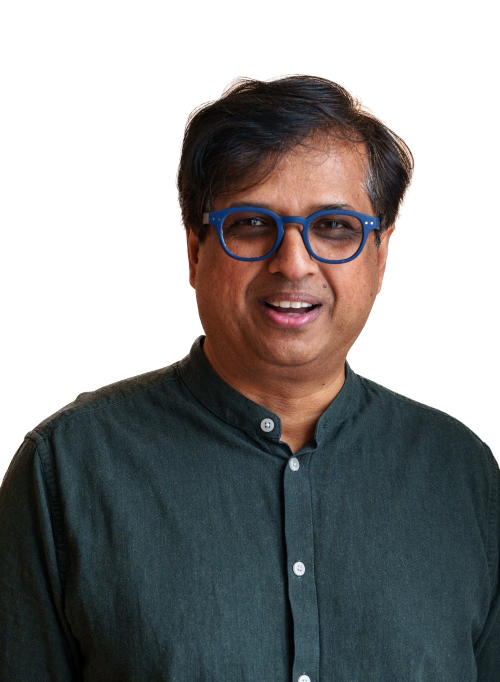
Rahul Srivastava is a co-founder of urbz and The Institute of Urbanology. He studied social and urban anthropology in Mumbai, Delhi and Cambridge (UK). His previous publications include an ethnography of urbanized nomads around Mumbai, a novel published by Puffin, (Penguin, India) and 'The Slum Outside', a commentary on Dharavi, co-written with Matias Echanove and published by Strelka Press. He continues to write extensively on urban issues with Matias, with their next major publication signed up with Verso, London. He brings his background in anthropology and visual ethnography to urbanology, the practice that energises much of urbz's work in Mumbai and elsewhere.
Articles

Exporting Indian Urbanism
Not all is worthy of the bin! Our latest column in The Hindu explores features of Indian urbanism that could inspire cities around the world. (The Hindu 24.09.2017)


Mining the forests
Nature holds something far more precious than wood, coal and minerals — something which industrial practices have been destroying in their crude quest for cheap bucks. (The Hindu, 10.09.17)

Towards an alternative development for Ulleung-do
A 5 day workshop on the remote Ulleung island generates ideas and discussion for an alternative to the traditional fast paced development in South Korea.

Letter from a globalised island of Ulleung-do
On how nature and economy share a common destiny (The Hindu, 27.08.17)

Planning without colonizing
Lessons from a century-old plan for Indore by Scottish planner Patrick Geddes (The Hindu, 14.08.17)
Why India should reject China's obsession with bigger, denser megacities
In the urbanisation race, India seems desperate to catch up with China. Yet this highly networked country can build a future where cities do not rule supreme.

Mess is more
Recent research in Dhaka show that accommodation and housing are related but distinct needs. (The Hindu, 30.07.17)
Hamburg: between the medieval and the global
The organisation of the G20 reflects its democratic deficit. Not only did the G20 summit turn parts of Hamburg into a virtual fortress, it also made hostages of thousands of peaceful protesters and residents. (The Hindu, 16.07.17)

Accommodating an Indigenous History
India’s financial capital does infantilise its own indigenous history. But it also celebrates the past.

Why Mumbai extends far beyond its metropolitan limits
Transcript of interview in the Hindustan Times.