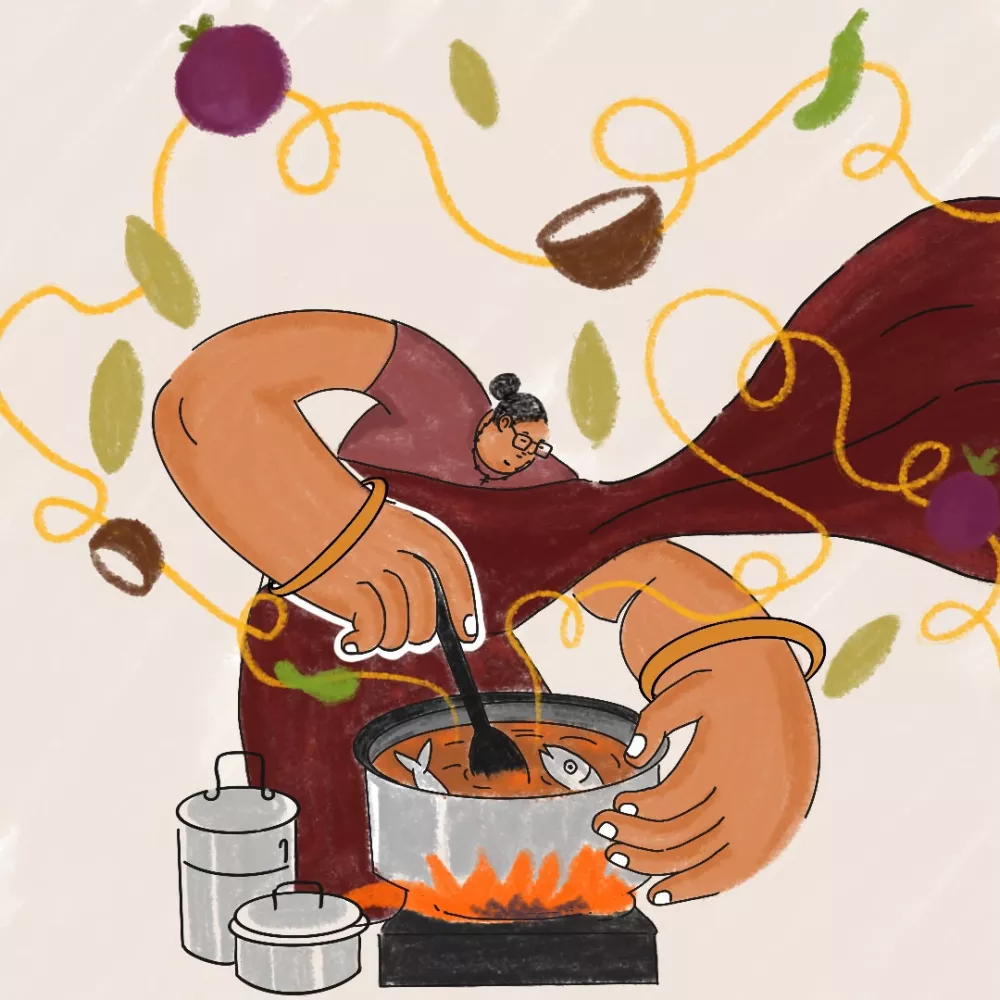
Through Mary Maushi’s steel dabbas, this story follows the daily journey of a home-cooked Koli meal from her kitchen in Dharavi Koliwada to the shared lunch table at urbz. Along the way, it explores food, inherited knowledge, and the conversations that unfold around a meal

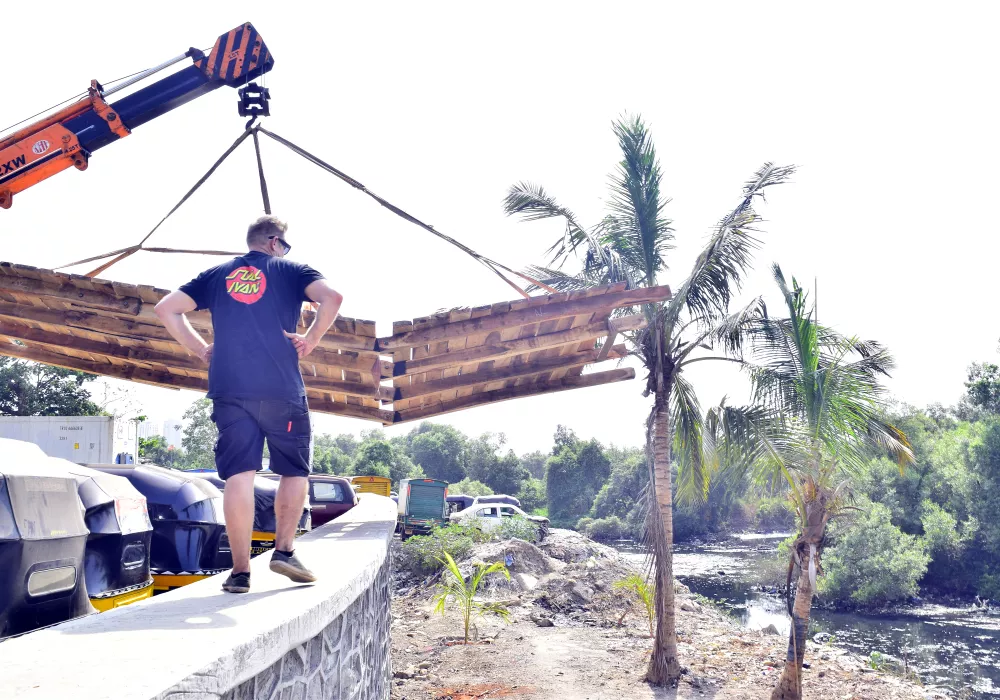
Dharavi Koliwada is on a mission to re-establish a dwindling connection to its fishing ponds. Along with the crew from Sullivan Carpentry and urbz, they are actively designing and building an amphibious device that helps fishing boats get into the water.
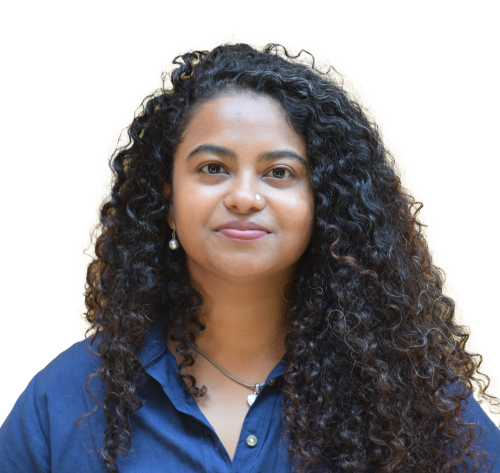
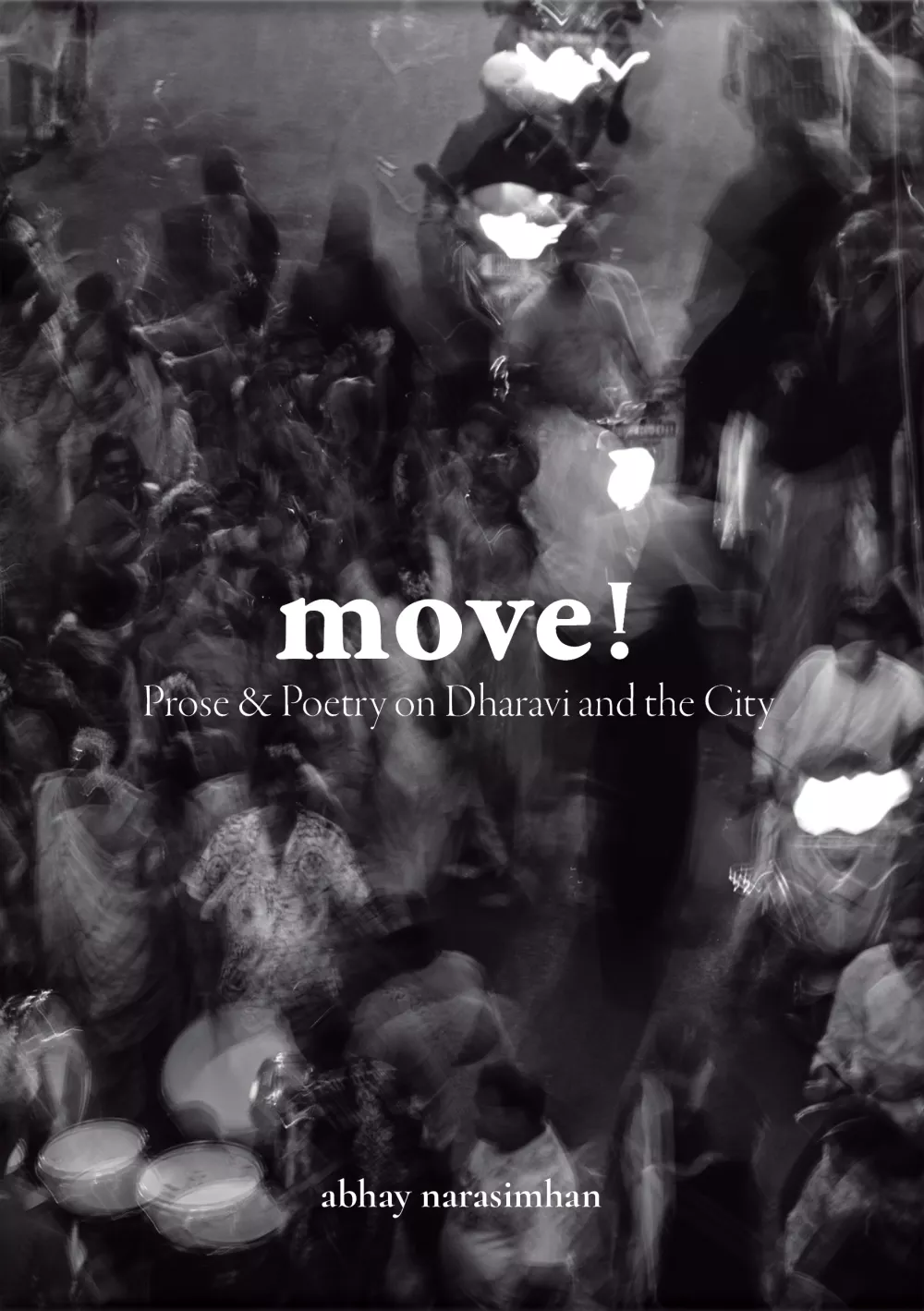
This compilation of prose and poetry emerges from the most incredible time I spent in Dharavi working with urbz Mumbai.

How Dharavi exposes the Limits of Professionalism with each frame...
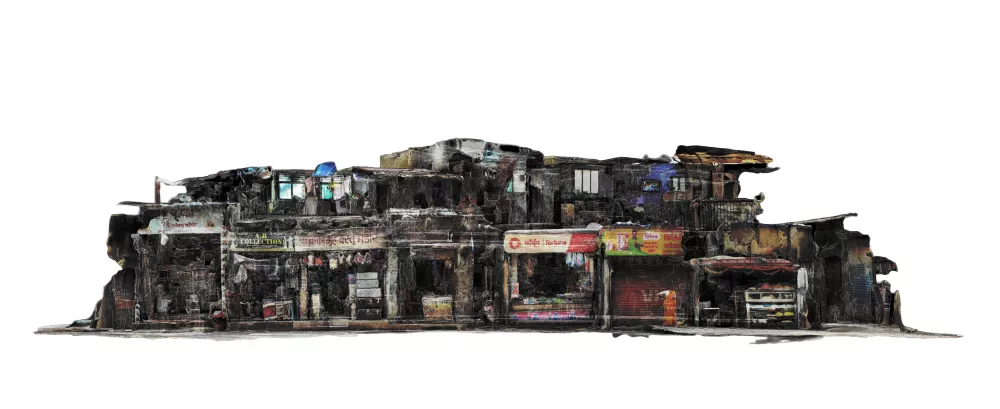
The following text recounts Paarth and Abhay’s experience measuring a plot of land owned by Ramesh Koli and his family. The plot includes a house and 7 shops that face the street. The family hopes to redevelop the plot with urbz.
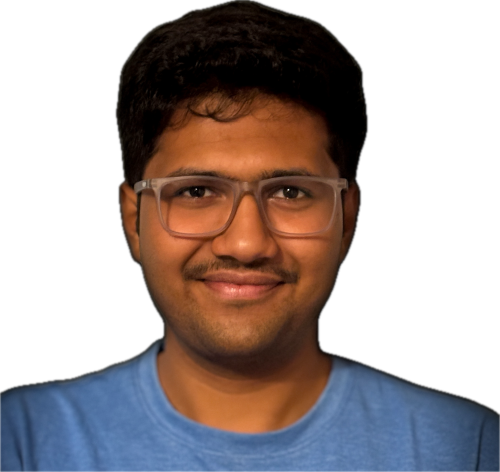
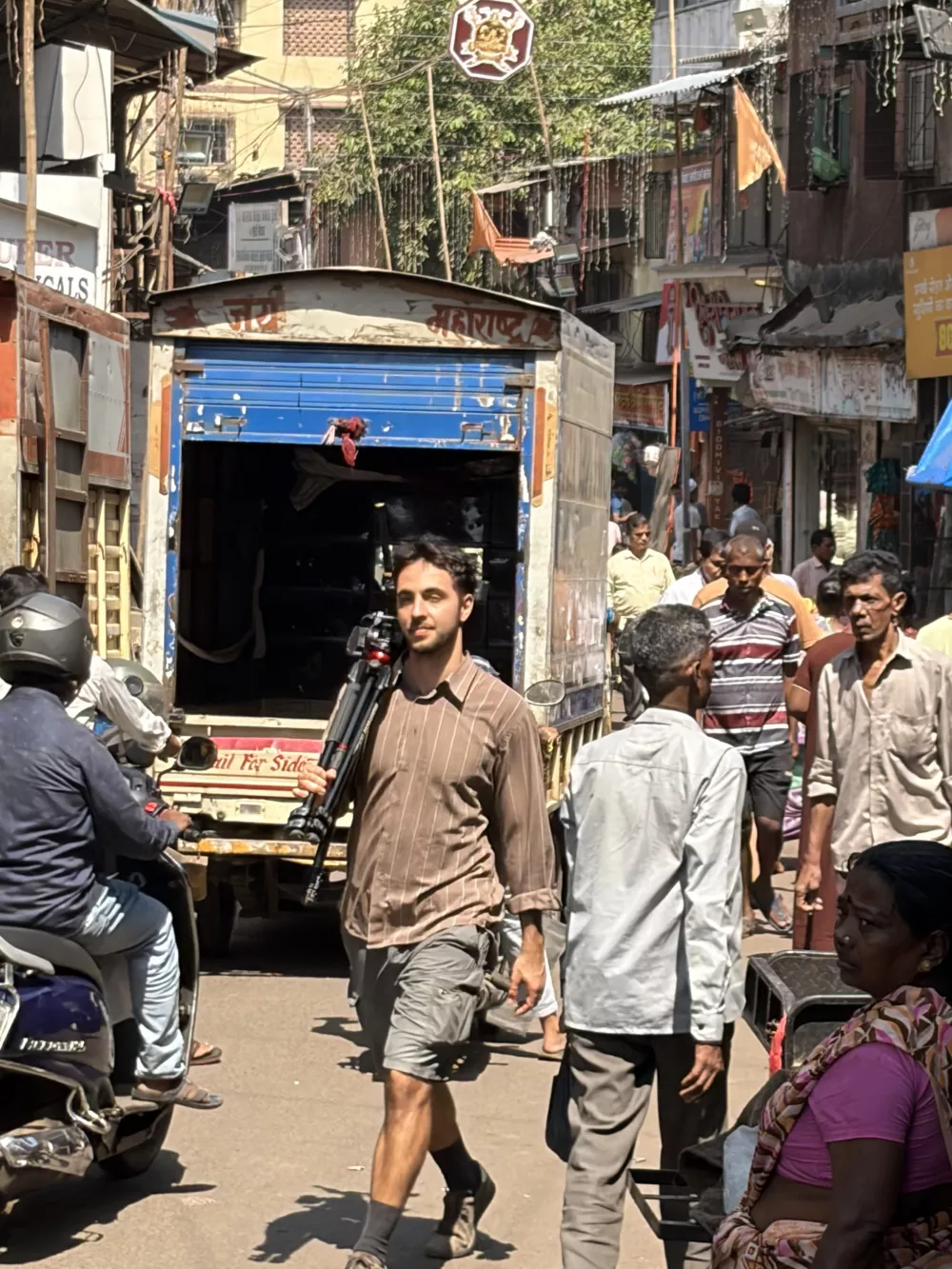
An interview with Liron Shalit, our filmmaker-in-residence. He is an award-winning documentary filmmaker focused on social issues, human rights, and ethical urbanism. Recently, the urbz office hosted a screening of his film Living Euljiro that traces the neglected losses of those living within a centuries-old district of maze-like alleys at the heart of Seoul (Synopsis). We speak to him about his craft, his lessons from Euljiro, and his time here in Dharavi.
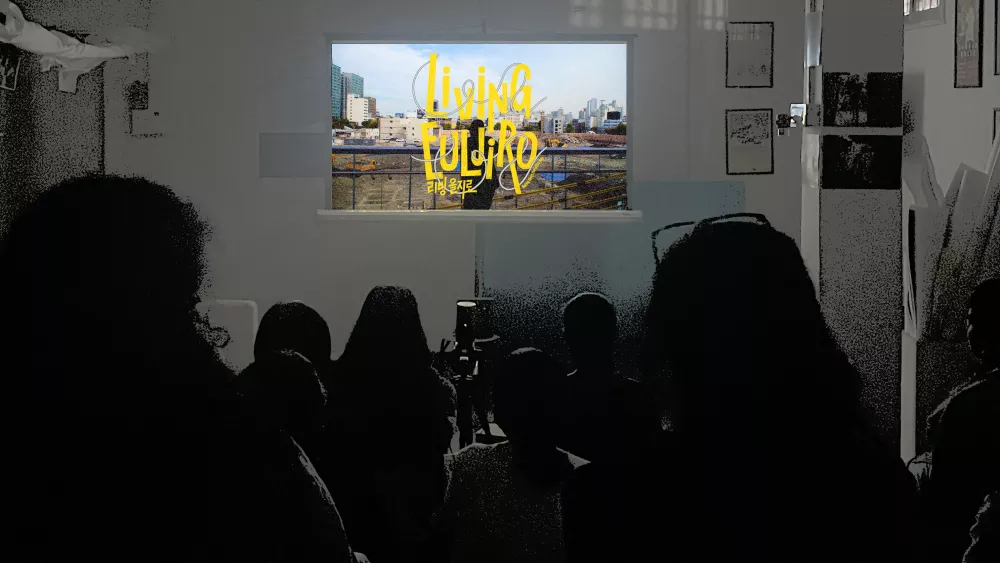
Living Euljiro is a film directed by Liron Shalit. Liron has been creating award-winning short documentaries since 2017, exploring themes such as social issues, human rights, disability, natural disasters, and urban life. Since relocating to Seoul in 2022, he has focused on documenting disappearing spaces and communities, capturing the distinctive culture of Euljiro and the stories of the people who live and work there.
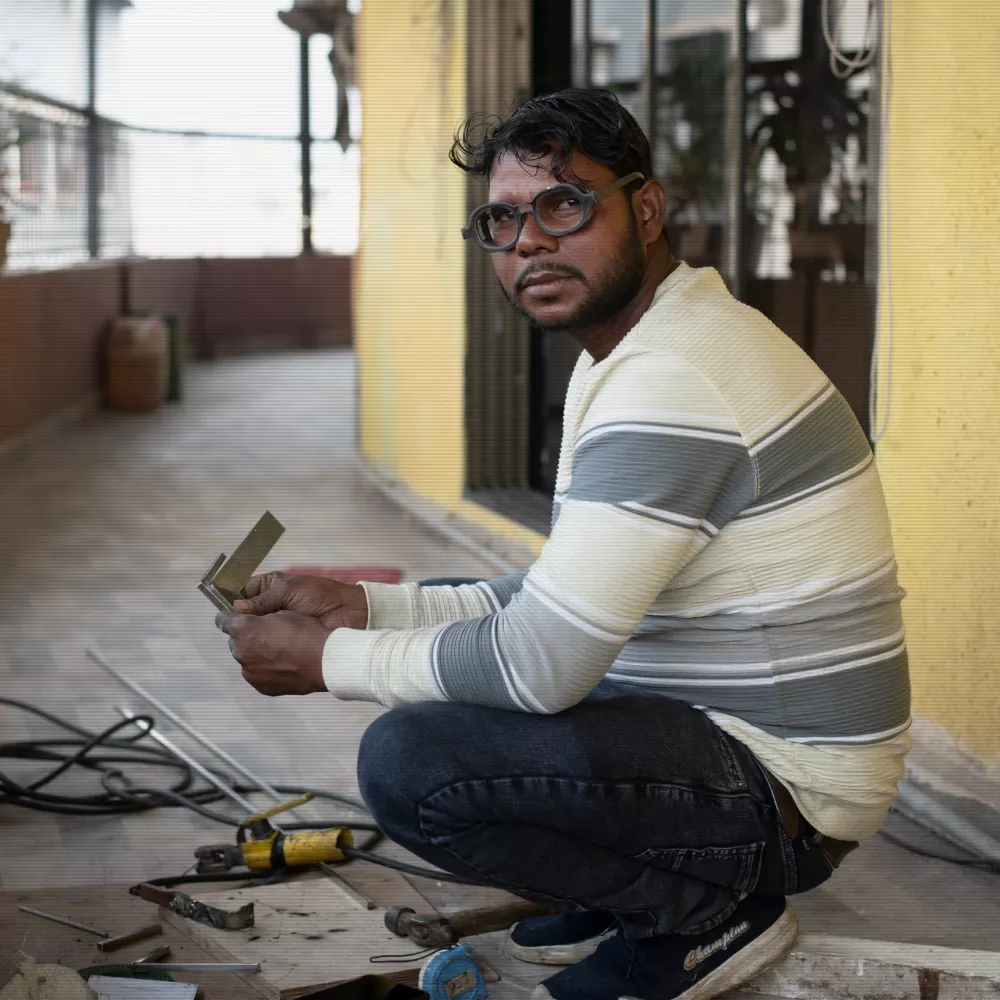
Kamlesh is an itinerant welder who has lived and worked in different parts of the country. Kamlesh represents the skilled workforce that quietly underpins the city’s built environment. This is his story...

The Handstorm workshop in Dharavi, with the Engineers for Social Impact from NYU, Abu Dhabi took place for the second time this year in October, 2025. We walked through the lanes of Dharavi Koliwada, observing Water in the diverse and unexpected paths that it took to and from people’s homes. Students diligently followed the water, listening carefully to the stories it had to tell.

NeuLand is a community garden in Cologne: a successful urban farming project in need of attracting a larger community, especially since its recent re-location to a new site. The six GDI students (Jonas, Kryzsztof, Vanessa, Stanley, Momodo, Beilei) who worked on NeuLand paid a lot of attention to the idea of circularity at every level of their engagement. Inspired by the circularity of seasons and agriculture, and by the uniqueness of the “round table” – around which exchange and interaction happen in a more dynamic form than elsewhere –, they saw the potential for the garden as a centering…