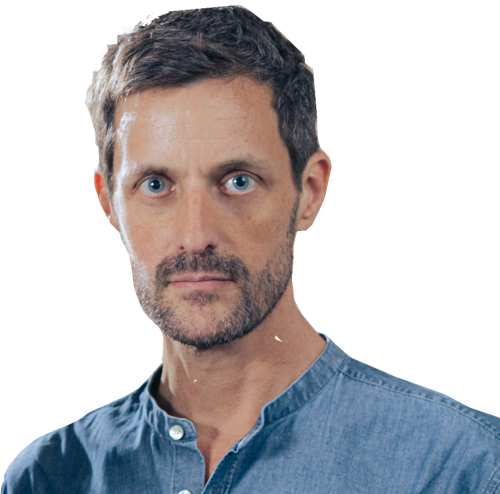
Matias Echanove is Swiss and Spanish urbanologist with over 20 years of research and practice in Asia, America and Europe. He lived, studied and worked in London, New York, Tokyo, and Mumbai, where he co-founded urbz, together with Rahul Srivastava and Geeta Mehta.
His academic training in government and economics at London School of Economics, urban planning at Columbia University, and urban information systems at the University of Tokyo, along with his personal and professional engagement with neighborhoods such as Bed-Stuy in Brooklyn NY, Shimokitazawa in Tokyo or Dharavi in Mumbai have largely contributed to shape urbz’ current practice.
Matias currently lives in his native city of Geneva, where he co-directs urbz Switzerland. He is also co-director at urbz Paris and an active partner at urbz’ offices in Mumbai and Bogota. He leads or coordinates projects in each of these countries, which involves spending too much time on Zoom calls and plane flights. Matias recently fell in love with the city of Cali in Colombia, where urbz works on the development of participatory tools and methodologies at the scale of the city. In Geneva, he works on the landscaping of a park for the International Federation of the Red Cross, among other projects. He is also currently involved in the reprogramming of a massive hospital complex in Nantes; and an improvement plan for a fisherman’s village in the heart of Mumbai.
Matias Echanove is regularly invited to present his work at institutions such as Harvard, Columbia, Berkeley, Princeton, ETHZ, EPFL, Strelka Institute, Max Planck Institute, the World Bank, the Swiss Architecture Museum in Basel, and Urban Age. He has written a large number of articles and opinion pieces in journals such as The New York Times, The Hindu, The Guardian, The Wall Street Journal, Art India, Oxford University Press, Strelka Press (Moscow), Domus (Milan), Tokyo University Press, and The Indian Architect and Builder. He was also interviewed on urban issues in the New York Times and The Economist. Together with Rahul Srivastava, he is currently writing a book on Homegrown Cities that will be published by Verso in 2026.
His work with urbz was exhibited at MoMA in New York, MAXXI in Rome, MAK in Vienna, Istanbul Design Biennial, Chicago Architecture Biennial, São Paulo Cultural Center, and Bhau Daji Lad City Museum in Mumbai, among other places.
Matias Echanove and Rahul Srivastava are Ambassador of Swiss-Indian friendship, an award given in 2017 by Swiss President Doris Leuthard and Indian Minister for Road Transport and Highways Mr. Mansukh L. Mandaviya for contributing innovative ideas in urban planning, and for strengthening the Swiss-Indian relationship.


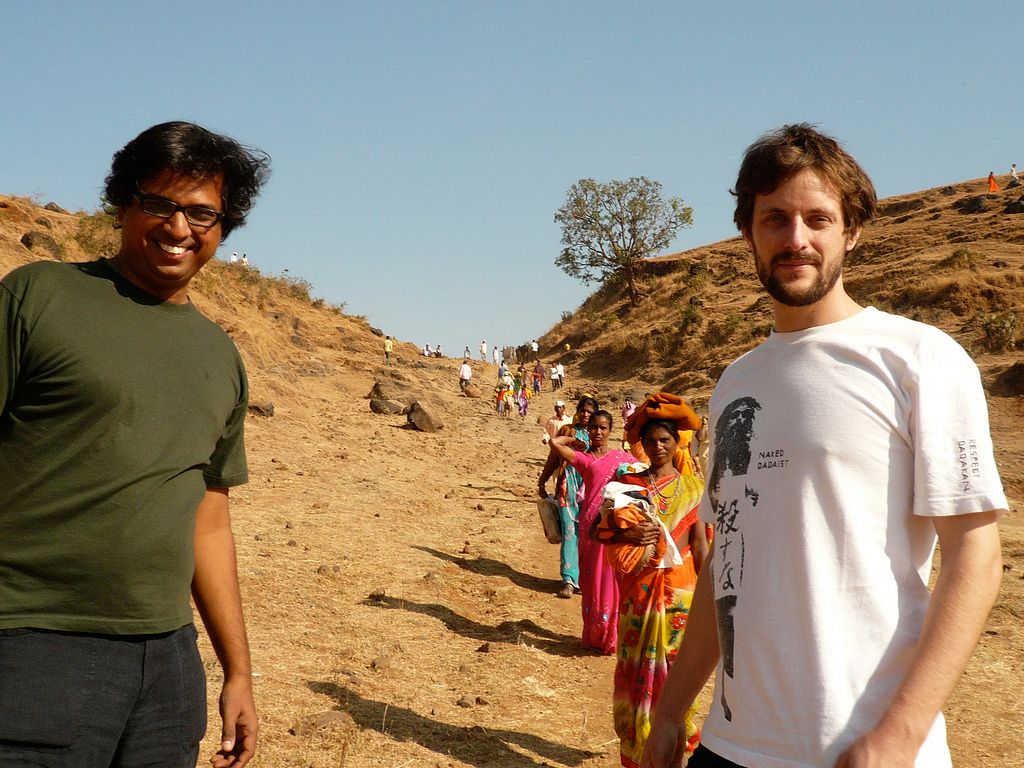

Articles
The road to the city
How renewed attention to urban-rural linkages may reshape the urbanisation debate. (The Hindu 5/11/2017)
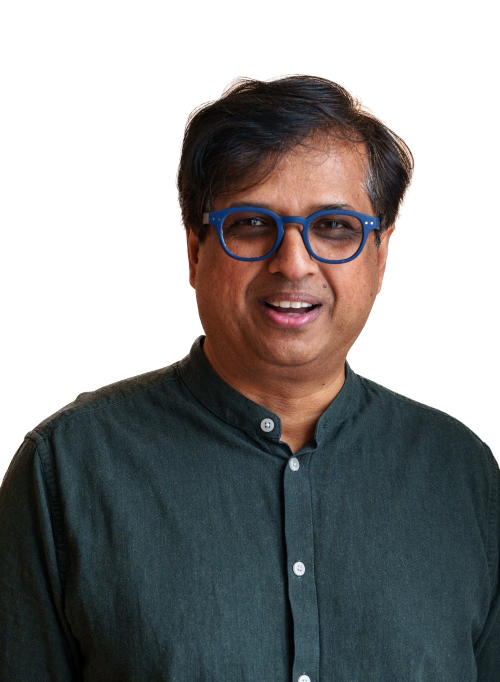

Constructive Resistance
One small indomitable neighbourhood holds out against the planners (and changes the plan). (The Hindu 22.10.2017)

A Humane City
Anyone who has commuted on trains during rush hour knows there’s something deeply tolerant about the Mumbaikar (The Hindu 07.10.2017)

Exporting Indian Urbanism
Not all is worthy of the bin! Our latest column in The Hindu explores features of Indian urbanism that could inspire cities around the world. (The Hindu 24.09.2017)

Mining the forests
Nature holds something far more precious than wood, coal and minerals — something which industrial practices have been destroying in their crude quest for cheap bucks. (The Hindu, 10.09.17)

Towards an alternative development for Ulleung-do
A 5 day workshop on the remote Ulleung island generates ideas and discussion for an alternative to the traditional fast paced development in South Korea.

Letter from a globalised island of Ulleung-do
On how nature and economy share a common destiny (The Hindu, 27.08.17)

Planning without colonizing
Lessons from a century-old plan for Indore by Scottish planner Patrick Geddes (The Hindu, 14.08.17)
Why India should reject China's obsession with bigger, denser megacities
In the urbanisation race, India seems desperate to catch up with China. Yet this highly networked country can build a future where cities do not rule supreme.

Mess is more
Recent research in Dhaka show that accommodation and housing are related but distinct needs. (The Hindu, 30.07.17)